
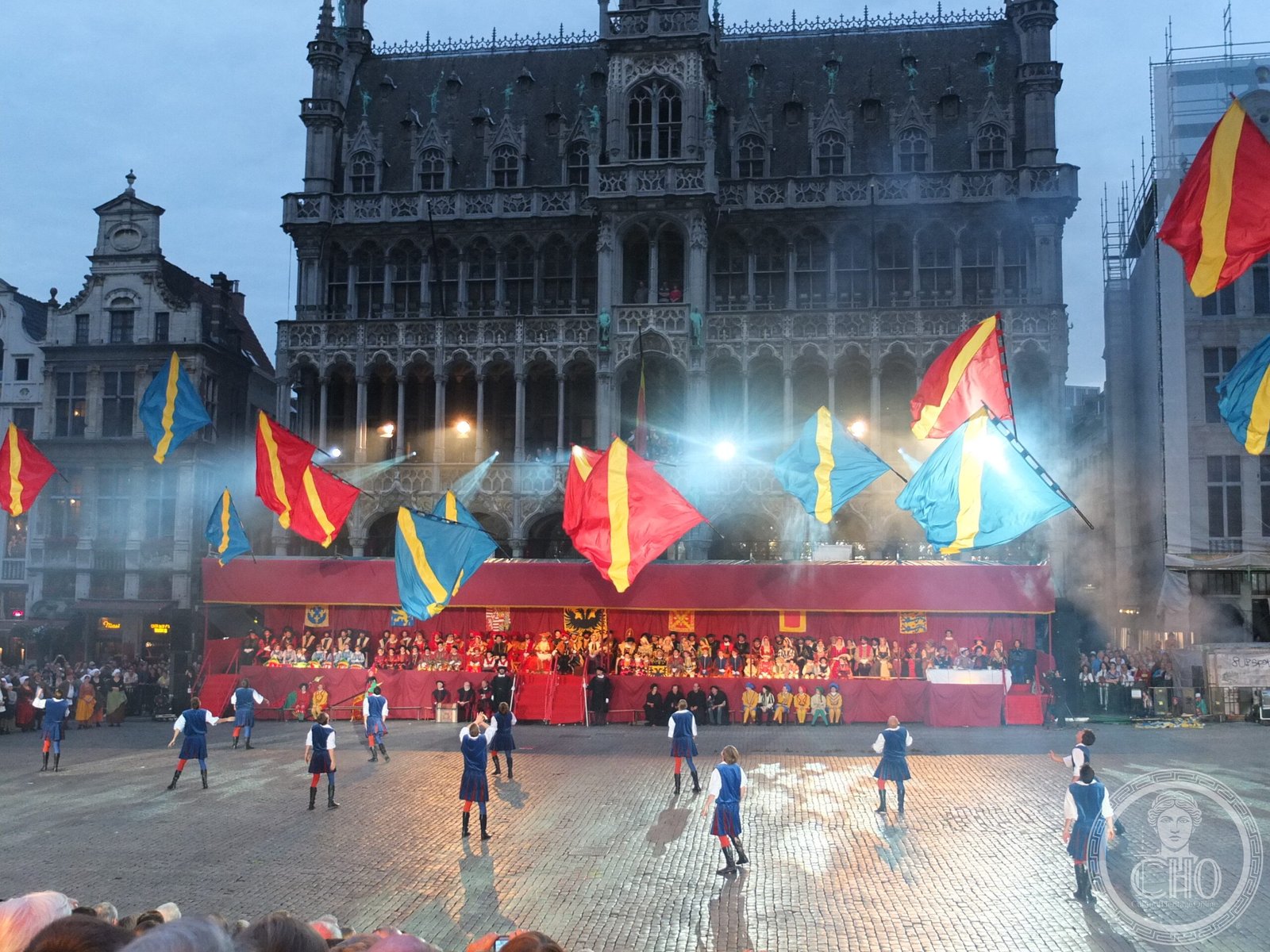
A spectacular medieval pageant honouring both sacred history and civic pride, Brussels’ Ommegang transforms the city’s streets into a canvas of colour, tradition, and collective memory each June and July.
At a glance
The Ommegang of Brussels is an annual historical procession that celebrates the city’s complex past through elaborate pageantry. Twice yearly, at the turn of June and July, thousands of participants dressed in medieval costume parade through Brussels’s historic streets, accompanied by decorated floats, processional giants, and folkloric groups on foot and horseback. The procession begins in the Sablon district and concludes at the Grand-Place, the city’s emblematic central square.
Origins and history
The Ommegang emerged in the 14th century as Brussels’ most significant lustral procession, honouring a miraculous statue of the Virgin Mary. Over centuries, it evolved from a purely religious observance into a civic spectacle embracing all layers of Brussels society. In 1930, the event was reimagined as a historical reenactment of the Joyous Entry of Emperor Charles V and his son Philip II into the city in 1549—a transformative moment in Brussels’ political and cultural history. This shift grounded the tradition in a specific historical memory while maintaining its celebratory character.
The tradition today
The modern Ommegang unfolds across Brussels’ medieval and early modern urban landscape, drawing thousands of participants and spectators. Costumed performers represent historical figures, nobles, and commoners; elaborate floats depict scenes from the imperial visit and Brussels life; and traditional giants—oversized processional figures—embody local folklore. The procession’s route, anchored between the Sablon district and the Grand-Place, weaves through streets lined with historic buildings, creating an immersive theatrical experience that collapses the boundary between past and present.
Cultural significance
The Ommegang exemplifies how a living tradition can simultaneously honour spiritual heritage, commemorate historical events, and express collective identity. It reflects Brussels’ position as a cosmopolitan capital with deep medieval roots, uniting citizens across generations and backgrounds in shared celebration. The event belongs to a broader tradition of processional pageantry found throughout Belgium and northern France, yet its particular focus on the imperial entry of 1549 anchors it to Brussels’ unique trajectory from medieval town to imperial and eventually modern capital.
Key facts
- Country: Belgium
- Anchor community: Brussels
- UNESCO Intangible Cultural Heritage (Representative List): Recognised as a Masterpiece of the Oral and Intangible Heritage of Humanity since 2019
- Frequency: Twice annually, at the turn of June and July
- Route: Begins in the Sablon/Zavel district; concludes at the Grand-Place/Grote Markt
- Participants: Thousands in medieval costume, including floats, processional giants, and folkloric groups
- Historical reference: Reenacts the Joyous Entry of Emperor Charles V and Philip II in 1549
Where to experience it
The Ommegang takes place twice yearly around the turn of June and July. To experience the procession, position yourself along the route between the Sablon district and the Grand-Place, or secure viewing space at the final spectacle in the Grand-Place itself. The event is organised by Ommegang Oppidi Bruxellensis in collaboration with the City of Brussels; check their website for exact dates, parade routes, and ticketing information for the grand finale at the Grand-Place.
Sources & resources
Find it on the map
See this place and what’s around it →📷 Become a Cultural Heritage Online photographer
Share your photos of places: they stay published under your name as the author. The more they're seen, the more you get noticed — and soon a contest will reward the most appreciated photos.
Log in or sign up free to add a photo