
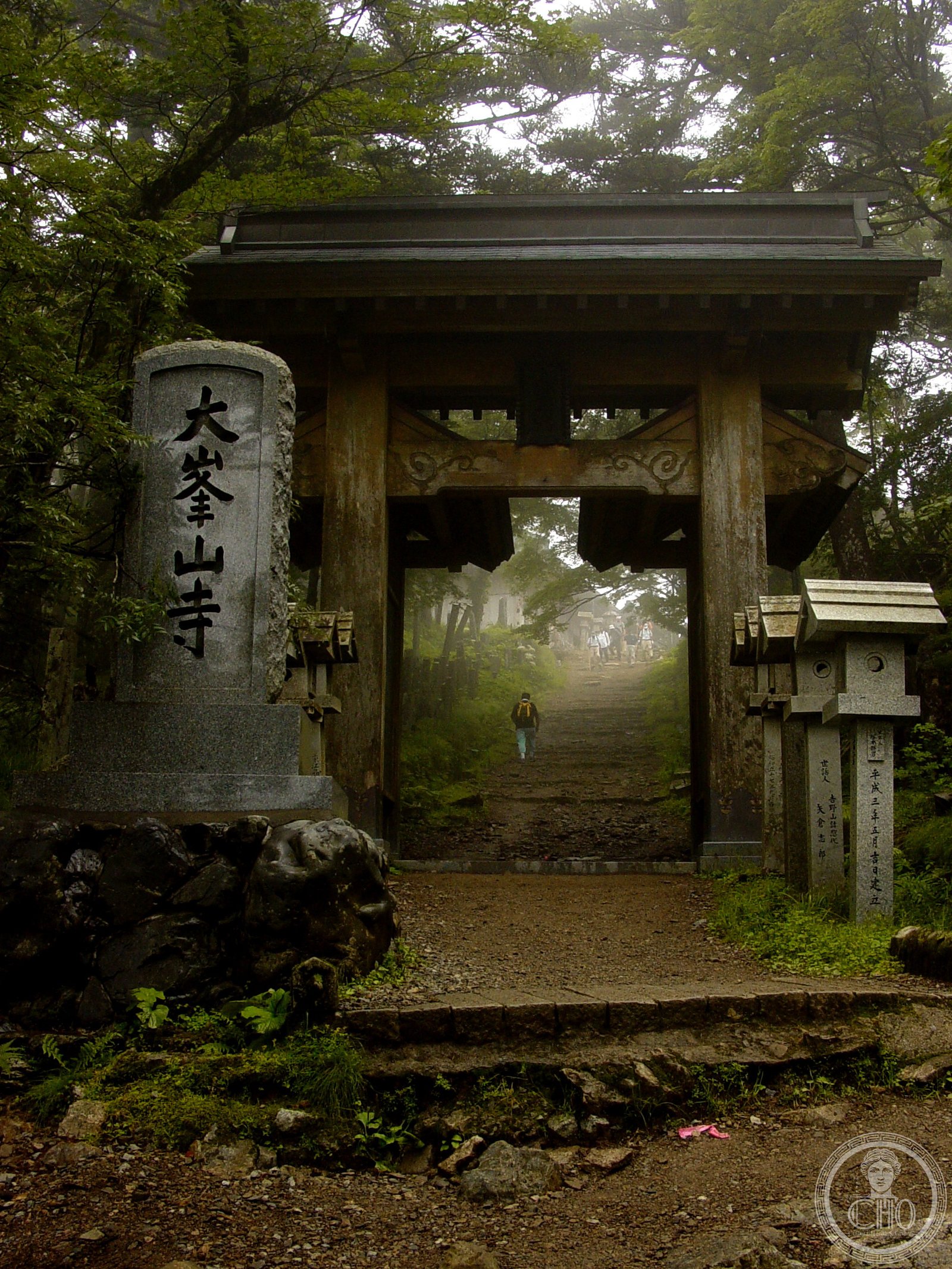
Perched at the summit of Mount Ōmine, this sacred temple stands as one of Shugendō’s two most venerated sites, maintaining a practice of female exclusion that has endured for over a millennium.
At a glance
Ōminesan-ji occupies the Sanjōgatake peak of Mount Ōmine in Yoshino district. Shared prestige with Kinpusen-ji as the preeminent temples of Shugendō—the Japanese mountain ascetic tradition—places this sanctuary at the spiritual center of an austere religious practice.
History
The temple’s significance extends back to the early Heian period. For more than twelve centuries, a strict prohibition on women’s entry to the sacred mountain has remained unbroken—a practice rooted in Shugendō doctrine that persists to the present day. In 2002, the precincts received designation as a National Historic Site of Japan.
What you see
The temple complex is defined by its mountain setting at altitude, accessible only to male pilgrims undertaking Shugendō discipline. The architecture reflects centuries of religious practice at this extreme location.
Cultural significance
Ōminesan-ji represents the living tradition of Shugendō, a form of Japanese Buddhism emphasizing asceticism, mountain spirituality, and mystical practices. Its equal standing with Kinpusen-ji underscores its role as a principal destination for practitioners seeking ritual purification and spiritual advancement through mountain pilgrimage.
Key facts
- Location: Tenkawa, Yoshino district, Nara Prefecture, Japan
- Coordinates: 34.253°N, 135.9414°E
- Peak: Sanjōgatake, Mount Ōmine
- Status: National Historic Site of Japan (designated 2002)
- Religious tradition: Shugendō
Practical information & getting there
Access to the temple and Mount Ōmine is restricted to male pilgrims. The site is reached via Tenkawa village in Nara Prefecture. Those wishing to visit should research current access protocols and the demanding nature of the mountain approach, as Shugendō pilgrimage is an intensive spiritual undertaking.
Sources & resources
Find it on the map
See this place and what’s around it →📷 Become a Cultural Heritage Online photographer
Share your photos of places: they stay published under your name as the author. The more they're seen, the more you get noticed — and soon a contest will reward the most appreciated photos.
Log in or sign up free to add a photo