
An ancient capital east of modern Luoyang, rebuilt during the Sui dynasty and recognized as a cornerstone of the Silk Roads network.
At a glance
The Old City of Luoyang lies 15 kilometres east of contemporary Luoyang. It served as the capital of the Northern Wei dynasty and was substantially rebuilt under Emperor Yang of Sui in 605. The site embodies a crucial junction of East–West trade and cultural exchange along the Silk Roads.
History
Luoyang held strategic importance as a dynastic capital during the Northern Wei period. Emperor Yang of Sui rebuilt the city in 605, reshaping it with new walls, streets and administrative structures. This reconstruction reflected Sui imperial ambitions to consolidate control over unified China and establish a major hub on emerging Silk Road networks.
What you see
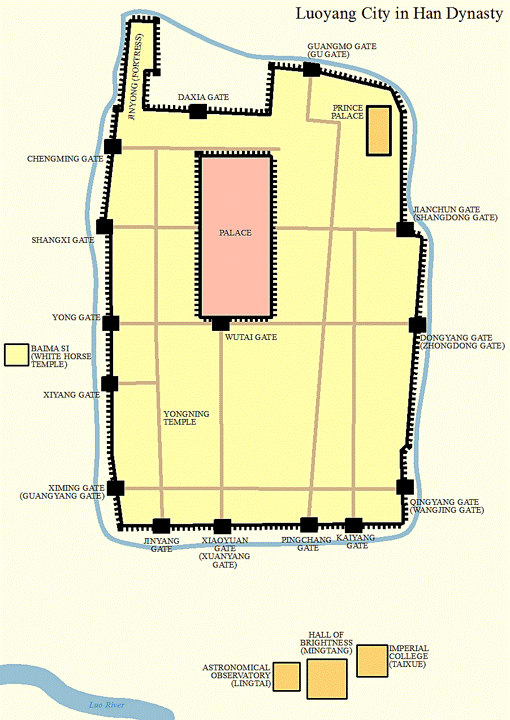
The archaeological remains reveal the planned layout of a classical Chinese capital, with reconstructed walls and foundations marking residential, administrative and commercial zones. Artifacts recovered from excavations demonstrate the cosmopolitan nature of the settlement during the early imperial period.
Cultural significance
The Old City exemplifies the flowering of urban culture during China’s transition from the Northern Wei to the Sui dynasty. Its designation as part of the Silk Roads: the Routes Network of Chang’an-Tianshan Corridor underscores its role as a meeting point for merchants, pilgrims and ideas travelling between Asia and the West. The site preserves evidence of multiethnic settlement and exchange during a transformative period in Chinese history.
Key facts
- Location: 15 km east of modern Luoyang, China
- Coordinates: 34.7286°N, 112.6225°E
- Capital of the Northern Wei dynasty
- Rebuilt by Emperor Yang of Sui in 605
- Designated a major cultural heritage site under national protection in 1961
- UNESCO World Cultural Heritage site since 2014 (Silk Roads designation)
Practical information & getting there
The archaeological site is accessible from Luoyang, a major city in Henan Province. Visitors should contact local cultural authorities or tourism offices for current information on access, hours and guided tours of the excavated areas.
Sources & resources
Find it on the map
See this place and what’s around it →📷 Become a Cultural Heritage Online photographer
Share your photos of places: they stay published under your name as the author. The more they're seen, the more you get noticed — and soon a contest will reward the most appreciated photos.
Log in or sign up free to add a photoIs this page about you?
This page is read by travellers and heritage enthusiasts who find it on Google. Tell us how you are connected to this place and we will take it from there.