

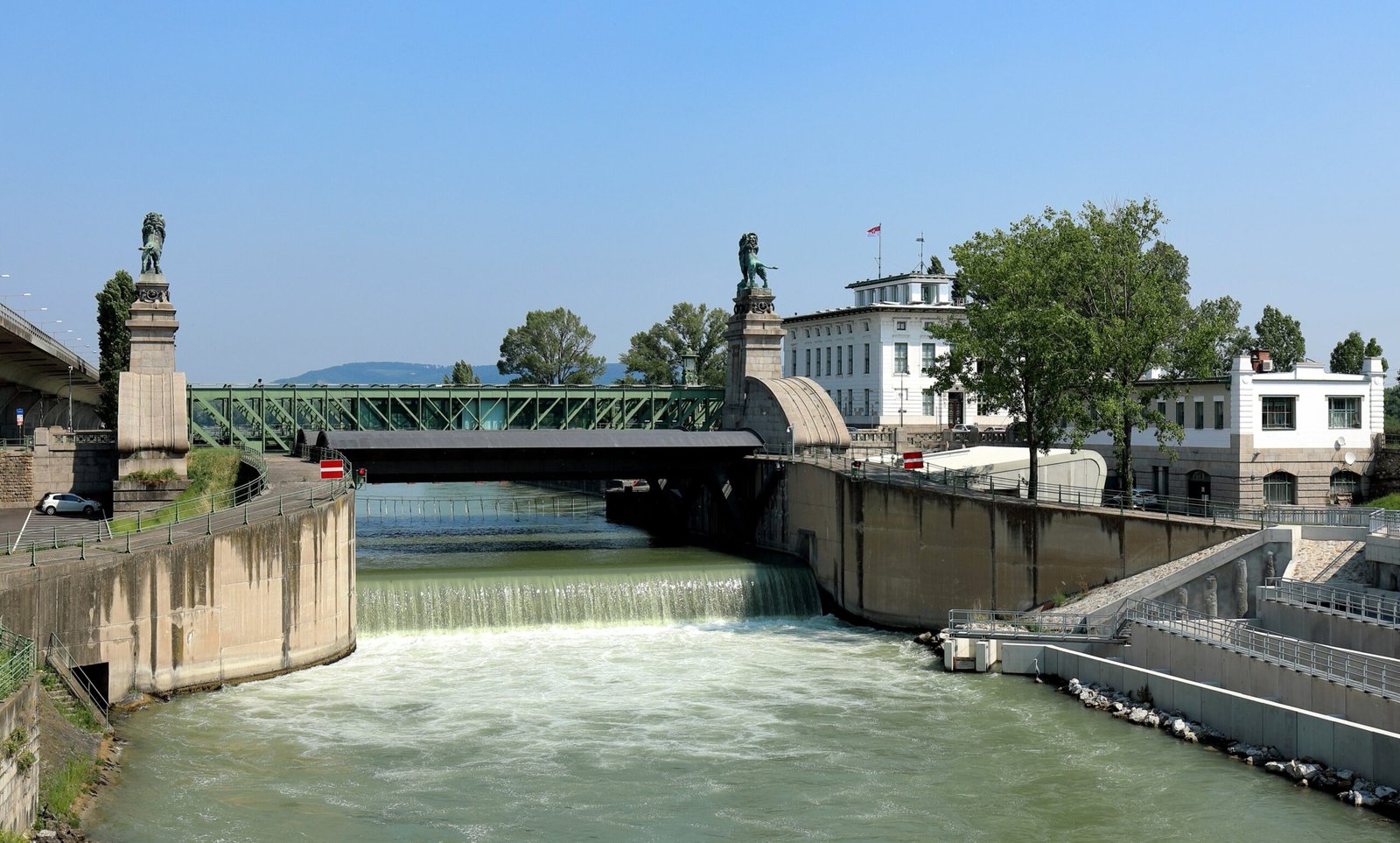
Otto Wagner’s twin hydraulic structures at the Danube Canal mark a pivotal moment in Vienna’s modernization, transforming a vital waterway while establishing the architect’s reputation for engineering innovation.
At a glance
Two separate hydraulic structures—a weir and a lock—sit where the Donaukanal leaves the Danube in Vienna’s Brigittenau district. Though often conflated, each serves distinct functions within the same engineered landscape. Otto Wagner designed both.
History
The project emerged from legislation passed in July 1892 that authorized not only the weir and lock but also the Vienna Stadtbahn and the transformation of the Donaukanal into a winter harbour. Wagner’s designs represented a bold fusion of practical necessity and architectural ambition, positioning Vienna’s infrastructure at the forefront of modern urban planning.
What you see
The weir and lock exemplify late 19th-century hydraulic engineering. Though commonly confused with one another, the two constructions serve complementary roles: the weir regulates water flow and levels, while the lock permits navigation. Wagner’s designs demonstrate precision engineering wed to considered aesthetic form.
Cultural significance
The Nussdorf structures announced Otto Wagner’s mastery of infrastructure design and helped establish Vienna as a center of modern engineering. They remain testament to the fin-de-siècle conviction that practical works could achieve artistic dignity—an idea that would define the architect’s entire career.
Key facts
- Country: Austria
- City: Brigittenau, Vienna
- Coordinates: 48.259°N, 16.369°E
- Architect: Otto Wagner
- Completed: 1892 onwards
- Legislation: July 1892
Practical information & getting there
The weir and lock are accessible from Vienna’s Brigittenau district along the Danube Canal. You can view the structures from nearby footpaths. For current visiting hours and detailed directions, consult local Vienna tourism resources.
Sources & resources
Find it on the map
See this place and what’s around it →📷 Become a Cultural Heritage Online photographer
Share your photos of places: they stay published under your name as the author. The more they're seen, the more you get noticed — and soon a contest will reward the most appreciated photos.
Log in or sign up free to add a photoIs this page about you?
This page is read by travellers and heritage enthusiasts who find it on Google. Tell us how you are connected to this place and we will take it from there.