
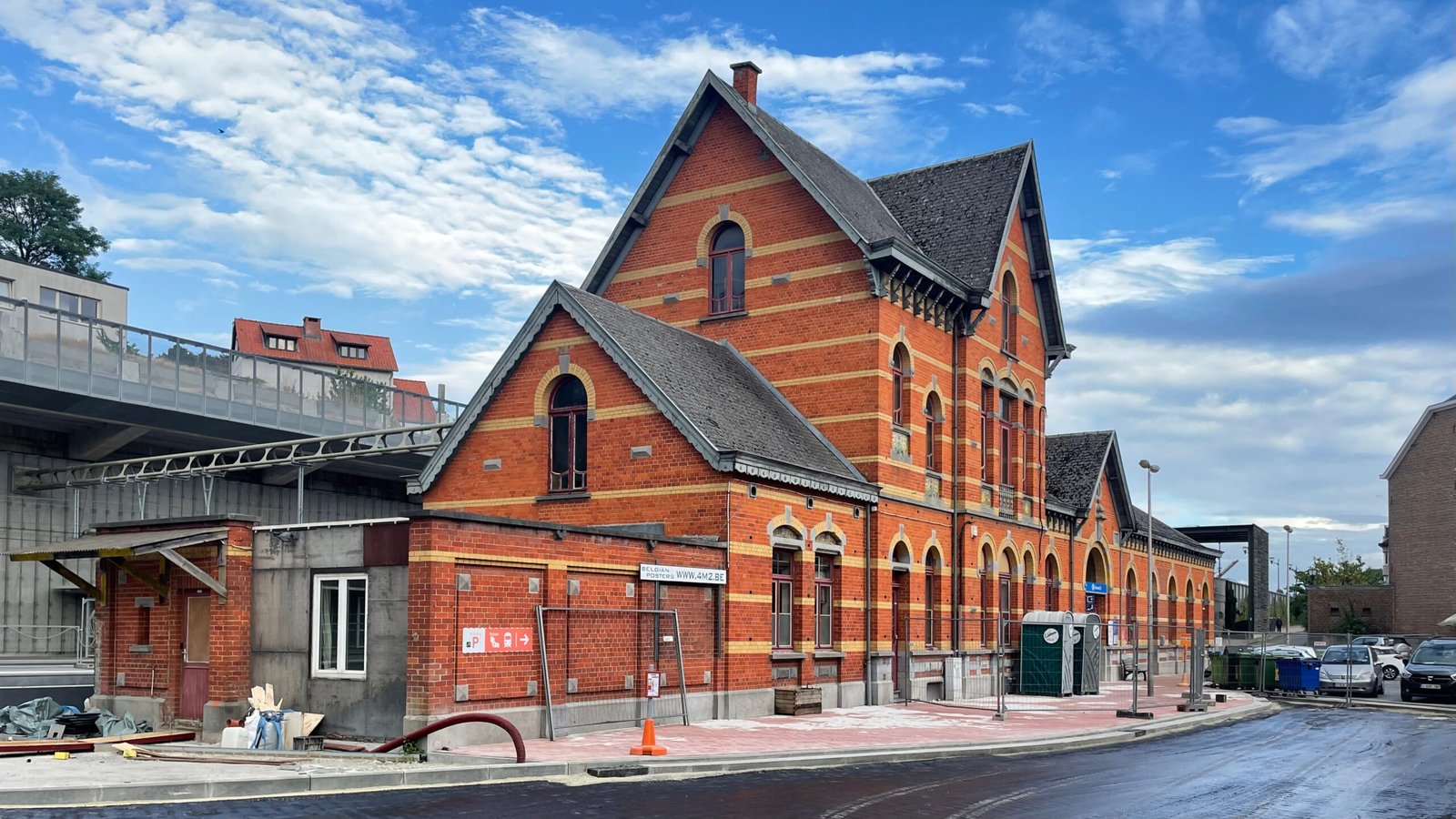
A late 19th-century railway station serving the Brussels–Namur line, Genval connects the Walloon Brabant region to Belgium’s capital and beyond.
At a glance
Genval railway station opened in 1889 as part of railway line 161, one of Belgium’s major regional connections. The station remains in daily operation, managed by the National Railway Company of Belgium (SNCB/NMBS).
History
The station was established in 1889 to serve the growing transportation needs between Brussels and Namur. It sits on railway line 161, a strategic corridor that has linked Walloon Brabant to the capital for over a century.
What you see
The station reflects the functional railway architecture of the late 19th century. As a working transport hub, it retains its essential character as a passenger facility on a major regional line.
Cultural significance
Genval station represents a crucial phase in Belgian railway development, when lines were extended beyond the capital to strengthen connections with provincial towns and facilitate regional commerce and travel.
Key facts
- Country: Belgium
- City: Rixensart
- Opened: 1889
- Railway line: Line 161 (Brussels–Namur)
- Operator: SNCB/NMBS (National Railway Company of Belgium)
- Coordinates: 50.72555556, 4.51527778
Practical information & getting there
Genval station is served by regional trains on the Brussels–Namur line. For current schedules and ticketing, consult SNCB/NMBS directly. The station is located in Rixensart, in the Walloon Brabant region of Belgium.
Sources & resources
- Genval railway station – Wikipedia
- Cultural Heritage Online
Find it on the map
See this place and what’s around it →📷 Become a Cultural Heritage Online photographer
Share your photos of places: they stay published under your name as the author. The more they're seen, the more you get noticed — and soon a contest will reward the most appreciated photos.
Log in or sign up free to add a photoIs this page about you?
This page is read by travellers and heritage enthusiasts who find it on Google. Tell us how you are connected to this place and we will take it from there.