

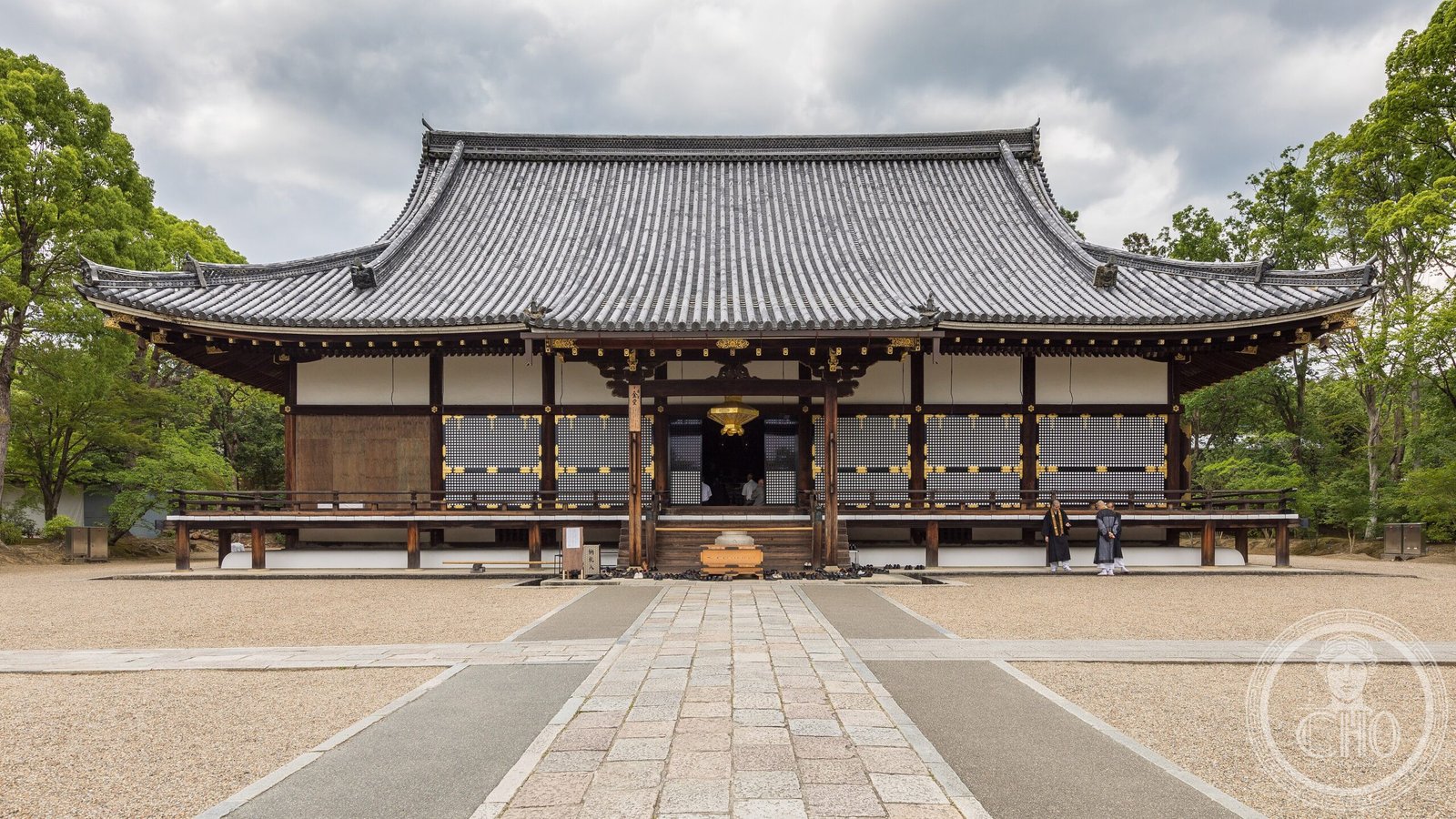
The head temple of the Omuro school of Shingon Buddhism, Ninna-ji stands as an imperial sanctuary in western Kyoto, renowned for its cherry blossoms and its role as the birthplace of the Omuro-ryu school of ikebana.
At a glance
Ninna-ji was founded in AD 888 by Emperor Uda and later reconstructed in the 17th century. For centuries, it served as a monzeki temple—a Buddhist temple administered by members of the imperial family—earning the designation “Omuro Gosho” (Omuro Imperial Palace) until the Meiji Restoration.
History
Emperor Uda established Ninna-ji in 888, establishing it as a center of imperial Buddhist practice. The temple’s deep connections to the ruling family transformed it into one of Japan’s most significant monzeki temples. Following the upheaval of the Meiji Restoration, the temple shed its imperial palace status but retained its spiritual authority as head of the Omuro school.
What you see
Much of the present-day temple complex dates to the 17th century reconstruction. The Imperial Palace Gardens remain a focal point, designated as a nationally protected Place of Scenic Beauty. The grounds are particularly celebrated during spring, when the Omuro Cherry Blossoms—also nationally designated—transform the temple into a sea of pale blooms.
Cultural significance
Ninna-ji ranks among Japan’s paramount centers of flower arrangement tradition. Emperor Uda founded the Omuro-ryu school of ikebana here, a practice that continues to define the temple’s cultural mission. The site represents the intersection of imperial patronage, Buddhist devotion, and Japanese aesthetic refinement. Its designation as part of the Historic Monuments of Ancient Kyoto, a UNESCO World Heritage Site, reflects its importance to Japanese heritage.
Key facts
- Country: Japan
- City: Kyoto
- Founded: AD 888 by Emperor Uda
- Reconstructed: 17th century
- Status: Head temple of the Omuro school, Shingon Sect
- UNESCO: Historic Monuments of Ancient Kyoto World Heritage Site
- National designations: Omuro Cherry Blossoms and Imperial Palace Gardens (Place of Scenic Beauty); Imperial Palace site (National Historic Site)
- Coordinates: 35.0311, 135.7138
Practical information & getting there
Ninna-ji is located in western Kyoto. The temple is renowned as a premier sakura (cherry blossom) viewing destination in spring. For specific hours, admission fees, and access details, consult the temple’s official resources or local Kyoto tourism information before your visit.
Sources & resources
Find it on the map
See this place and what’s around it →📷 Become a Cultural Heritage Online photographer
Share your photos of places: they stay published under your name as the author. The more they're seen, the more you get noticed — and soon a contest will reward the most appreciated photos.
Log in or sign up free to add a photoIs this page about you?
This page is read by travellers and heritage enthusiasts who find it on Google. Tell us how you are connected to this place and we will take it from there.