

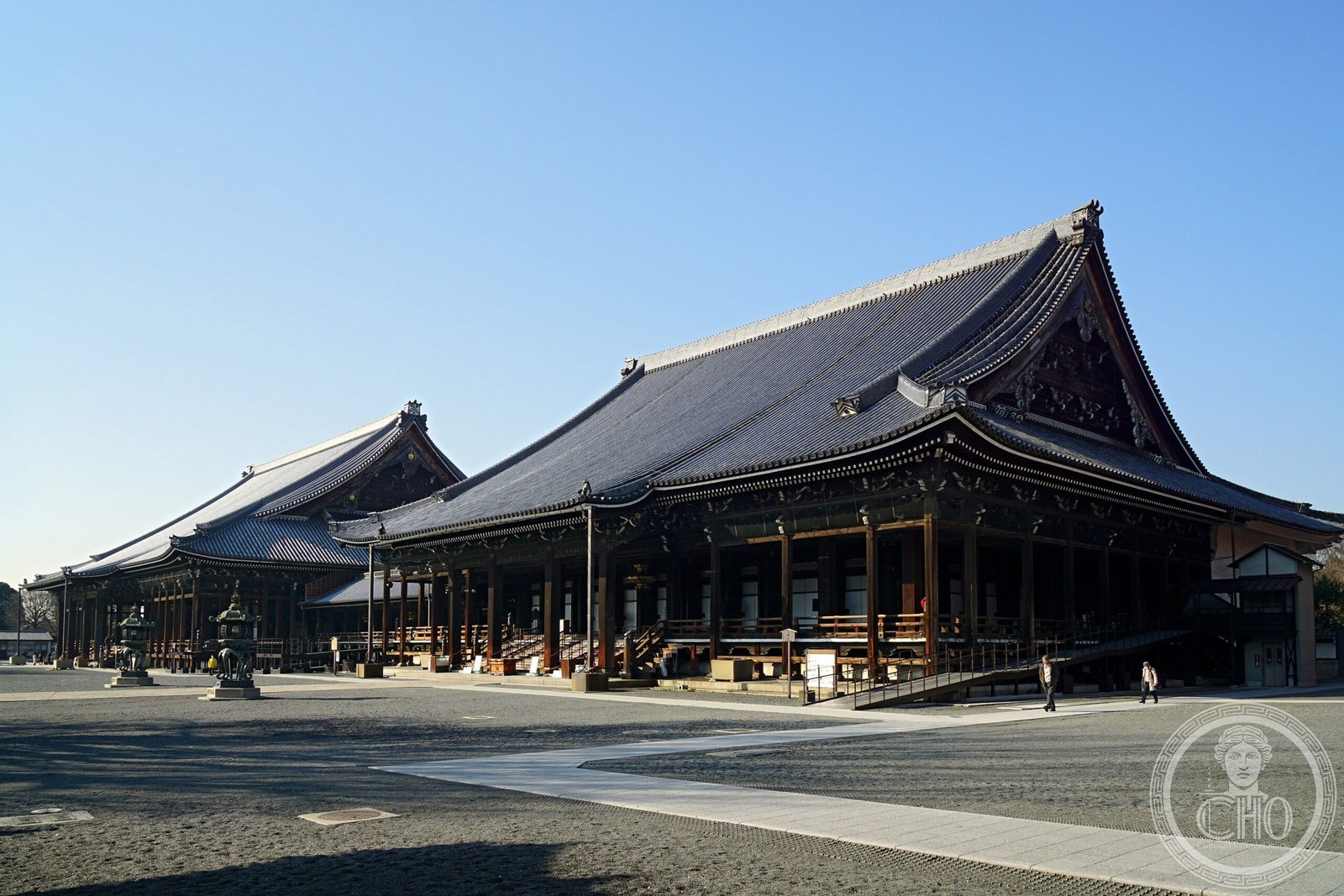
One of Kyoto’s two great Jōdo Shinshū temple complexes, Nishi Hongan-ji anchors the Hongwanji-ha subsect and preserves an exceptional array of buildings spanning the Azuchi–Momoyama and early Edo periods.
At a glance
Nishi Hongan-ji stands in Shimogyō-ku as the institutional and architectural heart of the Jodo Shinshu Hongwanji-ha tradition. Its seven National Treasure structures showcase Japanese design across residential, liturgical, and performance spaces—from ornate halls to intimate studies and a Noh stage.
History
The temple’s spiritual lineage reaches back to the 14th century, but Nishi Hongan-ji took its current form in 1591. This strategic establishment positioned it as a major institutional presence during Japan’s early modern consolidation. Alongside Higashi Hongan-ji—the rival Ōtani-ha head temple—it anchors Kyoto’s Pure Land Buddhist landscape.
What you see
Seven structures earned National Treasure status across three categories. Sacred buildings include the karamon gate, Goei-dō and Amida halls. Residential quarters showcase the flying Cloud Pavilion, shoin study, and the Black study hall with its Denrō gallery. The north Noh stage represents a distinct architectural category. These buildings collectively illustrate the refinement and spatial sophistication of 17th- and 18th-century Japanese construction.
Cultural significance
Nishi Hongan-ji embodies the intersection of religious authority, domestic aesthetics, and performance culture in early modern Japan. Its preservation across centuries—when many temples faced destruction or renovation—makes it an irreplaceable record of architectural and artistic practice. The 1994 World Heritage designation recognized it as part of Historic Monuments of Ancient Kyoto.
Key facts
- Country: Japan
- City: Kyoto (Shimogyō-ku)
- Established in current location: 1591
- Origins: 14th century
- UNESCO status: World Heritage Site (1994)
- Coordinates: 34.992, 135.7516
Practical information & getting there
Nishi Hongan-ji remains an active temple. Contact the institution directly for visiting hours, access policies, and any restrictions on photography or entry to specific halls. Public information is available through Kyoto tourism resources and the temple’s official channels.
Sources & resources
Find it on the map
See this place and what’s around it →📷 Become a Cultural Heritage Online photographer
Share your photos of places: they stay published under your name as the author. The more they're seen, the more you get noticed — and soon a contest will reward the most appreciated photos.
Log in or sign up free to add a photoIs this page about you?
This page is read by travellers and heritage enthusiasts who find it on Google. Tell us how you are connected to this place and we will take it from there.