
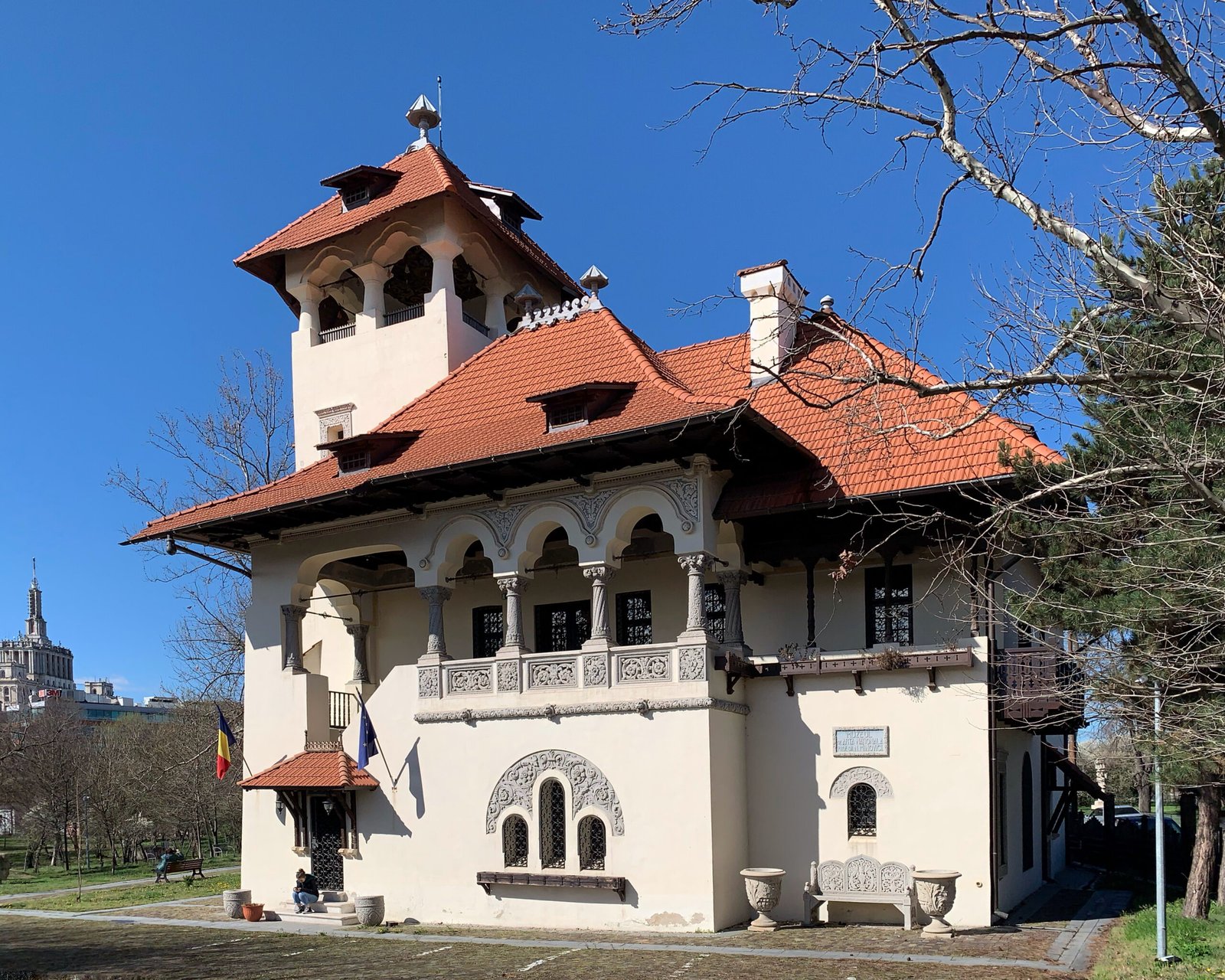
A pioneering ethnographic institution housed in a Romanian Revival villa, preserving the nation’s traditional crafts and material culture.
At a glance
Nicolae Minovici’s private retreat became Bucharest’s first dedicated folk art museum, displaying a rich collection of Romanian ethnographic objects within an architect-designed villa in the Băneasa district.
History
Nicolae Minovici commissioned this residence between 1906 and 1907 as a retreat on what was then Bucharest’s outskirts. The owner entrusted the design to his friend Cristofi Cerchez, who shaped the building according to Romanian Revival principles. Over time, the house transformed into an institution preserving folk traditions—becoming the city’s first museum dedicated entirely to folk art and ethnographic heritage. The Romanian Ministry of Culture and Religious Affairs recognizes the building as a historic monument.
What you see
Cerchez’s design embodies the Romanian Revival style, an architectural movement that drew inspiration from vernacular and historical Romanian building traditions. The villa demonstrates the period’s characteristic approach to adapting traditional forms for elite domestic architecture.
Cultural significance
The museum represents an early institutional effort to document and celebrate Romanian folk traditions. Its expansive ethnographic collection offers insight into the material culture, craftsmanship, and daily life of Romanian communities, making it a crucial repository of national cultural knowledge.
Key facts
- Country: Romania
- City: Bucharest (Băneasa district)
- Address: 1 Dr. Nicolae Minovici Street
- Coordinates: 44.4843, 26.0753
- Built: 1906–1907
- Architect: Cristofi Cerchez
- Architectural style: Romanian Revival
- Historic monument status: Protected by Romania’s Ministry of Culture and Religious Affairs
Practical information & getting there
The museum is located at 1 Dr. Nicolae Minovici Street in the Băneasa district of northern Bucharest. For current visiting hours, admission fees, and guided-tour availability, consult the museum directly or local tourism resources.
Sources & resources
Find it on the map
See this place and what’s around it →📷 Become a Cultural Heritage Online photographer
Share your photos of places: they stay published under your name as the author. The more they're seen, the more you get noticed — and soon a contest will reward the most appreciated photos.
Log in or sign up free to add a photoIs this page about you?
This page is read by travellers and heritage enthusiasts who find it on Google. Tell us how you are connected to this place and we will take it from there.