
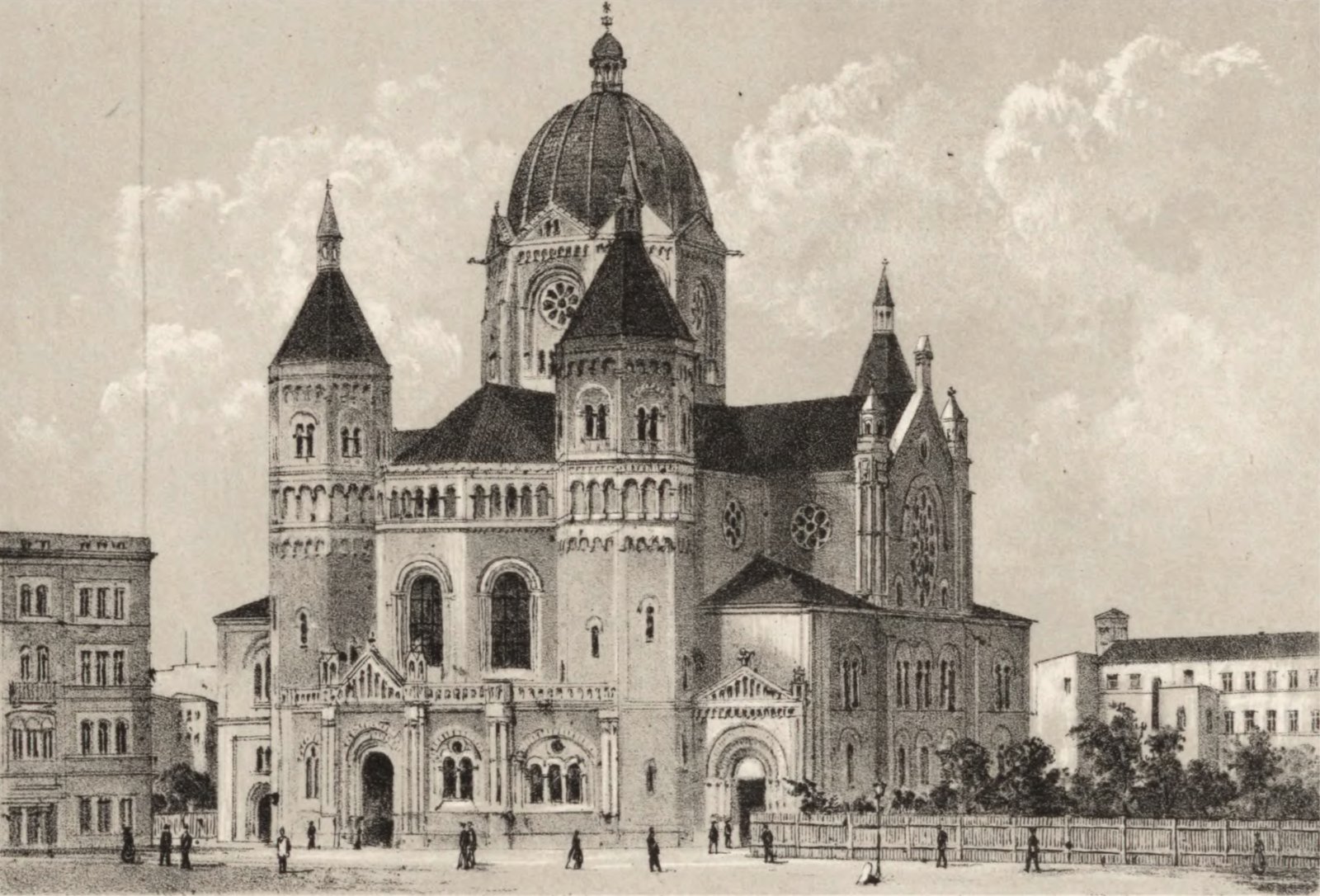
A monumental Romanesque Revival synagogue that served as a centre of Reform Judaism in Breslau before its destruction during Kristallnacht in 1938.
At a glance
The New Synagogue stood among the largest synagogues in the German Empire. Designed by Edwin Oppler and completed in 1872, it embodied the architectural ambitions and cultural confidence of Breslau’s Jewish community during the 19th century.
History
Constructed in the latter half of the 19th century, the synagogue became a focal point for Reform Jewish practice in Breslau. On the night of 9–10 November 1938, during the Kristallnacht pogrom, the building was destroyed—one of countless Jewish institutions razed across Nazi Germany during this violent campaign.
What you see
Edwin Oppler designed the synagogue in the Romanesque Revival style, a choice that reflected both contemporary architectural tastes and the community’s desire for a monumental house of worship. The building’s scale and stylistic confidence testified to the prominence of Breslau’s Jewish congregation.
Cultural significance
The New Synagogue was instrumental in advancing Reform Judaism in Breslau and represented the integration and achievements of German Jewry before the Nazi era. Its destruction marked a catastrophic rupture in the city’s cultural and religious life.
Key facts
- Architect: Edwin Oppler
- Completed: 1872
- Style: Romanesque Revival
- Location: Wrocław, Poland (formerly Breslau, Germany)
- Coordinates: 51.10453611, 17.02834444
- Destroyed: 9–10 November 1938 (Kristallnacht)
Practical information & getting there
The synagogue no longer stands. Wrocław is reached by rail and air; the former site in the city centre is accessible to visitors interested in tracing the history of the city’s Jewish heritage.
Sources & resources
Find it on the map
See this place and what’s around it →📷 Become a Cultural Heritage Online photographer
Share your photos of places: they stay published under your name as the author. The more they're seen, the more you get noticed — and soon a contest will reward the most appreciated photos.
Log in or sign up free to add a photoIs this page about you?
This page is read by travellers and heritage enthusiasts who find it on Google. Tell us how you are connected to this place and we will take it from there.