
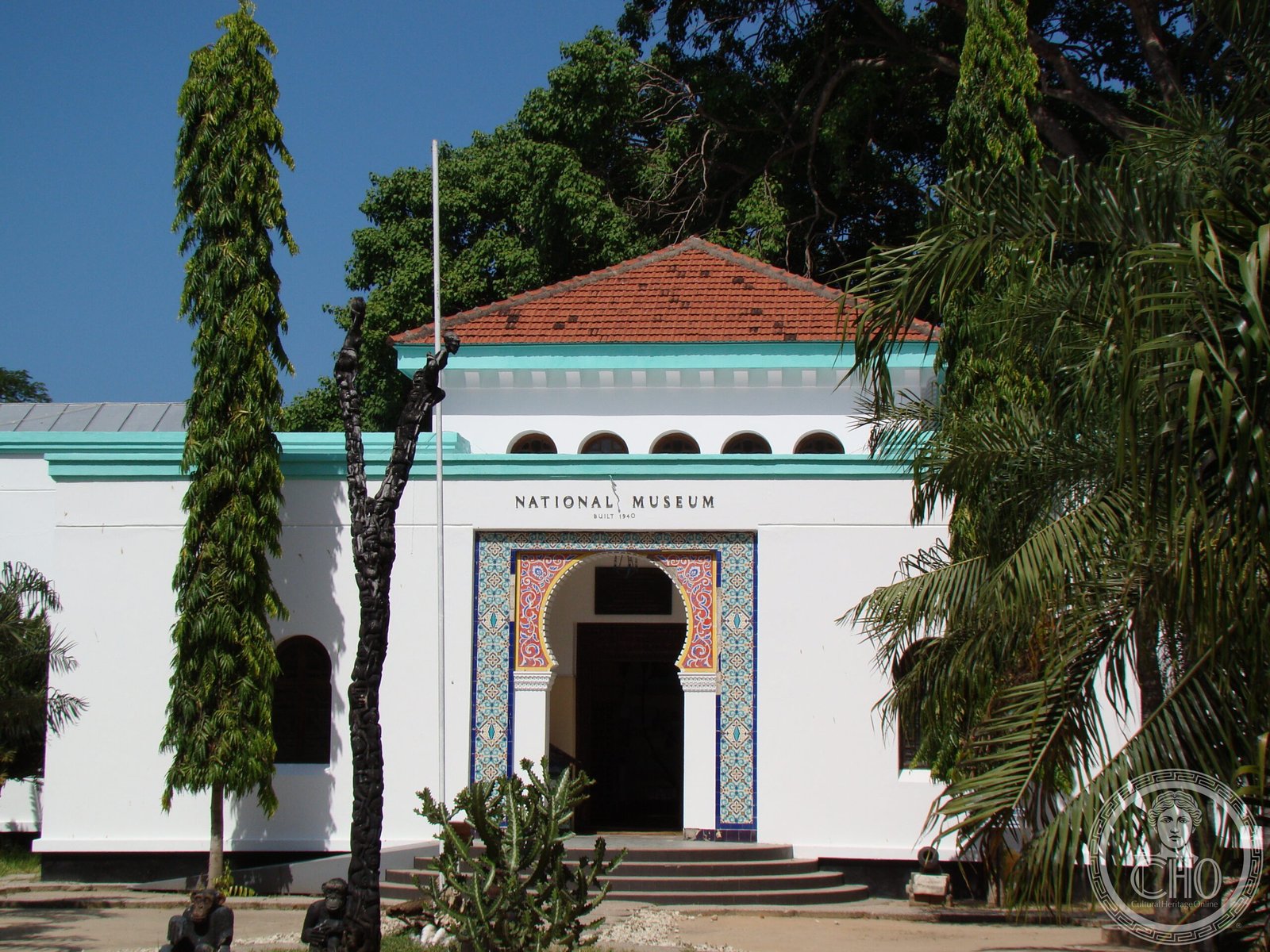
East Africa’s most important repository of human origins, housing original fossils from Olduvai Gorge that helped establish Africa as the cradle of humanity, in a dignified colonial Modernist building founded in 1940.
At a glance
- Type
- National Museum
- Period
- 1940 (opened as George V Memorial Museum)
- Style
- British Colonial Modernism
- Location
- Shaaban Robert Street, Dar es Salaam, Tanzania
- Coordinates
- -6.8128, 39.2913
- Architect
- H.A. de Chastel (British colonial administration)
Overview
The National Museum of Tanzania in Dar es Salaam is the custodian of the most significant archaeological collections in East Africa. Founded in 1940 during British colonial rule, it was originally named the George V Memorial Museum in honour of the long reign of King George V. The original building embodies the understated British Colonial Modernist aesthetic: white stuccoed walls, shaded verandas, and careful timber detailing that acknowledges the tropical climate while projecting institutional authority. Today the museum serves as Tanzania’s primary window into its vast and layered past, from the earliest traces of human life to the post-independence era.
History
Established by the British colonial government in 1940, the museum was conceived as both a cultural institution and a monument to imperial continuity, commemorating King George V who had died in 1936. In its early decades it focused on natural history and ethnographic collections from Tanganyika. After Tanzanian independence in 1961 the institution was renamed and its mandate broadened to embrace national identity and archaeological heritage. The museum’s profile rose dramatically when it incorporated material from the Olduvai Gorge excavations led by Louis and Mary Leakey, whose discoveries in the 1950s and 1960s fundamentally rewrote the story of human evolution by demonstrating that our earliest ancestors walked in East Africa millions of years ago.
Architecture and Design
The original museum building reflects British colonial architectural practice in East Africa during the interwar period: a pragmatic, dignified structure designed to function in a tropical climate without abandoning the formal conventions expected of a public institution. Thick stuccoed masonry walls provide thermal mass; deep eaves and covered verandas shade windows and circulation routes from direct sun. The building’s massing is horizontal and symmetrical, projecting stability. Subsequent additions have expanded the floor area while attempting to respect the character of the original block. The overall campus sits in parklike grounds near the city centre, making it an accessible civic landmark.
Cultural significance
The museum’s most extraordinary holdings are the original fossil specimens and casts from Olduvai Gorge, including material related to Homo habilis and Australopithecus boisei, as well as casts of the 3.6-million-year-old Laetoli footprints — the oldest known trace of bipedal hominins walking upright. These objects are not merely Tanzanian heritage: they are among the most important artifacts of the human species. Beyond palaeontology, the museum preserves extensive collections of Swahili coastal culture, Arab and Portuguese trading-era material, East African ethnography, and the political history of the independence movement and the TANU party that brought Julius Nyerere to power.
Visiting today
The museum is open Tuesday through Sunday. Admission is charged, with separate rates for Tanzanian nationals and foreign visitors. The Olduvai Gorge gallery is the principal draw, but the Swahili and colonial history galleries reward extended visits. The museum shop stocks publications on Tanzanian archaeology and natural history. Allow two to three hours for a thorough visit.
Getting there
The National Museum is located on Shaaban Robert Street in central Dar es Salaam, approximately one kilometre from the waterfront. From Julius Nyerere International Airport, taxis take about 30 minutes in normal traffic. Dala-dala minibuses operate throughout the city centre. Ride-hailing apps (Bolt, Uber) operate reliably in Dar es Salaam.
Sources and resources
Find it on the map
See this place and what’s around it →Record researched and written by Luigi De Marchi for Cultural Heritage Online, 2026.
📷 Become a Cultural Heritage Online photographer
Share your photos of places: they stay published under your name as the author. The more they're seen, the more you get noticed — and soon a contest will reward the most appreciated photos.
Log in or sign up free to add a photoIs this page about you?
This page is read by travellers and heritage enthusiasts who find it on Google. Tell us how you are connected to this place and we will take it from there.