

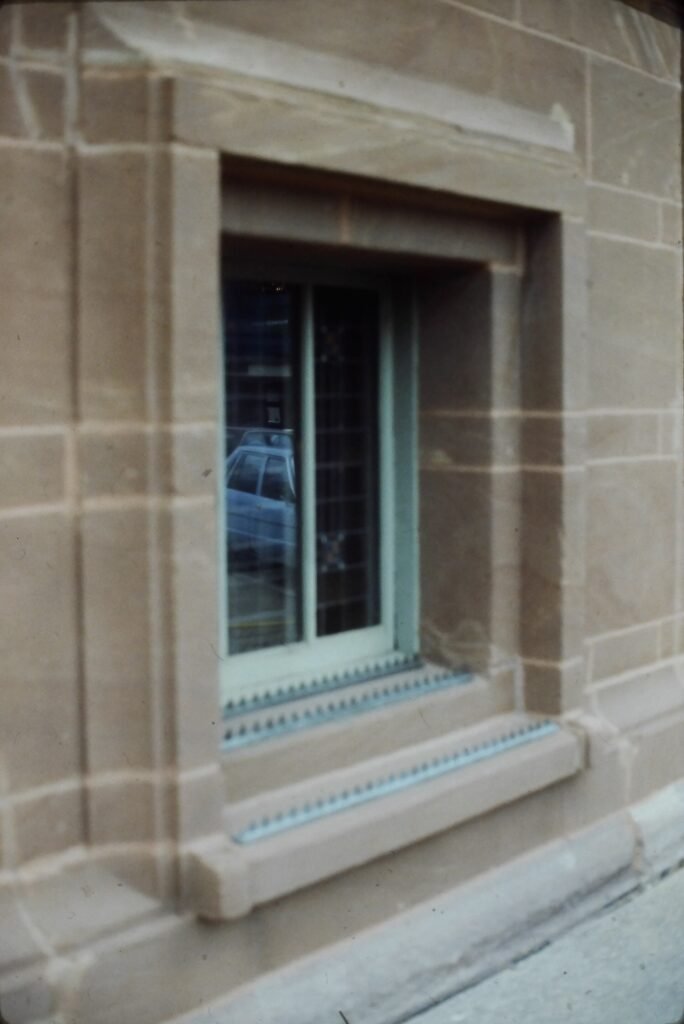
A plain brick cube on a prairie square, lined inside with stained glass and gold like a treasure chest.
At a glance
In the small Minnesota town of Owatonna, Louis Sullivan built a bank in 1908 that became the first of his celebrated “jewel boxes”. From the square it is a cube of warm brick with two great arched windows. Inside, the banking hall glows with stained glass, terracotta and gold-leaf ornament, proof that fine architecture need not stay in the big city.
Key facts
- Location: 101 North Cedar Avenue, Owatonna, Minnesota
- Architect: Louis Sullivan
- Built: 1908
- Type: the first of Sullivan’s small-town “jewel box” banks
- Style: Sullivanesque (American Art Nouveau ornament)
History
By 1908 Sullivan’s big-city commissions had dried up, and a reform-minded banker in Owatonna hired him to build a bank that ordinary farmers would trust and enjoy. He made it a strongbox with a soul.
The success here led to a series of similar small banks across the Midwest. The Owatonna bank, carefully restored, is still in use and is regarded as one of his finest late works.
What you see
Outside, the cube is severe: brick, a wide arch with a half-circle of stained glass, a band of ornament at the cornice. Inside, the hall is a casket of colour, green and gold terracotta, stained-glass windows and great cast-iron chandeliers. The contrast of plain box and rich interior is the whole idea.
Practical information
- Open: a working bank; interior viewable in business hours
- Cost: free to enter the banking hall
- Best for: the stained glass and gold ornament inside
- Time needed: 15–20 minutes
Getting there
The bank faces the Central Park square in downtown Owatonna, in southern Minnesota, about an hour’s drive south of Minneapolis.
Nearby
- Owatonna Central Park — the town square the bank faces
- Minneapolis — the city to the north, about an hour away
Sources
- Encyclopædia Britannica / Wikipedia — National Farmers’ Bank of Owatonna
- National Park Service — National Historic Landmark record
- Wikimedia Commons — image source and licence
Find it on the map
See this place and what’s around it →Record researched and written by Luigi De Marchi for Cultural Heritage Online, 2026.
📷 Become a Cultural Heritage Online photographer
Share your photos of places: they stay published under your name as the author. The more they're seen, the more you get noticed — and soon a contest will reward the most appreciated photos.
Log in or sign up free to add a photoIs this page about you?
This page is read by travellers and heritage enthusiasts who find it on Google. Tell us how you are connected to this place and we will take it from there.