
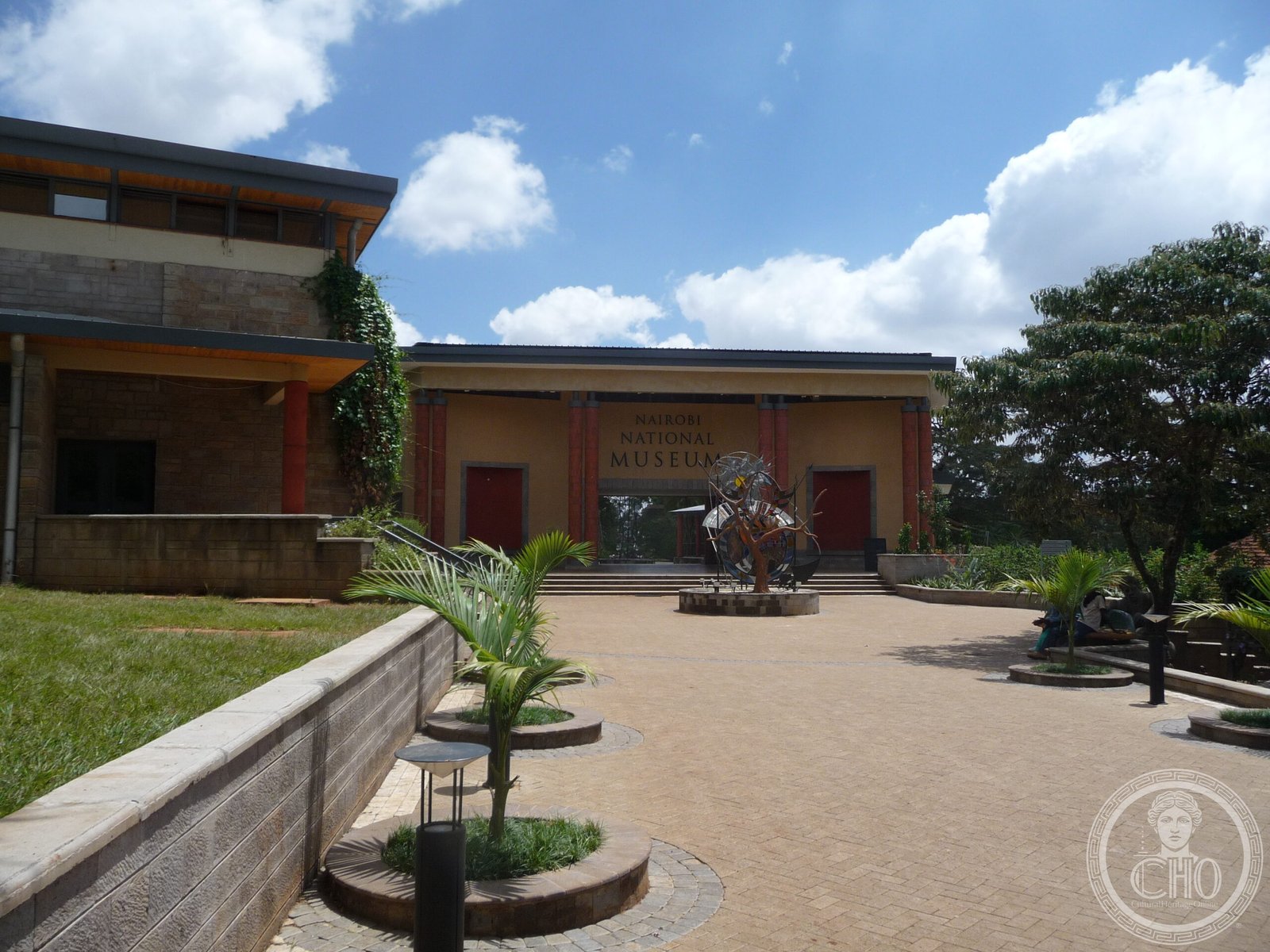
The Nairobi National Museum is Kenya’s principal public museum and one of the most significant natural history and cultural institutions in Africa. Founded by the East Africa Natural History Society in 1909 and housed in this purpose-built facility since 1929, the museum holds collections of extraordinary breadth: the fossil remains of Turkana Boy — the most complete skeleton of Homo erectus ever discovered, dating to 1.5 million years ago — the world’s largest collection of Kenyan birds, extensive displays of Kenyan ethnography and art, and a nationally significant collection documenting the evolution of life in East Africa. The building itself is a standard example of British colonial institutional architecture: a symmetrical facade, shaded verandas, and a pitched roof — dignified, functional, and entirely of its era. Expanded many times since 1929, the original structure remains the historic nucleus of a campus that now covers several hectares in the Museum Hill neighbourhood of central Nairobi. The museum is operated by the National Museums of Kenya, the custodian of all of Kenya’s publicly held cultural and natural heritage.
At a glance
- Type
- National museum (natural history, cultural heritage)
- Period
- Founded 1909; current building 1929
- Style
- British Colonial / Neoclassical
- Location
- Museum Hill, Nairobi, Kenya
- Coordinates
- 1.2731° S, 36.8108° E
- Architect(s)
- East Africa Natural History Society commission
Overview
The Nairobi National Museum sits on Museum Hill, a short distance north of the city centre, within a campus that includes the Snake Park, a botanical garden, and the Museum of Modern Art (NMK). The main building houses permanent galleries covering natural history — mammals, birds, reptiles, marine life — Kenyan cultural heritage across all of Kenya’s 42+ ethnic groups, and palaeontology, including the Turkana Boy display. The Cradle of Mankind gallery presents Kenya’s extraordinary fossil record in context. The museum also holds important collections of Kenyan art, including works by Joy Adamson (author of Born Free) and a significant collection of Maasai and Kikuyu material culture. The museum campus receives over 200,000 visitors annually.
History
The East Africa Natural History Society was founded in 1909 by a group of British colonial officials and naturalists to document the flora, fauna, and geology of British East Africa. The collection was initially housed in rented premises; the current Museum Hill building opened in 1929. The museum’s profile rose dramatically in the second half of the 20th century through the work of the Leakey family — Louis Leakey, Mary Leakey, and Richard Leakey — who used it as the base for their transformative palaeontological research in the Rift Valley. The discovery of Turkana Boy (KNM-WT 15000) in 1984 by Richard Leakey’s team at Lake Turkana brought the museum international renown. After Kenyan independence in 1963, the institution became the National Museum of Kenya; it was expanded and modernised with a major renovation completed in 2008.
Architecture & Design
The 1929 building is a competent example of British colonial institutional design — symmetrical, solid, and deliberately unpretentious. The main facade presents a central projecting entrance bay flanked by wings under a hipped roof, with shaded verandas running along the ground floor in the colonial tropical idiom. The material is rendered masonry, painted white, with minimal classical detail at the entrance. The building was designed for function rather than grandeur: wide doorways for specimen transport, high-ceilinged galleries for display cases and skeletal mounts, and a plan that could be extended as the collection grew. Subsequent expansions in the 1960s, 1980s, and the major 2005–2008 renovation by architect Bob Mutiso substantially enlarged the footprint while preserving the historic 1929 nucleus as the main entrance wing.
Cultural significance
The Nairobi National Museum holds Kenya’s most important claim on global scientific attention: the fossil record of human evolution from the Rift Valley. The Turkana Boy skeleton, discovered at Nariokotome in 1984, is the most complete early hominin skeleton ever found and has been central to debates about the anatomy, locomotion, and development of Homo erectus. The museum’s palaeontological collections, built through a century of Leakey family fieldwork, document the longest continuous sequence of human evolutionary history anywhere on earth. Beyond science, the museum is Kenya’s institutional memory — the repository of the material culture, natural history knowledge, and artistic heritage of all of Kenya’s peoples. It is the country’s primary cultural institution and a mandatory stop on any serious engagement with Kenyan heritage.
Visiting today
The Nairobi National Museum is open daily from 09:30 to 17:30, including public holidays. Admission fees apply (reduced rates for children and Kenyan residents). The campus includes the main museum building, the Snake Park (live reptile displays), a botanical garden of indigenous Kenyan plants, and a café. Audio guides are available in English. The Cradle of Mankind gallery, housing the Turkana Boy display, is the most visited exhibit; arrive early for less crowded viewing. The museum shop sells quality Kenyan crafts, books, and ethnographic reproductions. Photography is permitted in most galleries without flash.
Getting there
The Nairobi National Museum is located on Museum Hill Road, approximately 2 kilometres northwest of the Nairobi city centre (Kenyatta Avenue). It is reachable by matatu (shared minibus) from the city centre via Museum Hill Road, or by taxi and ride-hailing services (Uber, Bolt, Little Cab) in approximately 10–15 minutes from central Nairobi. The museum has on-site car parking. From Nairobi’s Jomo Kenyatta International Airport, the journey takes 30–60 minutes depending on traffic. Navigation apps reliably find “Nairobi National Museum” or “NMK Museum Hill.”
Sources & resources
Find it on the map
See this place and what’s around it →Record researched and written by Luigi De Marchi for Cultural Heritage Online, 2026.
📷 Become a Cultural Heritage Online photographer
Share your photos of places: they stay published under your name as the author. The more they're seen, the more you get noticed — and soon a contest will reward the most appreciated photos.
Log in or sign up free to add a photoIs this page about you?
This page is read by travellers and heritage enthusiasts who find it on Google. Tell us how you are connected to this place and we will take it from there.