

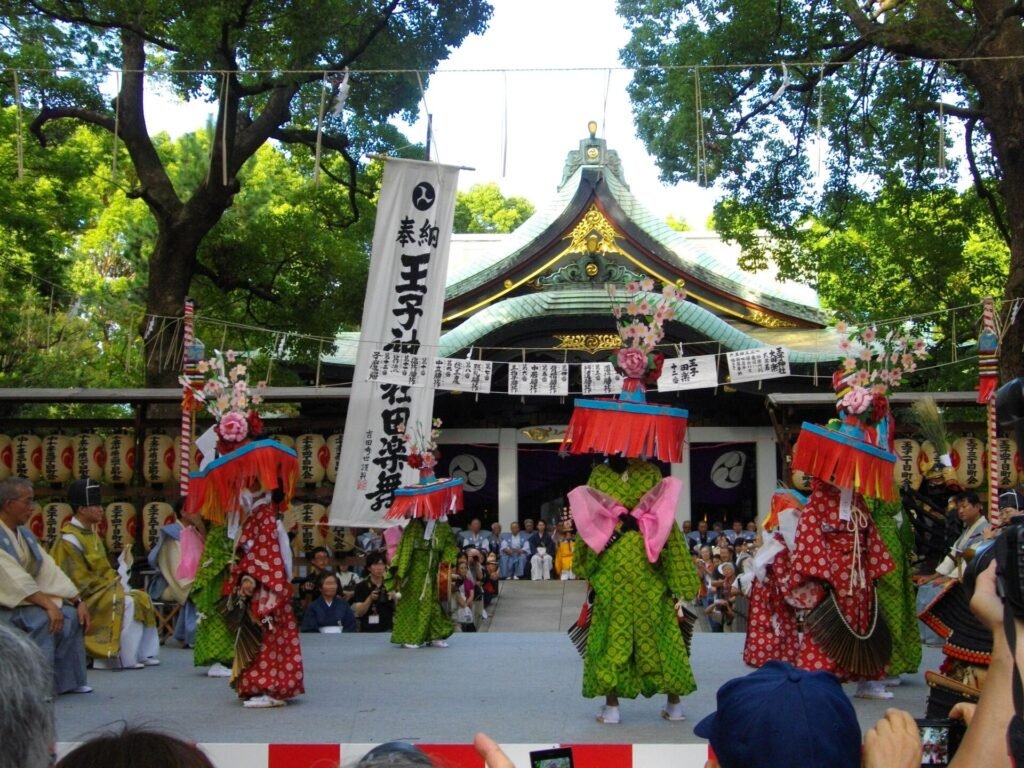
A rhythmic harvest dance rooted in Shinto ritual, dengaku emerged from rice-planting ceremonies in rural Japan and evolved into a sophisticated performing art. Dancers strike wooden clappers in synchronized patterns, their movements a living echo of gratitude for the harvest.
In UNESCO’s words
Nachi no Dengaku is a Japanese folk performing art with a deep connection to Kumano Sanzan, a sacred site in Nachisanku. It is performed on a stage inside Kumano Nachi Shrine during the annual Nachi Fire Festival, celebrated on 14 July. It is a key component of the festival and takes the form of ritual dancing to flute music and drums for an abundant harvest of rice crops. Nachi no Dengaku is performed by one flute player, four drummers with drums tied around their waists, four players of Binzasara, a musical string instrument, and two others. Eight to ten performers dance to the music in a variety of formations. There are 22 repertoires, each performed in 45 minutes. The dance is currently performed and transmitted by the Association for the Preservation of Nachi Dengaku, consisting of local residents of Nachisanku. Nachi no Dengaku is transmitted against a backdrop of a belief in Kumano Sanzan and its shrine. The local people and transmitters respect and worship the shrine as a source of mental and spiritual comfort.
Official description, UNESCO Intangible Cultural Heritage List — Nachi no Dengaku, a religious performing art held at the Nachi fire festival
At a glance
Nachi no Dengaku is a Japanese folk performing art performed annually at Kumano Nachi Shrine during the Nachi Fire Festival on 14 July. Dancers and musicians perform together in ritual form, their movements and music intended to bring about an abundant rice harvest. The tradition is inseparable from Kumano Sanzan, the sacred site where it takes place.
Origins & history
Nachi no Dengaku emerged from a belief system centered on Kumano Sanzan and its shrine. The local people of Nachisanku have maintained and transmitted the practice across generations, viewing the shrine as a source of spiritual and mental comfort. This reverence for the sacred site continues to shape how the tradition is understood and performed.
The practice
The performance involves eleven musicians and dancers working together: one flute player, four drummers with drums tied at the waist, four players of Binzasara (a string instrument), and two others, with eight to ten additional dancers performing in various formations. The repertoire consists of 22 pieces, each lasting approximately 45 minutes. The Association for the Preservation of Nachi Dengaku, made up of local residents, currently performs and transmits the tradition.
Cultural significance
Nachi no Dengaku holds deep spiritual meaning for the community of Nachisanku, embodying their connection to Kumano Sanzan and their dependence on the harvest. The practice is sustained by local belief and devotion to the shrine, which the community members regard as central to their wellbeing. Transmission of the tradition by the preservation association ensures continuity of this cultural expression.
Key facts
- Country: Japan
- Inscribed: 2012
- UNESCO list: Representative List of the Intangible Cultural Heritage of Humanity
- UNESCO reference: 00413
- UNESCO vocabulary: Festivals; Ritual dance; Sacred sites
- Map: Nachisanku — the locality named in UNESCO’s official description of this element
Where to experience it
Nachi no Dengaku is performed annually on 14 July during the Nachi Fire Festival at Kumano Nachi Shrine in Nachisanku. The tradition remains deeply rooted in the local community, with performances transmitted by the Association for the Preservation of Nachi Dengaku, whose members are residents of Nachisanku. Visitors who attend the festival encounter the full ritual: flute and drum music accompanied by dancers moving in varied formations across the shrine stage, each of the 22 repertoires unfolding over approximately 45 minutes. The performance maintains its original purpose as a prayer for abundant rice harvests, inseparable from worship at Kumano Sanzan.
Sources & resources
- UNESCO — official element page: Nachi no Dengaku, a religious performing art held at the Nachi fire festival
- UNESCO — open data record: Intangible Heritage List, reference 00413
- UNESCO — official photograph: Photograph of this element — Cultural Heritage Division, Wakayama Prefectural Board of Education — 2007 by Cultural Heritage Division, Wakayama Prefectural Board of Education
- Reference — Wikipedia (secondary): Dengaku — consulted as a secondary reference, not as confirmation
- Cultural Heritage Online: Our archive and city guides

Find it on the map
See this place and what’s around it →📷 Become a Cultural Heritage Online photographer
Share your photos of places: they stay published under your name as the author. The more they're seen, the more you get noticed — and soon a contest will reward the most appreciated photos.
Log in or sign up free to add a photo