
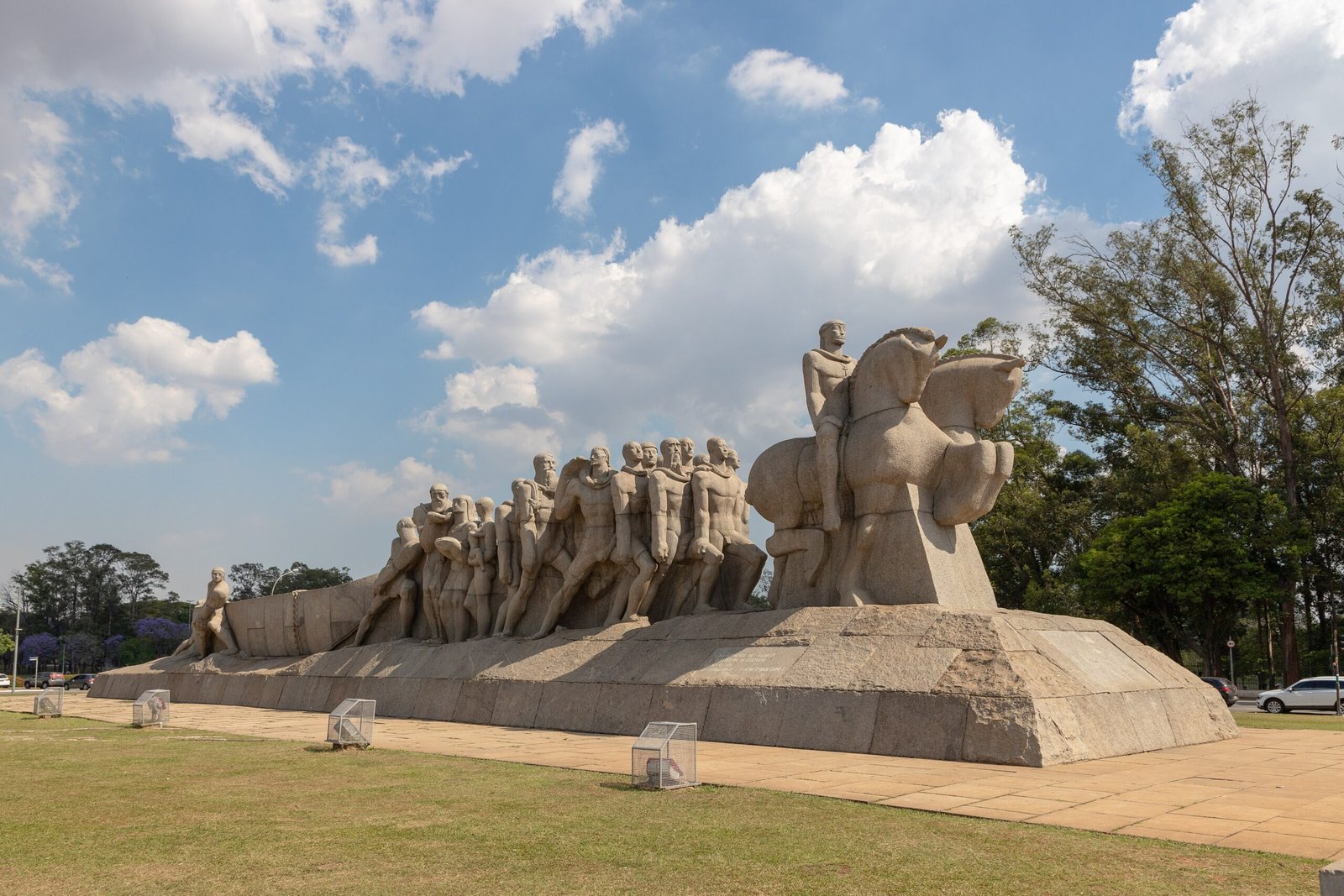
Victor Brecheret’s monumental granite sculpture celebrates the bandeirantes and their 17th-century expeditions into Brazil’s interior, anchoring the entrance to São Paulo’s iconic Ibirapuera Park.
At a glance
A commanding granite sculpture by Italian-Brazilian artist Victor Brecheret, this memorial stands in Praça Armando de Salles Oliveira opposite the Palácio 9 de Julho. Its scale and location have made it an unmistakable landmark in São Paulo’s urban landscape.
History
The São Paulo government commissioned the monument in 1921, recognizing the historical importance of the bandeiras—the settling expeditions that had expanded Portuguese colonial territory throughout the 17th century. Brecheret devoted over three decades to the work, completing it in 1954. The sculpture honors the bandeirantes, the expedition leaders and participants who drove inland exploration.
What you see
The work is executed entirely in granite, a material that emphasizes its permanence and weight. Its large-scale composition dominates the Praça Armando de Salles Oliveira, asserting a commanding presence at Ibirapuera Park’s entrance and shaping how visitors experience the city’s public realm.
Cultural significance
The monument represents a pivotal moment in São Paulo’s cultural identity—the celebration of the bandeirantes as architects of territorial expansion. Through Brecheret’s sculpture, the city memorializes a contested chapter of colonial history and asserts the bandeirantes’ place in Brazilian national memory.
Key facts
- Location: Moema District, São Paulo, Brazil
- Coordinates: -23.58, -46.6607
- Sculptor: Victor Brecheret (1894–1955)
- Material: Granite
- Commissioned: 1921
- Completed: 1954
Practical information & getting there
The monument is located in Praça Armando de Salles Oliveira at the entrance to Ibirapuera Park in the Moema district. As a major public landmark accessible from the park’s main approach, it is easily reached by public transport or car. The site is open to the public year-round.
Sources & resources
Find it on the map
See this place and what’s around it →📷 Become a Cultural Heritage Online photographer
Share your photos of places: they stay published under your name as the author. The more they're seen, the more you get noticed — and soon a contest will reward the most appreciated photos.
Log in or sign up free to add a photoIs this page about you?
This page is read by travellers and heritage enthusiasts who find it on Google. Tell us how you are connected to this place and we will take it from there.