
Montecatini Terme is the only Italian town among the eleven cities that make up the UNESCO-inscribed Great Spa Towns of Europe. Its Stabilimento Tettuccio, rebuilt in the late 1920s, still stages the ritual of the thermal cure inside a building that mixes Renaissance-revival grandeur with Art Nouveau decoration.
At a glance
Montecatini Terme sits in the Valdinievole plain in the province of Pistoia. Its sulphate-rich springs have drawn visitors since the fifteenth century, but the town as it appears today, with its long tree-lined avenues and grand thermal establishments, was largely shaped under Grand Duke Leopold II in the 1770s and then rebuilt during the Belle Époque and Fascist periods.
The waters come from several distinct springs on the edge of the plain, each with a different mineral composition; the Tettuccio spring is a sodium sulphate water traditionally used for liver and digestive complaints. Over the decades the town’s spa culture attracted figures such as Giuseppe Verdi, Giacomo Puccini, Igor Stravinsky, Henry James, and the Duke and Duchess of Windsor.
Key facts
- Location: Montecatini Terme, province of Pistoia, Tuscany
- Main building: Stabilimento Termale Tettuccio, Viale Verdi 71
- Architects: Ugo Giovannozzi and Pietro Pacci, 1925–1928
- Earlier history: springs first documented in a 1417 notarial deed; developed under Grand Duke Leopold II from 1771
- UNESCO status: inscribed in 2021 as part of the serial site Great Spa Towns of Europe (reference 1667), Montecatini Terme being the sole Italian component among eleven cities
History
The sulphate springs of Montecatini are first recorded in a 1417 deed transferring their rights to the Comune di Pescia, though the Medici family is said to have taken an interest in the waters somewhat earlier, with the family physician recommending the cure. Small-scale development continued under Medici patronage through the following centuries.
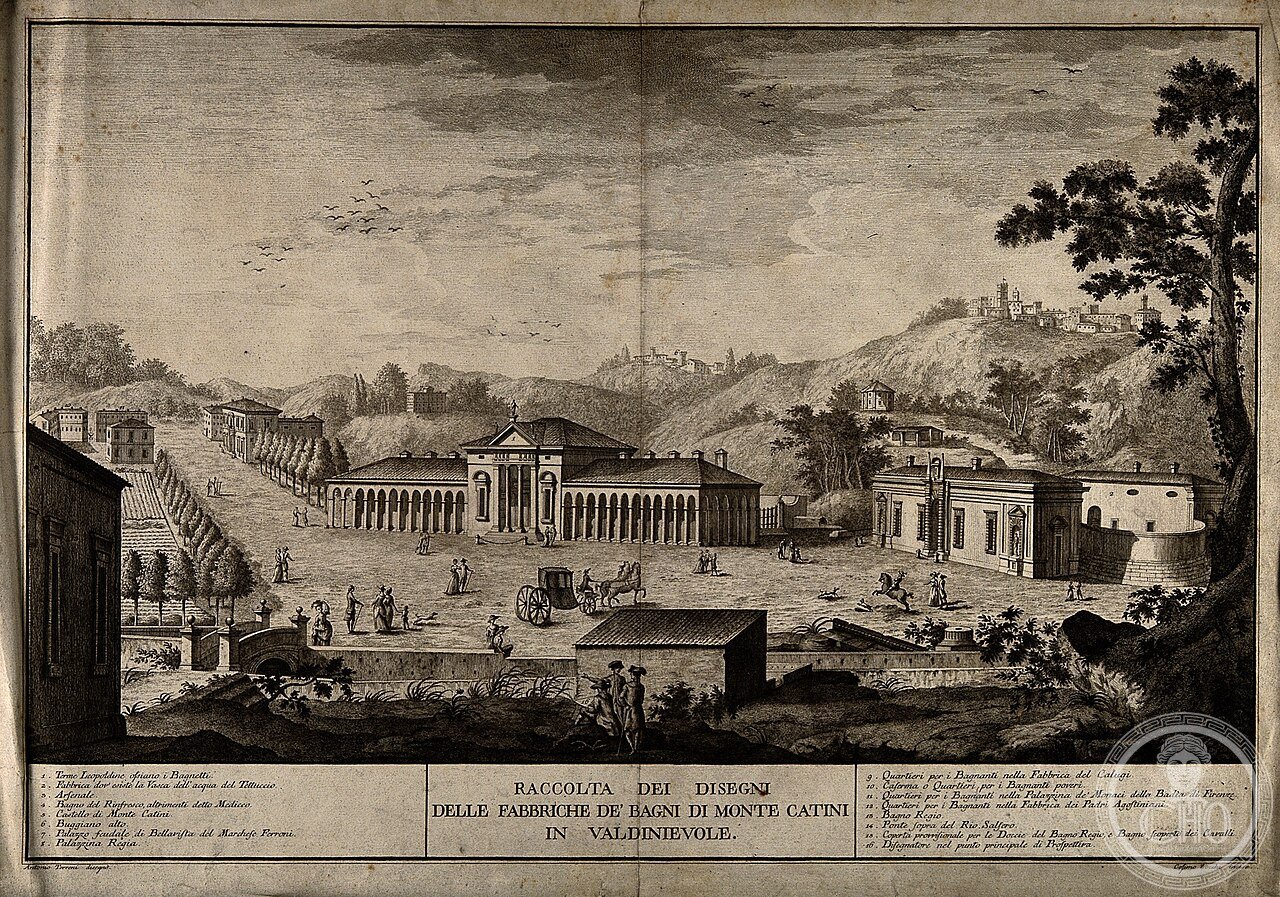
The decisive transformation came under Grand Duke Leopold II of Habsburg-Lorraine, who between 1771 and 1781 commissioned the architect Nicola Gasparo Paoletti to lay out both the thermal park and the town around it. The Leopoldine and Excelsior establishments date from this period, and the long avenues of Viale Verdi, Viale Puccini and Viale Bicchierai still follow Paoletti’s original plan, a formal arrangement of tree-lined allées leading to the spa park that later influenced other European spa towns.
The railway reaching Montecatini in the mid-nineteenth century opened the town to a much wider clientele during the Belle Époque. In 1926 the Fascist government created the Azienda Autonoma delle Terme di Montecatini to take the spa establishments, until then privately owned, into public hands, and commissioned Giovannozzi and Pacci to rebuild the Tettuccio between 1925 and 1928. The town was inscribed on the UNESCO World Heritage list in 2021 as part of the Great Spa Towns of Europe, the only Italian member of that eleven-city serial site.
What you see
The Tettuccio’s facade combines a three-arched central portal with mosaic lunettes and colonnaded loggia wings decorated with ceramic panels by Galileo Chini, one of the leading figures of Italian Art Nouveau ceramics, showing allegorical female figures among botanical borders. Inside, the domed rotunda to the left of the entrance is the building’s most theatrical space, with a polychrome marble floor, a frescoed ceiling painted as a sky of clouds and putti, and fountains from which the sulphate water is dispensed at different concentrations for visitors taking the traditional cure.
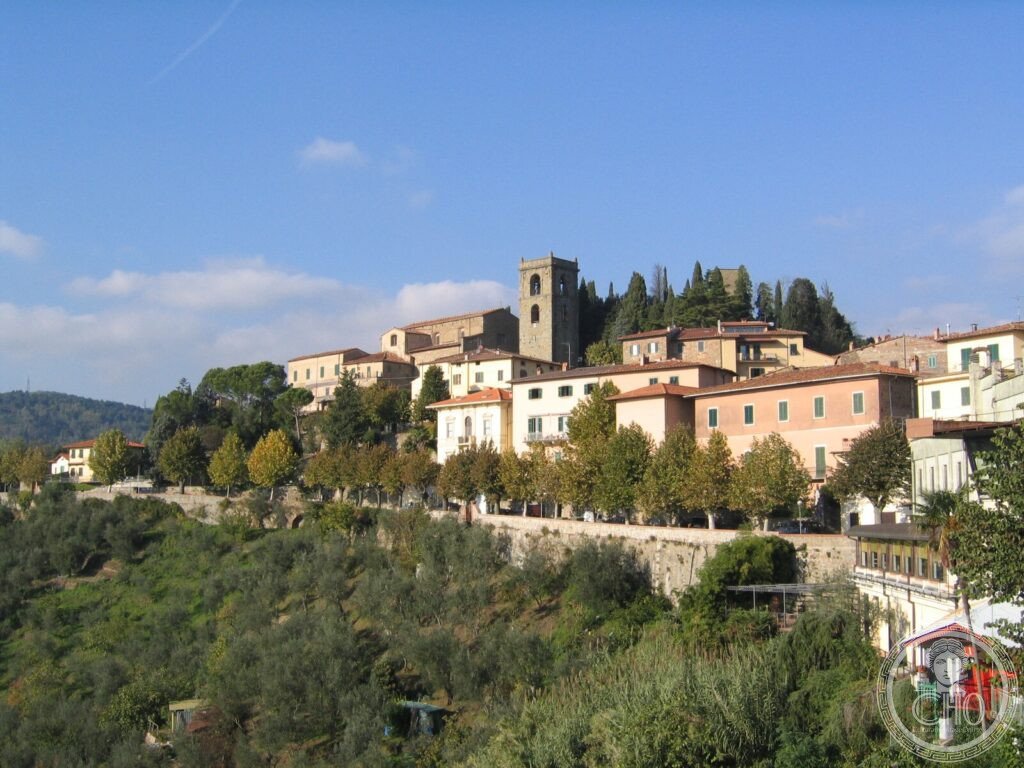
A funicular, the oldest in Tuscany, climbs from Viale Diaz to the older hilltop settlement of Montecatini Alto, where the Romanesque Pieve is the oldest surviving structure in the municipality and the terrace gives views over the Valdinievole plain. The Excelsior establishment on Viale Verdi, with roots in the Leopoldine period and rebuilt in the 1920s, is known for its mud treatments applied to joints for arthritic and rheumatic conditions.
Practical information
- Opening season: the Tettuccio and other thermal establishments typically operate from spring to autumn; current dates, hours and admission should be checked with the official Terme di Montecatini channels.
- The cure: the traditional programme involves drinking a prescribed dose of thermal water in the morning followed by a walk in the park, repeated over several weeks under medical guidance.
- Funicular to Montecatini Alto: runs seasonally from Viale Diaz; check current timetable locally before planning a visit.
Getting there
Montecatini Terme lies on the railway line linking Pistoia and Lucca, making it reachable by regional train from Florence, and it sits within easy reach of Lucca and the Pistoia botanical garden for visitors combining several Tuscan stops in one trip.
Nearby
- Montecatini Alto — reached by funicular from the town centre; medieval hilltop village with the Romanesque Pieve and views over the Valdinievole.
- Lucca — on the same railway line, suggested as a combined stop.
- Pistoia botanical garden — mentioned as part of a wider Tuscan itinerary alongside Montecatini and Lucca.
Sources
- UNESCO (Great Spa Towns of Europe, reference 1667)
- Azienda Autonoma delle Terme di Montecatini
Gallery
Find it on the map
See this place and what’s around it →📷 Become a Cultural Heritage Online photographer
Share your photos of places: they stay published under your name as the author. The more they're seen, the more you get noticed — and soon a contest will reward the most appreciated photos.
Log in or sign up free to add a photo