
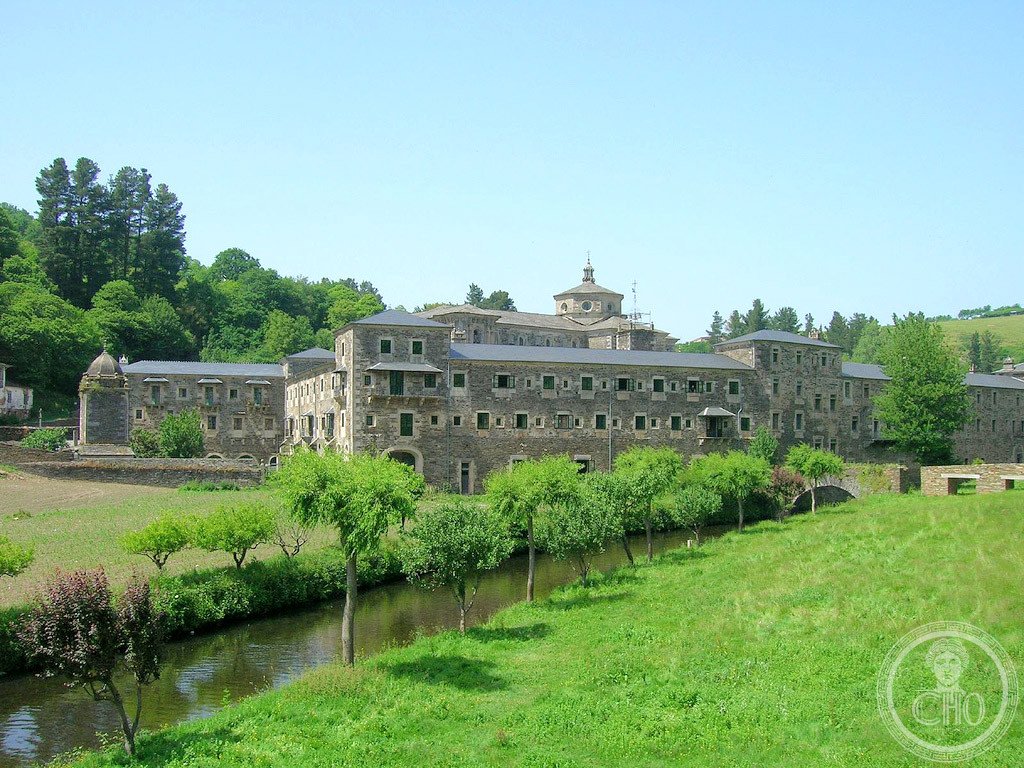
An active Benedictine monastery in Galicia, founded in the sixth century and long a centre of theological learning along the pilgrimage route to Santiago de Compostela.
At a glance
San Xulián de Samos stands as one of Galicia’s oldest monastic communities. The monastery continues its religious mission today while serving as a crucial waystation for pilgrims walking the Way of Saint James toward the shrine of the apostle in Santiago de Compostela.
History
The monastery was established in the sixth century, a period of monastic expansion across the Iberian Peninsula. Over centuries, it evolved into a School of Theology and Philosophy, attracting scholars and students from across Christendom. Its position along the pilgrimage route to Saint James’s shrine strengthened its spiritual and intellectual influence throughout the medieval period.
What you see
The monastery complex reflects centuries of continuous habitation and development. Benedictine architectural principles shape its layout, combining functional spaces for worship, study, and communal life. The buildings testify to ongoing monastic practice and periodic renewal across the medieval and later periods.
Cultural significance
San Xulián de Samos represents a living link to Spain’s monastic heritage. As a centre of theological study, it preserved and transmitted learning through the medieval era. Its role on the Way of Saint James made it a crossroads of spiritual devotion, connecting pilgrims from across Europe to one of Christianity’s greatest shrines.
Key facts
- Country: Spain
- Location: Samos, Galicia
- Founded: 6th century
- Religious order: Benedictine
- Status: Active monastery
- Coordinates: 42.73°N, 7.33°W
Practical information & getting there
The monastery welcomes pilgrims and visitors along the Way of Saint James. It remains an active religious community; visitors should respect monastic schedules and customs. For current visiting hours, facilities, and accommodation details, contact the monastery directly or consult local pilgrimage resources.
Sources & resources
Find it on the map
See this place and what’s around it →📷 Become a Cultural Heritage Online photographer
Share your photos of places: they stay published under your name as the author. The more they're seen, the more you get noticed — and soon a contest will reward the most appreciated photos.
Log in or sign up free to add a photoIs this page about you?
This page is read by travellers and heritage enthusiasts who find it on Google. Tell us how you are connected to this place and we will take it from there.