
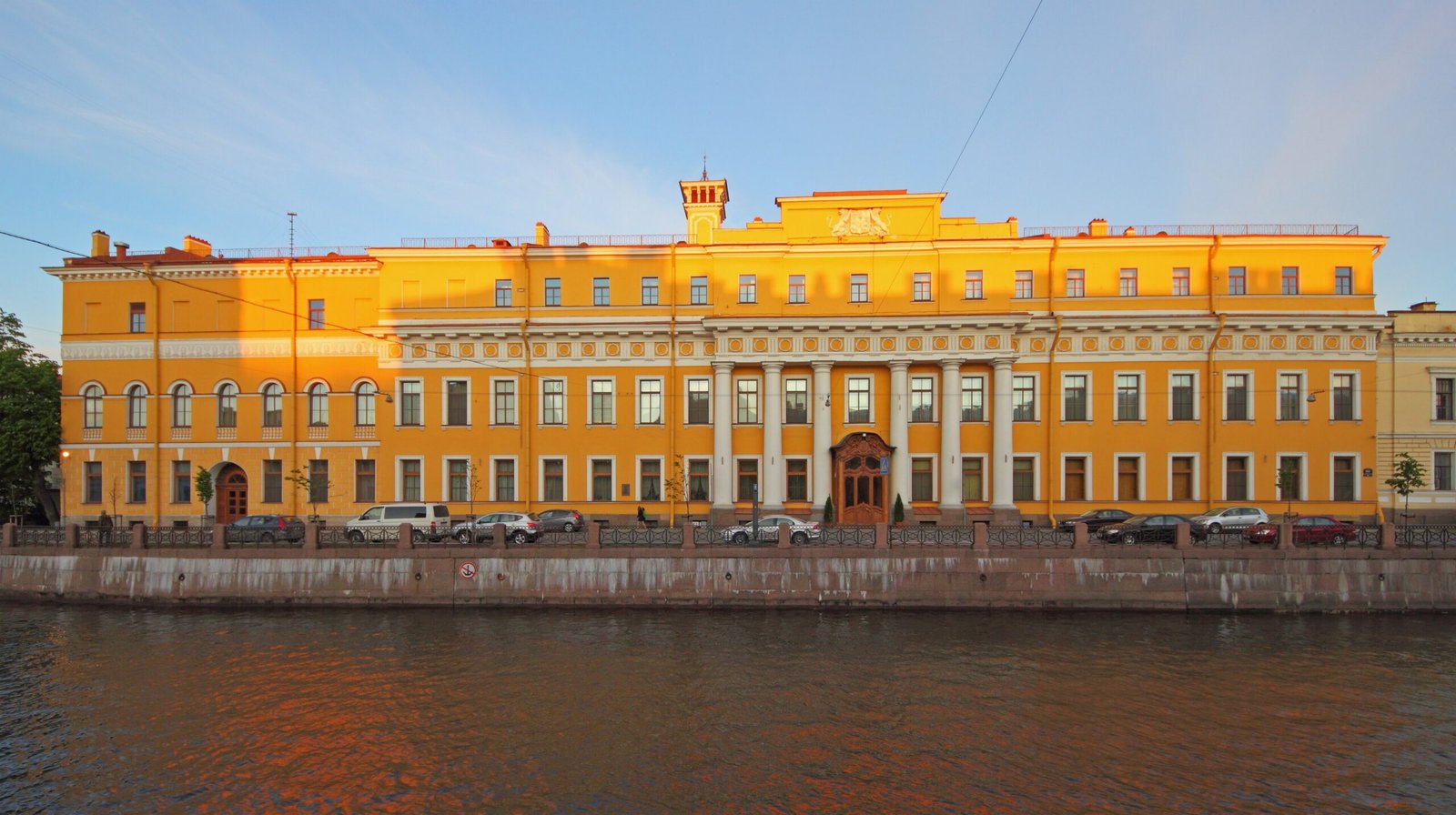
A neoclassical mansion on the Moika River that housed one of Imperial Russia’s richest families, and a cellar room where a monk was shot, poisoned, and shot again.
At a glance
Built around 1770 by Jean-Baptiste Vallin de la Mothe, the palace passed through several architects before the Yusupov family remodeled it in the 1830s. It is best known today as the site of Grigori Rasputin’s murder in December 1916, and it now operates as a museum and cultural center.
History
Vallin de la Mothe raised the original building in the neoclassical idiom then fashionable along the Moika embankment. Ownership and renovations followed over the decades. Emilio Sala, an Italian sculptor, contributed to its decoration. When the princely Yusupovs acquired the property, architect Andrei Mikhailov reworked the palace in the 1830s, giving it the appearance it largely retains. The family filled it with an extraordinary collection, more than 40,000 works of art, including paintings by Rembrandt, alongside jewelry and sculpture. Ernst Friedrich von Liphart, curator of paintings at the Hermitage, painted the curtain and ceiling of the palace’s private theatre. The Russian Revolution ended this era abruptly. The palace was nationalized and its treasures dispersed, many to the Hermitage.
What you see
The palace presents a restrained neoclassical facade toward the river, its calm exterior giving little hint of the opulence within. Interiors from the Yusupov period rival contemporary royal residences in scale and finish. A small, lavishly furnished cellar room survives as the setting for one of the twentieth century’s most notorious murders. Upstairs, second-floor reception rooms retain their historic decoration and are open for public tours. The courtyard where Rasputin tried to flee now sits beside a kindergarten playground, an odd juxtaction of tragedy and everyday life.
Cultural significance
Few buildings so directly connect aristocratic excess with revolutionary upheaval. The Yusupov family’s wealth and philanthropy made the palace a byword for pre-revolutionary luxury. Rasputin’s death here, plotted by Prince Felix Yusupov with Vladimir Purishkevich and Grand Duke Dmitri Pavlovich, turned the mansion into a fixture of Russian historical memory. Details of that night remain disputed. What is agreed is stark enough: poison, a first shot, a chase, a second shot, and a third fired at close range. The Soviet decision to preserve rather than repurpose the building, unusual among confiscated noble estates, ensured its survival as a public museum.
Key facts
- Location: St. Petersburg, Russia, on the Moika River
- Original construction: c. 1770, architect Jean-Baptiste Vallin de la Mothe
- Style: Neoclassical
- Major remodeling: 1830s, by Andrei Mikhailov, for the Yusupov family
- Historic event: murder of Grigori Rasputin, December 17 (O.S.), 1916
- Post-1925 use: Education Commissariat, now a “Palace of Culture for Educators” and museum
- Heritage status: officially listed
Practical information & getting there
The palace stands on the Moika embankment in central St. Petersburg, within easy reach of the city’s main historic sites. Museum tours cover the reception rooms and the cellar associated with Rasputin’s death. Check the official website before visiting, since tour schedules and access to specific rooms can vary.
Sources & resources
Find it on the map
See this place and what’s around it →📷 Become a Cultural Heritage Online photographer
Share your photos of places: they stay published under your name as the author. The more they're seen, the more you get noticed — and soon a contest will reward the most appreciated photos.
Log in or sign up free to add a photoIs this page about you?
This page is read by travellers and heritage enthusiasts who find it on Google. Tell us how you are connected to this place and we will take it from there.