
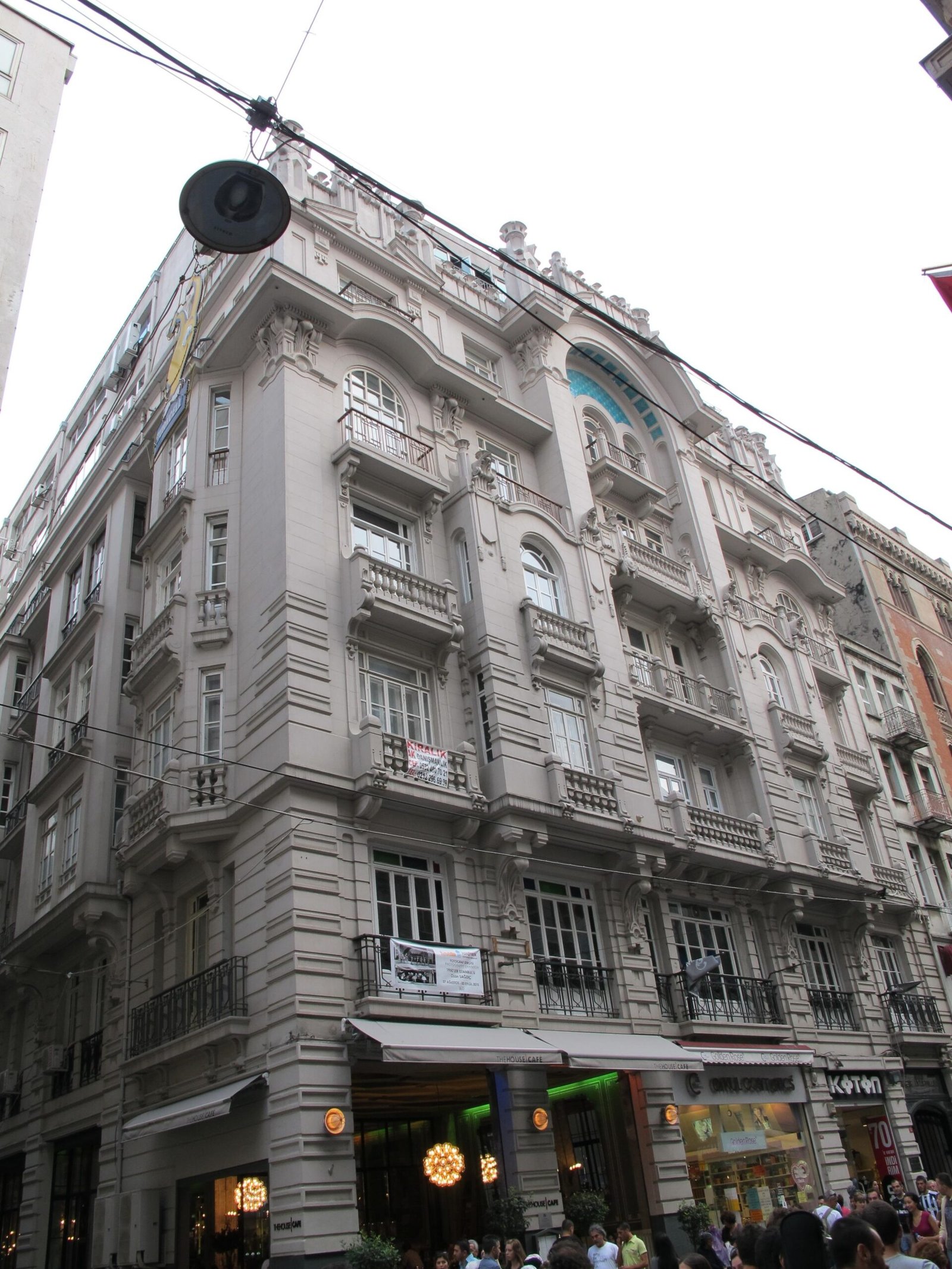
A celebrated Art Nouveau landmark on Istanbul’s İstiklal Avenue, the Mısır Apartment embodied the cosmopolitan elegance of early twentieth-century high society.
At a glance
The Mısır Apartment (meaning “Egypt Apartment” in Turkish) stands as a distinguished example of Art Nouveau architecture in Istanbul. Located on the prestigious İstiklal Avenue in Beyoğlu, this historical building once served as a fashionable address for Istanbul’s cultural and intellectual elite.
History
The building earned its reputation as a magnet for notable residents and enterprises. Among those who occupied or worked within its walls were the poet and intellectual Mehmet Akif Ersoy, businessman Lazzaro Franko, politician Su Baykal, and statesman Hüsamettin Cindoruk. The Mısır Apartment became synonymous with the vibrant artistic and political circles of Istanbul during its peak years.
What you see
The building exemplifies Art Nouveau style, the decorative movement that dominated European architecture and design at the turn of the twentieth century. Its architectural language reflects the elegance and ornamentation characteristic of the period, making it visually distinctive among Istanbul’s urban fabric.
Cultural significance
The Mısır Apartment represents a pivotal moment in Istanbul’s architectural history when the city embraced European modernist aesthetics while maintaining its unique character. As a gathering place for poets, politicians, and entrepreneurs, the building symbolizes the cosmopolitan ambitions of the era.
Key facts
- Country: Turkey
- City: Beyoğlu, Istanbul
- Coordinates: 41.0325°N, 28.9767°E
- Architectural style: Art Nouveau
- Location: İstiklal Avenue
Practical information & getting there
The Mısır Apartment is situated on İstiklal Avenue, one of Istanbul’s most walkable and vibrant streets in the Beyoğlu district. The avenue is well-served by public transport, including the nostalgic tram line that runs its length. Visitors can explore the building’s exterior and the surrounding neighbourhood’s shops, galleries, and cafés.
Sources & resources
Find it on the map
See this place and what’s around it →📷 Become a Cultural Heritage Online photographer
Share your photos of places: they stay published under your name as the author. The more they're seen, the more you get noticed — and soon a contest will reward the most appreciated photos.
Log in or sign up free to add a photoIs this page about you?
This page is read by travellers and heritage enthusiasts who find it on Google. Tell us how you are connected to this place and we will take it from there.