
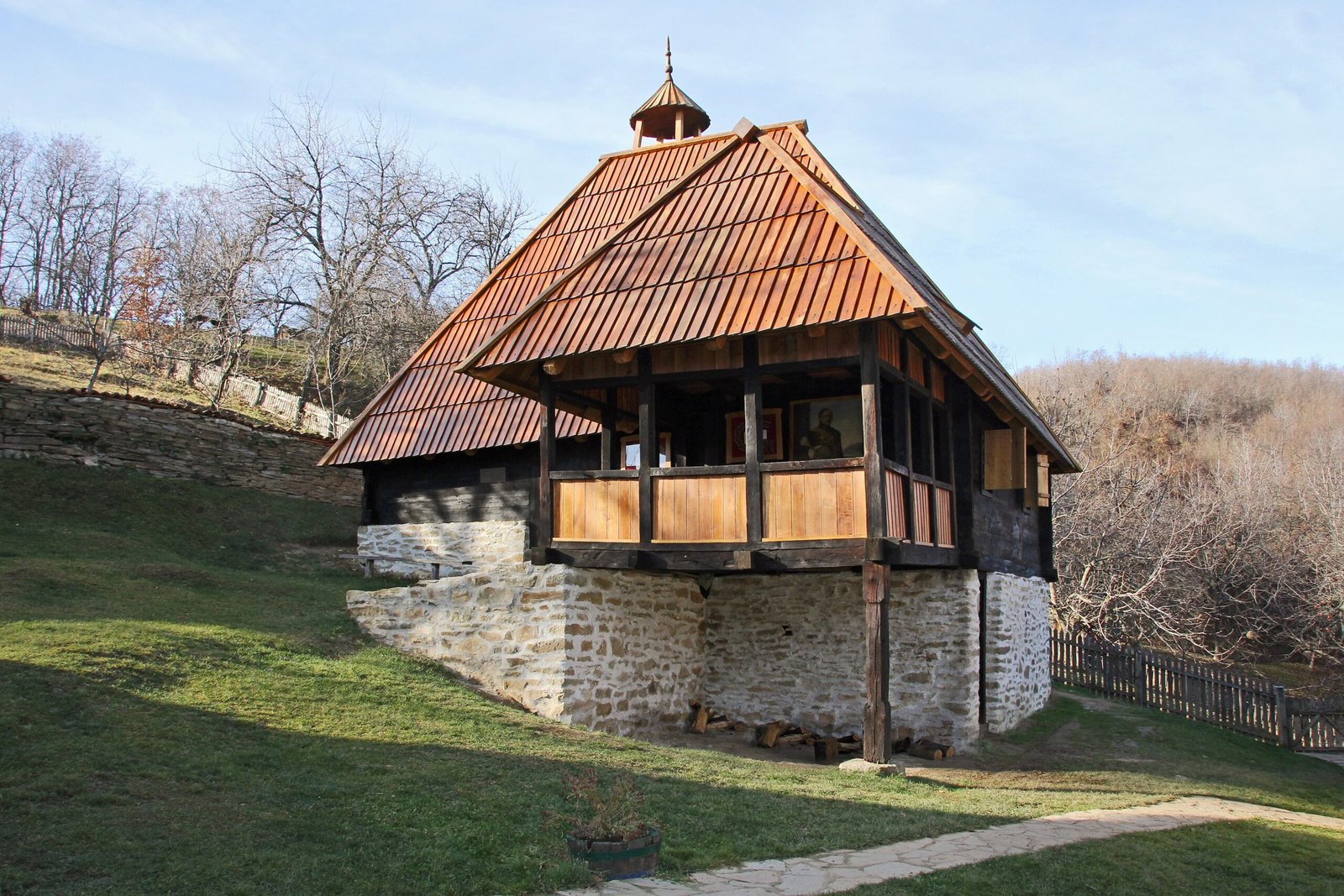
The residence where Prince Miloš Obrenović made the pivotal decision to launch the Second Serbian Uprising, now preserved as a cultural monument of exceptional importance.
At a glance
This stone residence in the village of Gornja Crnuća stands as a landmark of Serbian resistance. Built on land inherited through his stepfather Radovan Marinković, the house witnessed a transformative moment in Serbian history. The building’s modest architecture reflects the practical needs of a nobleman navigating Ottoman occupation.
History
Prince Miloš Obrenović constructed the residence on his stepfather’s estate in Gornja Crnuća. The house gained historical prominence as the setting where Obrenović and his supporters determined to organize the Second Serbian Uprising—a decisive moment that would reshape Serbian independence. Today it remains a tangible connection to early 19th-century Serbian political life and the leadership that challenged Ottoman rule in the Balkans.
What you see
The residence exemplifies the domestic architecture of its era, built with practical simplicity rather than ornamental grandeur. Its design reflects the constraints and customs of life in early 19th-century Serbia.
Cultural significance
The house holds exceptional cultural importance as the birthplace of the Second Serbian Uprising’s strategic decision. Miloš Obrenović’s leadership from this base ultimately contributed to Serbia’s path toward autonomy. The designation as a Cultural Monument of Exceptional Importance acknowledges its role in Serbian national history and its association with one of the country’s most consequential political figures.
Key facts
- Country: Serbia
- Location: Gornja Crnuća, municipality of Gornji Milanovac
- Coordinates: 44.07639°N, 20.56686°E
- Status: Cultural Monument of Exceptional Importance
- Managed by: Museum of Rudnik, Gornji Milanovac
Practical information & getting there
The residence is located in the village of Gornja Crnuća within Gornji Milanovac municipality. For visiting details and opening hours, contact the Museum of Rudnik in Gornji Milanovac, which manages the site. The house is an immovable cultural property and protected by Serbian heritage law.
Sources & resources
Find it on the map
See this place and what’s around it →📷 Become a Cultural Heritage Online photographer
Share your photos of places: they stay published under your name as the author. The more they're seen, the more you get noticed — and soon a contest will reward the most appreciated photos.
Log in or sign up free to add a photoIs this page about you?
This page is read by travellers and heritage enthusiasts who find it on Google. Tell us how you are connected to this place and we will take it from there.