
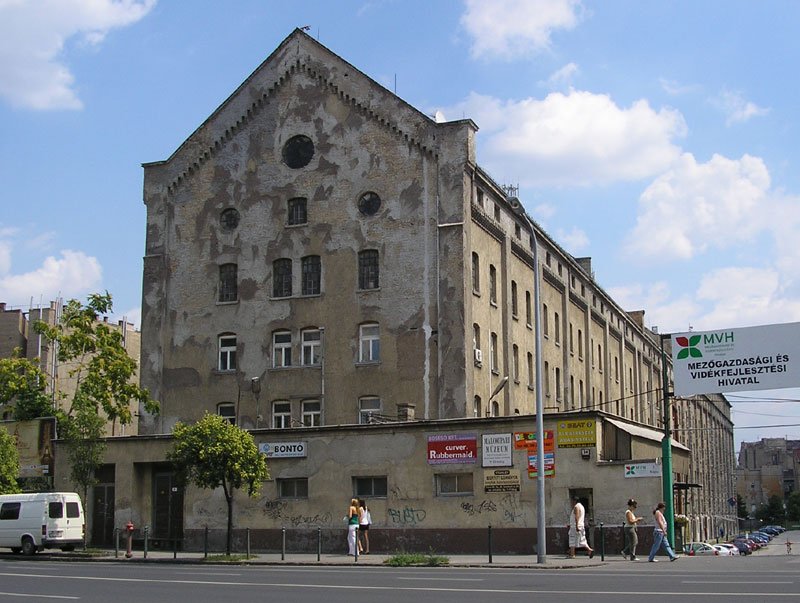
A specialist museum dedicated to Budapest’s milling heritage, housed in Ferencváros and documenting the industrial equipment and history of the city’s defunct mills.
At a glance
The Mill Industry Museum (Malomipari Múzeum) preserves the tangible record of Budapest’s once-vital milling industry. Established as a private exhibition in 1978 and formally recognized as a specialist museum in 1984, it assembled equipment and machinery from mills that had ceased operations.
History
The museum’s collection originated from the liquidated mills of Budapest, capturing the industrial life of a city once central to Central European grain processing. Opened privately in 1978, it gained official status and public access in 1984 under the name Milling Museum. The institution closed temporarily in 2012; its permanent reopening remains uncertain. The collection is now owned by the Museum of Hungarian Agriculture at Vajdahunyad Castle.
What you see
The museum’s holdings consist primarily of milling equipment and machinery—the working tools of the trade. These objects represent the technical and industrial heritage of Budapest’s flour mills and grain-processing facilities.
Cultural significance
The Mill Industry Museum documents an important chapter in Budapest’s industrial past. Milling was essential to the city’s economy and urban development, and the museum preserves evidence of that heritage through preserved machinery and equipment.
Key facts
- Country: Hungary
- City: Budapest
- District: Ferencváros
- Coordinates: 47.4769°N, 19.0704°E
- Officially designated specialist museum: 1984
- Current status: Temporarily closed since 2012
- Collections now owned by: Museum of Hungarian Agriculture
Practical information & getting there
The museum is located at 24 Soroksári út in Budapest’s Ferencváros district. However, it has been temporarily closed since 2012 and reopening is not currently expected. The collection is now maintained by the Museum of Hungarian Agriculture. For current information about possible future access or related exhibitions, contact Vajdahunyad Castle.
Sources & resources
Find it on the map
See this place and what’s around it →📷 Become a Cultural Heritage Online photographer
Share your photos of places: they stay published under your name as the author. The more they're seen, the more you get noticed — and soon a contest will reward the most appreciated photos.
Log in or sign up free to add a photoIs this page about you?
This page is read by travellers and heritage enthusiasts who find it on Google. Tell us how you are connected to this place and we will take it from there.