
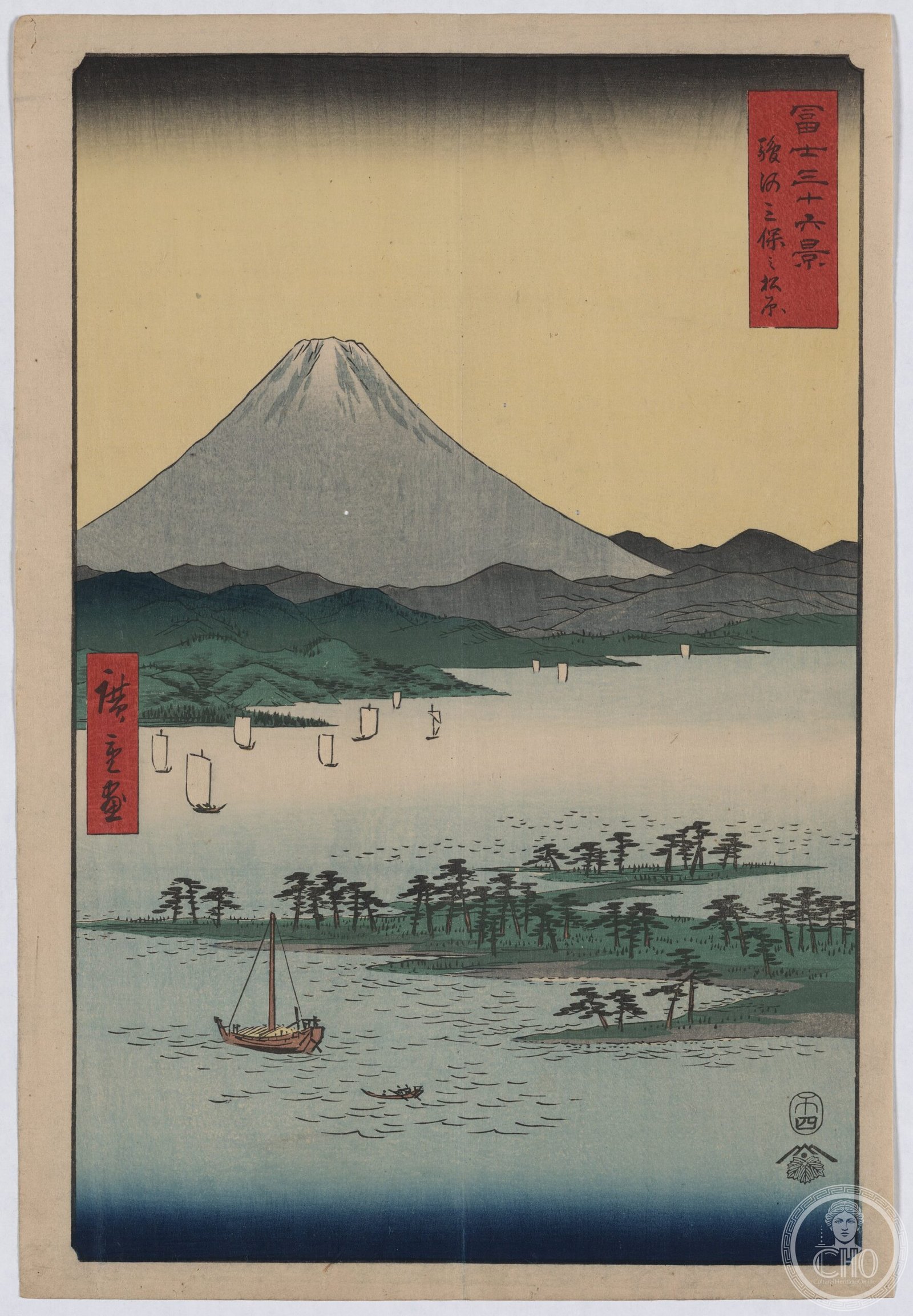
A seven-kilometre pine-lined seashore on the Miho Peninsula that inspired one of Japan’s most celebrated Noh dramas and earned World Heritage status as part of the Fujisan Cultural Site.
At a glance
Miho no Matsubara is a scenic coastal landscape where dense pine groves meet the sea. The peninsula’s natural beauty has anchored Japanese culture for centuries, most famously as the setting for the legend of the heavenly robe that gave rise to the Noh play Hagoromo.
History
The pine groves became associated with the myth of a celestial being who descended to earth and left her feathered robe upon a pine tree. This legend shaped the libretto of Hagoromo, one of Noh’s masterpieces, performed for over four centuries.
In 1922, the site received official recognition as a National Place of Scenic Beauty of Japan. Its cultural significance deepened in 2013 when the pine groves were inscribed on the UNESCO World Heritage List as a component of the Fujisan Cultural Site, acknowledging their role in Japan’s spiritual and artistic heritage.
What you see
The landscape consists of an unbroken expanse of pine forest stretching seven kilometres along the shoreline. The dense canopy of conifers frames views of the sea and, on clear days, Mount Fuji in the distance. The trees create a distinctive atmosphere where forest and ocean merge.
Cultural significance
Miho no Matsubara embodies the intersection of myth, theatre, and landscape that defines Japanese aesthetic philosophy. The Noh drama Hagoromo—performed annually during the Hagoromo Festival held on the second Saturday and Sunday of October—keeps the legend alive and connects visitors to centuries of theatrical tradition. The pine groves’ inclusion in the Fujisan Cultural Site recognises their place within Japan’s broader spiritual geography centred on Mount Fuji.
Key facts
- Location: Miho Peninsula, Shimizu Ward, Shizuoka City, Japan
- Coordinates: 34.995°N, 138.523°E
- Designated National Place of Scenic Beauty: 1922
- UNESCO World Heritage Site: 2013 (as part of Fujisan Cultural Site)
- Seashore length: seven kilometres
Practical information & getting there
The Hagoromo Festival, held annually in October, is the principal cultural event. A performance of the Noh drama takes place near the legendary pine tree during the festival’s second Saturday and Sunday. For detailed visiting information, current access conditions, and festival schedules, consult local tourism resources or the Shizuoka City website.
Sources & resources
Find it on the map
See this place and what’s around it →📷 Become a Cultural Heritage Online photographer
Share your photos of places: they stay published under your name as the author. The more they're seen, the more you get noticed — and soon a contest will reward the most appreciated photos.
Log in or sign up free to add a photoIs this page about you?
This page is read by travellers and heritage enthusiasts who find it on Google. Tell us how you are connected to this place and we will take it from there.