
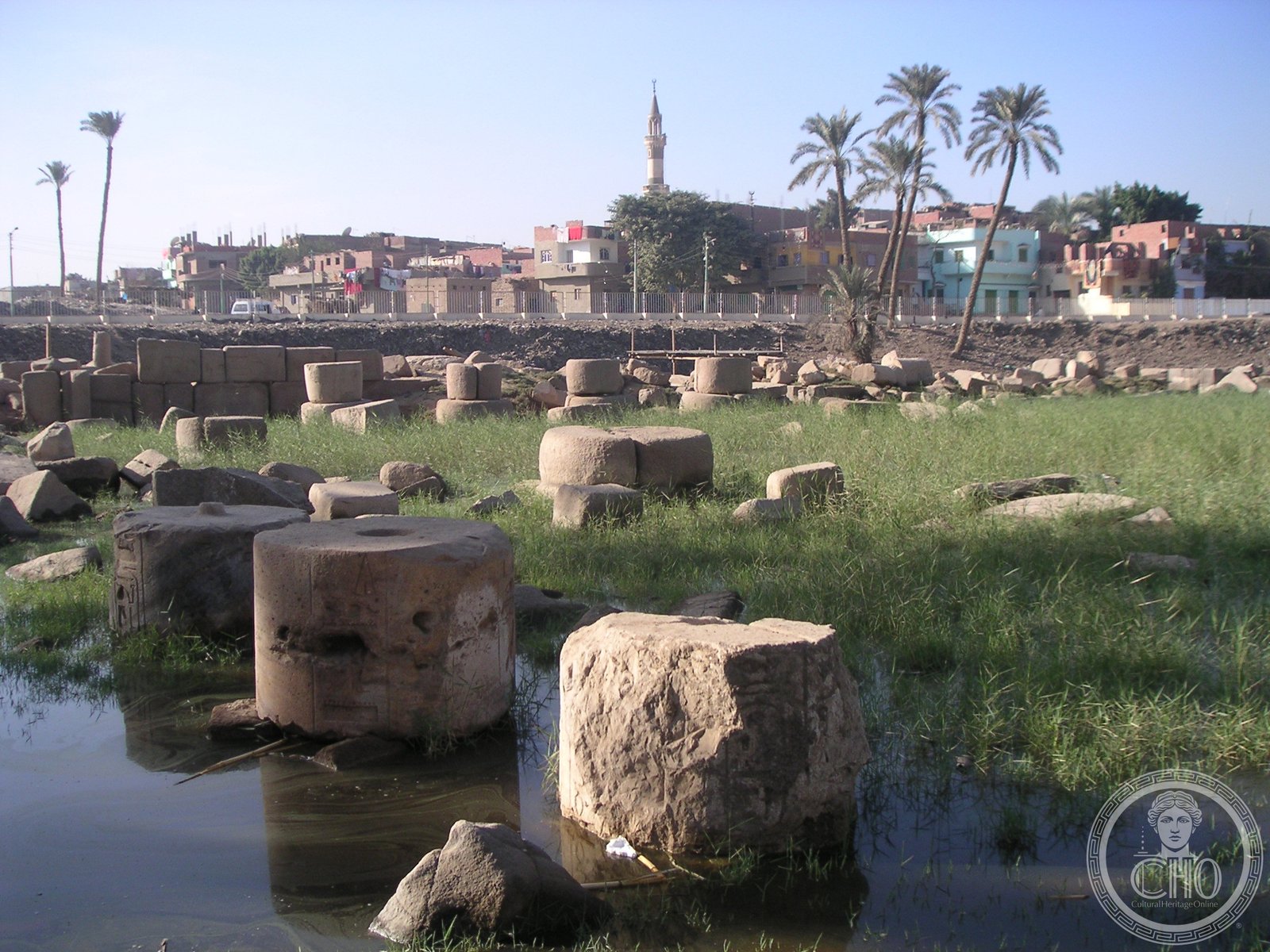
The ancient capital of Egypt for over two millennia, Memphis dominated the mouth of the Nile Delta as a centre of commerce, craft, and divine power. Its colossal ruins, scattered across the desert west of modern Cairo, stand as fragmented testimony to one of antiquity’s greatest cities.
At a glance
Memphis served as the capital of Egypt during the Early Dynastic Period and Old Kingdom, and remained politically and religiously vital throughout pharaonic history. According to the third-century BC historian Manetho, King Menes founded the city. Its strategic location at the Nile Delta’s mouth made it an indispensable hub for distribution of goods and food across the ancient kingdom.
History
Founded according to legend by King Menes, Memphis rose to prominence as Egypt’s primary seat of power. During its golden age, the city thrived as a nexus of regional commerce and religious authority. Its principal port, Peru-nefer, bustled with workshops, factories, and warehouses that supplied the entire kingdom.
The city’s decline began in late antiquity as Alexandria’s coastal position drew economic power away from the Delta. The Edict of Thessalonica (380 AD) further diminished Memphis’s religious significance by establishing Christianity as the empire’s sole faith. By the Middle Ages, Cairo had superseded it as the region’s political and economic centre.
What you see
The site functions as an open-air museum displaying fragmentary remains of Memphis’s former grandeur. Most prominent is Hut-ka-Ptah, the great temple dedicated to Ptah, god of craftsmen and patron deity of the city. The temple’s Greek rendering, Ai-gy-ptos, likely gave rise to the modern English name Egypt.
West of Memphis stretch the pyramid fields across more than 30 kilometres of desert plateau, including the famed Pyramids of Giza. Together, Memphis and its necropolis form part of a UNESCO World Heritage Site.
Cultural significance
Memphis embodied the administrative, commercial, and spiritual identity of pharaonic Egypt for over two thousand years. Its religious centre honoured Ptah, one of Egypt’s most venerated gods, and its temples and workshops set standards for craftsmanship across the ancient world. The city’s ruins remain invaluable archaeological evidence of ancient Egyptian civilization at its height.
Key facts
- Country: Egypt
- Location: Vicinity of Mit Rahina, Badrashin, Giza Governorate
- Coordinates: 29.849, 31.255
- UNESCO World Heritage Site (Memphis and its Necropolis)
- Accessible as an open-air museum
Practical information & getting there
The site lies near the village of Mit Rahina in Giza Governorate, approximately 20 kilometres south of Cairo. Visitors can access Memphis as an open-air museum. For current visiting hours, entry fees, and guided tour options, consult local tourism resources or your accommodation in Cairo.
Sources & resources
Find it on the map
See this place and what’s around it →📷 Become a Cultural Heritage Online photographer
Share your photos of places: they stay published under your name as the author. The more they're seen, the more you get noticed — and soon a contest will reward the most appreciated photos.
Log in or sign up free to add a photoIs this page about you?
This page is read by travellers and heritage enthusiasts who find it on Google. Tell us how you are connected to this place and we will take it from there.