
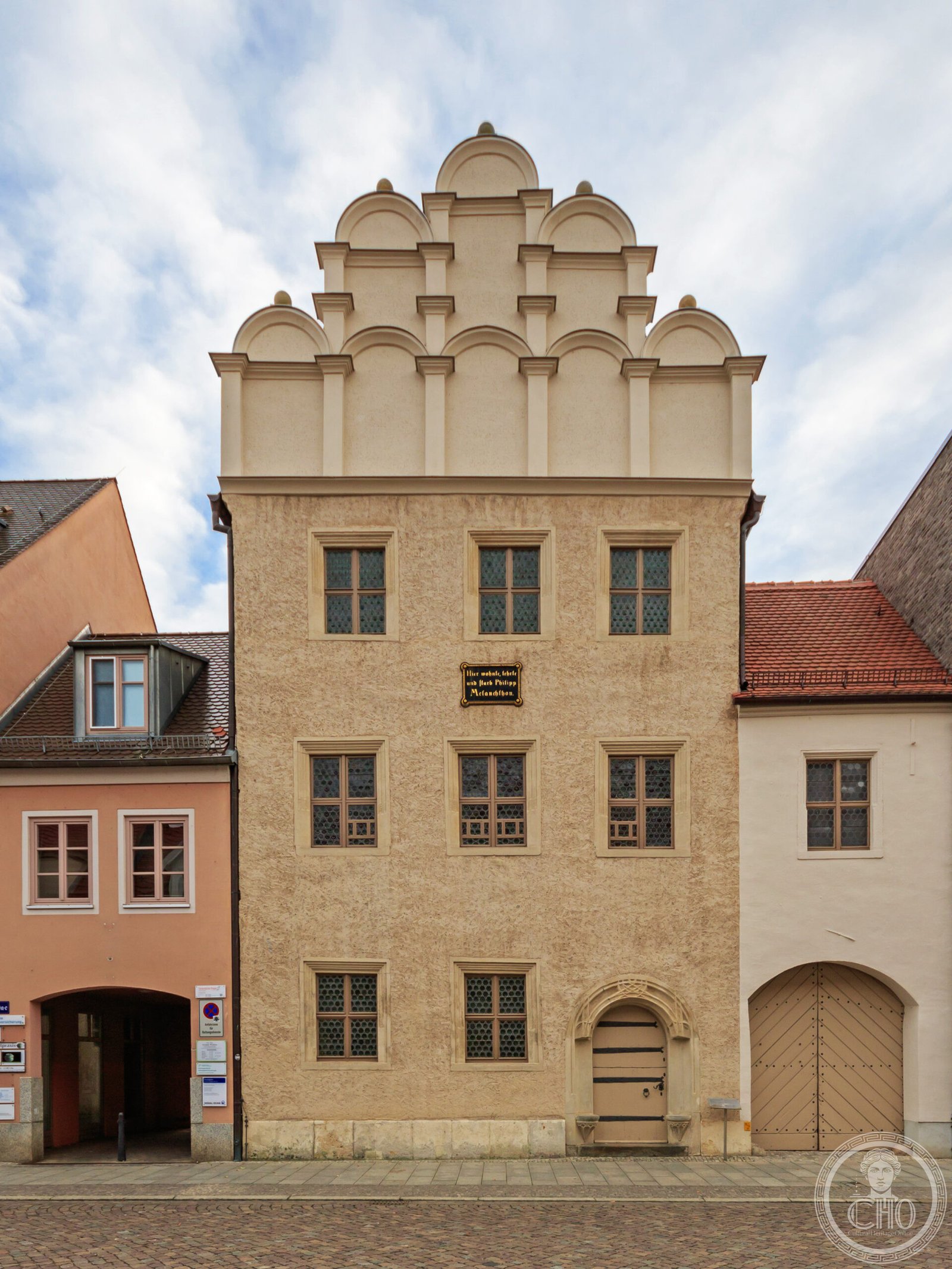
The home and study of Philipp Melanchthon, a pivotal Protestant Reformer, preserved as a museum devoted to his life, work, and intellectual circle.
At a glance
This Renaissance townhouse in Wittenberg served as the residence and workplace of Philipp Melanchthon, one of the most influential theologians of the Protestant Reformation. The building’s late Gothic arched windows and characteristic broad-tiered gables reflect the architectural tastes of its era. Today it functions as a writer’s house museum, offering insight into Melanchthon’s scholarship and his role in reshaping European religious thought.
History
Melanchthon and his family lived in this house, where his study remains a focal point of the building. In 1954, the Melanchthonhaus formally opened as a museum dedicated to examining Melanchthon’s life and intellectual legacy. Recognition of the site’s historical importance grew internationally, culminating in its designation as a UNESCO World Heritage Site in 1996 alongside related Luther sites in Wittenberg and Eisleben, acknowledging their collective significance to the Protestant Reformation.
What you see
The Melanchthonhaus exemplifies Renaissance residential architecture with distinctly Gothic elements. Late Gothic arched windows pierce the façade, while the broad-tiered gables—typical of northern German townhouses—crown the roofline. The structure’s modest but refined proportions reflect the status of a respected humanist scholar in sixteenth-century Wittenberg.
Cultural significance
Melanchthon’s intellectual contributions to Protestant theology and education made him a counterpart to Martin Luther. His study, preserved within the house, symbolizes the scholarly foundations of the Reformation. The museum’s collections—paintings, prints, and manuscripts by Melanchthon and his contemporaries—document the religious and intellectual ferment of the era and the lasting, global influence of Protestantism that emerged from this small Saxon town.
Key facts
- Country: Germany
- City: Lutherstadt Wittenberg
- Coordinates: 51.8647° N, 12.6508° E
- UNESCO World Heritage Site: 1996
- Museum established: 1954
Practical information & getting there
The Melanchthonhaus is located in Wittenberg, a town easily reached by rail from major German cities including Berlin and Leipzig. The museum welcomes visitors interested in Renaissance history, Protestant Reformation studies, and the life of one of the period’s most important humanist thinkers. Current opening hours and admission fees are available through the museum’s official website.
Sources & resources
Find it on the map
See this place and what’s around it →📷 Become a Cultural Heritage Online photographer
Share your photos of places: they stay published under your name as the author. The more they're seen, the more you get noticed — and soon a contest will reward the most appreciated photos.
Log in or sign up free to add a photoIs this page about you?
This page is read by travellers and heritage enthusiasts who find it on Google. Tell us how you are connected to this place and we will take it from there.