
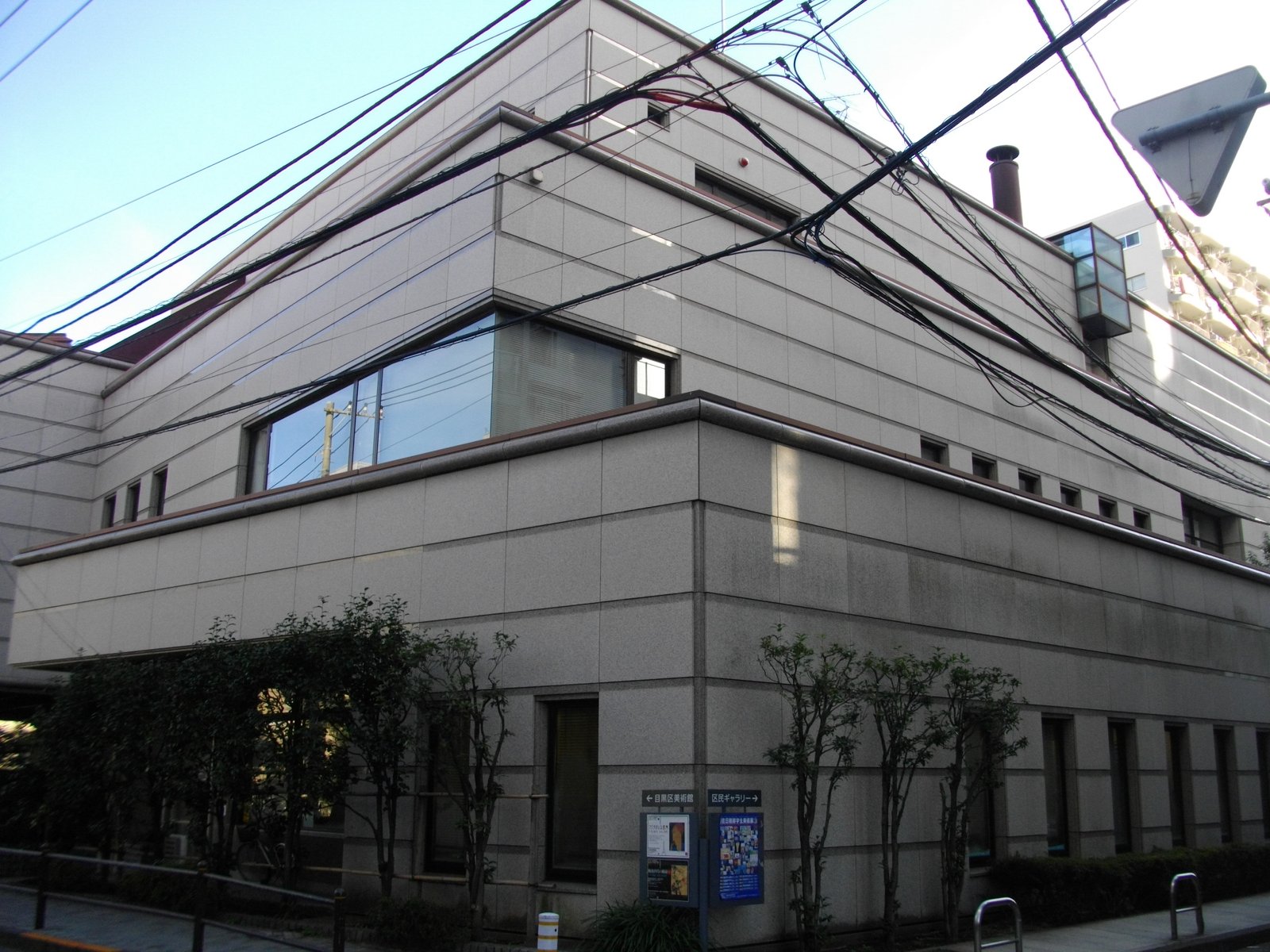
A modernist art gallery in central Tokyo, housing significant works by 20th-century Japanese painters in a purpose-built reinforced concrete structure.
At a glance
The Meguro Museum of Art opened in November 1987 as a dedicated space for Japanese modern art. Its clean-lined building reflects the architectural principles of its designer, Nihon Sekkei, while its collection spans influential painters who shaped post-war Japanese aesthetics.
History
Completed in 1987, the museum emerged during a period of cultural institution-building in Tokyo. It was designed by Nihon Sekkei, a leading Japanese architectural firm. The museum established itself through rotational exhibitions and acquisitions of works by major modern Japanese artists.
What you see
The building is constructed of reinforced concrete with a straightforward modernist vocabulary. It comprises one basement level and three above-ground floors, totalling 4,059 square metres of gallery and support space. The design prioritizes clarity and light for viewing artworks.
Cultural significance
The museum serves as a major venue for Japanese modern art in Tokyo’s cultural landscape. Its permanent collection documents the evolution of 20th-century Japanese painting through works by canonical figures including Tsuguharu Fujita, Zenzōrō Kojima, Shikanosuke Oka, Kazuo Sakata, and Kumi Sugai. These artists represent diverse movements from post-Impressionism to abstraction.
Key facts
- Location: Meguro 2–4–36, Meguro-ku, Tokyo, Japan
- Opened: November 1987
- Architect: Nihon Sekkei
- Structure: Reinforced concrete; 1 basement + 3 floors above ground
- Floor area: 4,059 square metres
- Coordinates: 35.634907, 139.707663
Practical information & getting there
The museum is a ten-minute walk from Meguro Station on Tokyo’s JR Yamanote Line. The location in Meguro, a central ward, makes it easily accessible by public transport. The museum holds frequent rotating exhibitions; check the website for current displays and hours before visiting.
Sources & resources
Find it on the map
See this place and what’s around it →📷 Become a Cultural Heritage Online photographer
Share your photos of places: they stay published under your name as the author. The more they're seen, the more you get noticed — and soon a contest will reward the most appreciated photos.
Log in or sign up free to add a photoIs this page about you?
This page is read by travellers and heritage enthusiasts who find it on Google. Tell us how you are connected to this place and we will take it from there.