
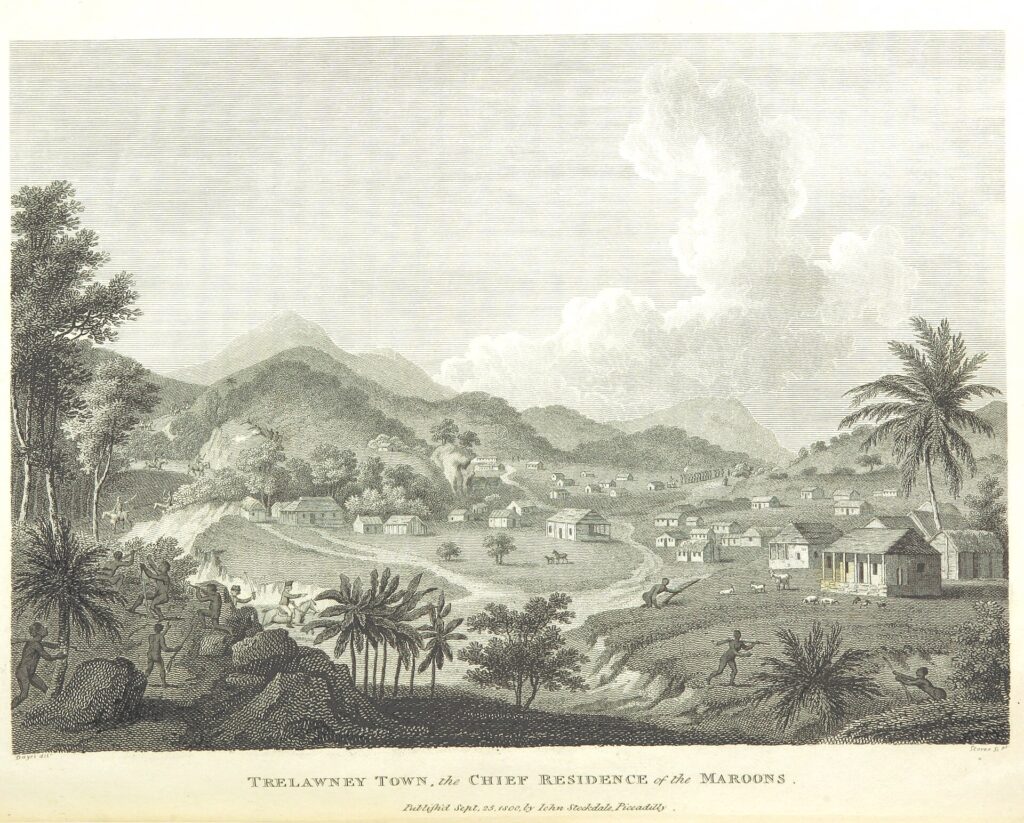
The Maroons of Jamaica are descendants of enslaved Africans who freed themselves and built autonomous communities in the island’s mountainous interior, sustaining their independence through resistance, treaty, and the creation of distinct cultural practices that persist today.
In UNESCO’s words
Situated in the highlands of eastern Jamaica, Moore Town is home to the descendants of independent communities of former runaway slaves known as Maroons. The African ancestors of the Moore Town Maroons were forcibly removed from their native lands to the Caribbean by Spanish slave traders in the sixteenth and seventeenth centuries. The term Maroon, derived from the Spanish word cimarrón (wild), refers to those slaves who fled the plantations in the early 1600s and established their own settlements in the Blue and Johncrow Mountains of eastern Jamaica. By the early eighteenth century, the Maroon communities controlled much of the eastern part of the island. In opposition to the expanding plantation system of the British, they formed well-organized and efficient underground military units. After decades of warfare, the British finally yielded to the communities’ demands for recognition of their autonomy by signing a treaty with the Maroons in 1739. Hailing from West and Central African regions with diverse languages and cultural practices, the Moore Town Maroons elaborated new collective religious ceremonies that incorporated various spiritual traditions. These expressions and practices, which were then named Kromanti Play, continue to represent the very foundation of Maroon identity. During Kromanti ceremonies, dances, songs and specific drumming styles are performed to invoke ancestral spirits. These ceremonies also feature a language of African derivation, likewise named Kromanti, and rare medicinal preparations. As part of their heritage, the inhabitants of Moore Town also possess a unique system of communally-held “treaty lands”, a local political structure and the use of the abeng, a side-blown “talking” horn of Jamaican origin which serves as a means of long-distance communication. Several decades of missionary opposition to Kromanti Play have driven this tradition partially underground and have led to serious schisms within the communities. Moreover, deteriorating economic conditions have forced many Maroons to migrate to other parts of Jamaica and abroad.
Official description, UNESCO Intangible Cultural Heritage List — Maroon heritage of Moore Town
At a glance
The Moore Town Maroons are descendants of formerly enslaved Africans who escaped plantations in eastern Jamaica from the early 1600s onward and established independent communities in the mountains. Their heritage centers on Kromanti Play, a set of collective religious ceremonies that blend spiritual traditions from diverse West and Central African regions. These ceremonies involve specific dances, songs, drumming styles, and a language of African derivation, all performed to invoke ancestral spirits. The Moore Town Maroons also maintain a unique communal land system, local political structures, and use the abeng, a talking horn for long-distance communication.
Origins & history
African slaves forcibly brought to Jamaica by Spanish traders in the sixteenth and seventeenth centuries began escaping plantations in the early 1600s, forming settlements in the Blue and Johncrow Mountains. By the early eighteenth century, these Maroon communities had grown powerful enough to control much of eastern Jamaica and organize efficient military resistance against the expanding British plantation system. After decades of warfare, the British recognized Maroon autonomy by signing a treaty in 1739. The Maroons, coming from regions with diverse languages and cultural practices, developed Kromanti Play as a new collective religious expression that merged their varied spiritual traditions and became central to their shared identity.
The practice
Kromanti ceremonies are the living core of Moore Town Maroon practice. During these gatherings, participants perform specific dances and songs accompanied by distinctive drumming styles to invoke ancestral spirits. The ceremonies employ Kromanti, a language of African origin, and feature rare medicinal preparations. Beyond ritual, the community maintains their heritage through oral transmission of history, genealogy, and social memory within family networks. They preserve knowledge of settlement in mountainous terrain, traditional food production, craft work, and medicine—practical skills essential to their way of life.
Cultural significance
Kromanti Play and the broader Maroon heritage represent sustained resistance to enslavement and the achievement of freedom and autonomy. This tradition embodies the community's self-determination and continues to form the very foundation of Maroon identity. However, decades of missionary opposition have driven Kromanti practice partially underground and created serious divisions within communities. Additionally, deteriorating economic conditions have forced many Maroons to migrate away, threatening the transmission and survival of these traditions to future generations.
Key facts
- Country: Jamaica
- Inscribed: 2008
- UNESCO list: Representative List of the Intangible Cultural Heritage of Humanity
- UNESCO reference: 00053
- UNESCO vocabulary: Cultural space; Slavery
- Map: Moore Town — the locality named in UNESCO’s official description of this element
- Related World Heritage site: Blue and John Crow Mountains (a different UNESCO designation, not the place of the tradition)
Where to experience it
Moore Town, situated in the highlands of eastern Jamaica within the Blue and Johncrow Mountains, remains the home of Moore Town Maroons and the living centre of Kromanti Play traditions. The practice endures within family households and community gatherings, where ancestral ceremonies featuring distinctive dances, songs, drumming styles, and the African-derived Kromanti language continue to be performed. Visitors interested in experiencing this heritage should connect with local Maroon communities and cultural organisations, as these sacred traditions are maintained through oral transmission and community participation rather than formal public venues.
Sources & resources
- UNESCO — official element page: Maroon heritage of Moore Town
- UNESCO — open data record: Intangible Heritage List, reference 00053
- UNESCO — official video: UNESCO film on this element — embedded on this page
- UNESCO — official photograph: The Maroons are descendants of runaway slaves who established free settlements in eastern Jamaica in the seventeenth century. There, they developed distinct social and religious expressions incorporating various spiritual traditions, among them a collective procession accompanied by drumbeat and the calling sound of the side-blown abeng horn. — UNESCO/Andrew P. Smith
- Reference — Wikipedia (secondary): Jamaican Maroons — consulted as a secondary reference, not as confirmation
- Cultural Heritage Online: Our archive and city guides

Find it on the map
See this place and what’s around it →📷 Become a Cultural Heritage Online photographer
Share your photos of places: they stay published under your name as the author. The more they're seen, the more you get noticed — and soon a contest will reward the most appreciated photos.
Log in or sign up free to add a photo