

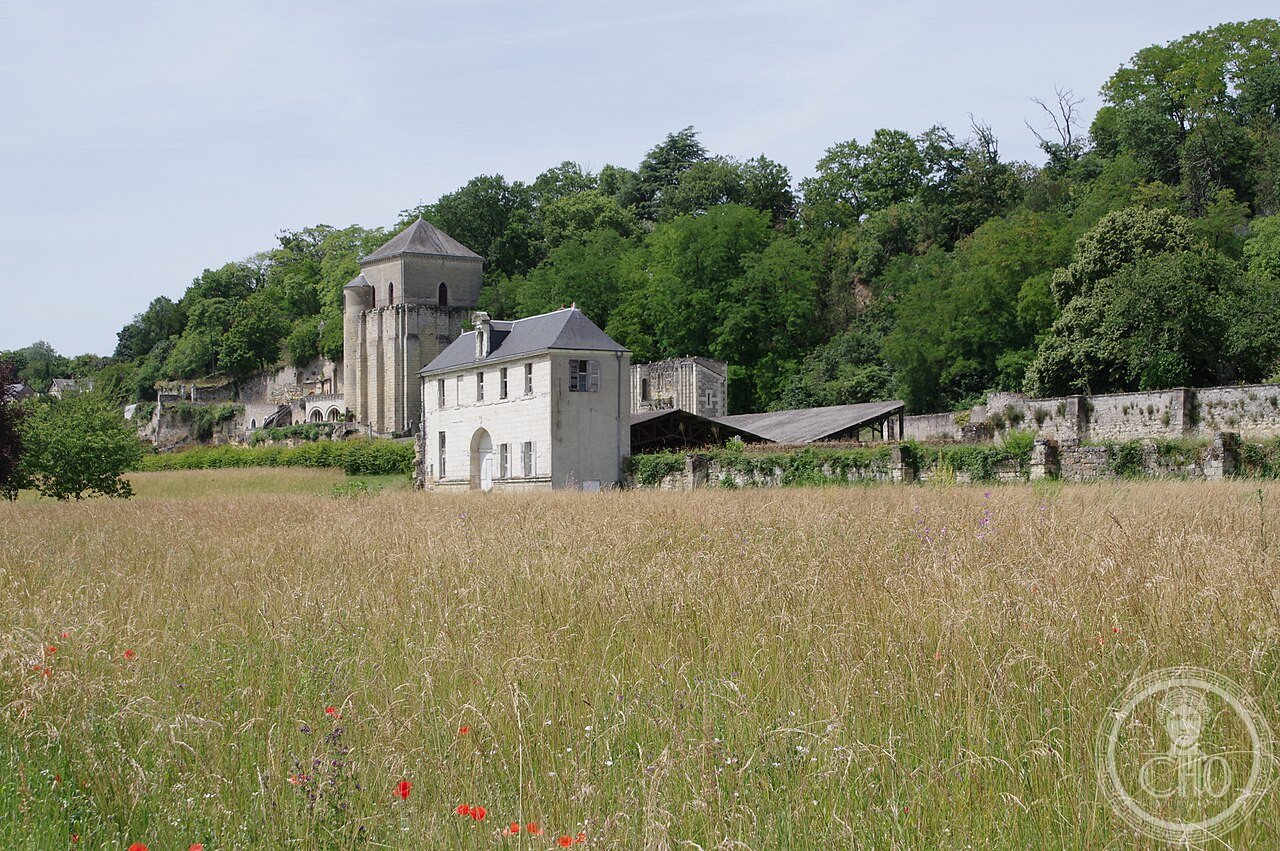
Saint Martin of Tours withdrew here in 372, into a bend of the Loire dominated by a rocky escarpment, where the first monks dug hermit caves into the hillside. Destroyed and emptied by the Normans in 853, with more than a hundred monks killed, the abbey recovered to become one of the richest in Europe: in 1096 Pope Urban II consecrated its new chapel and preached the First Crusade there.
About Marmoutier Abbey, Tours
Marmoutier Abbey was founded by Martin of Tours in 372, a year after his 371 elevation as Bishop of Tours, when he withdrew from the pressures of city life to establish “Majus Monasterium” (Marmoutier) several miles from Tours, on the opposite bank of the Loire. Surrounded by a cliff within a meander of the river, the site was chosen for its tranquil, picturesque isolation, and many of the earliest brethren fashioned their own retreats directly out of the rock of the overhanging mountainside, hollowing caves into the cliff face. In 853, the abbey was pillaged and destroyed by Norman raiders, who killed over 100 monks in the attack. Despite this devastation, the community recovered and prospered dramatically: by shortly after the year 1000, Marmoutier had grown to become one of the richest abbeys in Europe. Following the Norman Conquest of England in 1066, the abbey acquired patronage over a number of churches in England. In 1096, Pope Urban II personally consecrated the abbey’s new chapel — and it was during this same visit that he preached the First Crusade, one of medieval Christendom’s most consequential calls to arms. The abbey was seized during the French Revolution in 1799, and within a few subsequent decades the bulk of its buildings had been demolished. In 1847, the Sisters of the Sacred Heart purchased the surviving remains and established a boarding school on the site, which remains active today.
Key facts
- Foundation: 372, by Martin of Tours, one year after becoming Bishop of Tours
- Setting: a cliff within a meander of the Loire; earliest monks lived in caves hollowed into the rock
- 853: pillaged and destroyed by Norman raiders, over 100 monks killed
- Post-1000 growth: became one of the richest abbeys in Europe
- 1066: acquired patronage of churches in England following the Norman Conquest
- 1096: new chapel consecrated by Pope Urban II, who preached the First Crusade during the same visit
- 1799: seized during the French Revolution; most buildings demolished within decades
- 1847: remains purchased by the Sisters of the Sacred Heart, who established a boarding school still active today
History
Martin of Tours’s founding retreat to Marmoutier, deliberately choosing a rugged cliffside hermitage over comfortable episcopal residence in Tours itself, reflects the specific ascetic monastic ideals Martin championed as one of Western Christianity’s most influential early monastic founders — his personal example of rock-cut cave dwelling directly shaped the community’s earliest devotional character before its later medieval transformation into one of Europe’s wealthiest abbeys. The 853 Norman destruction, with over 100 monks killed, situates Marmoutier within the same broader wave of devastating Viking raiding along the Loire that similarly struck other major French religious houses during this period, making the abbey’s subsequent complete recovery and rise to extraordinary post-1000 wealth a genuinely remarkable institutional turnaround.
Pope Urban II’s 1096 visit, combining the chapel’s consecration with his preaching of the First Crusade, situates Marmoutier directly within one of medieval European history’s most consequential religious-military mobilisations — the First Crusade’s launch, following Urban’s famous Council of Clermont address later that same year, would reshape European relations with the Islamic world and the Byzantine Empire for centuries, and Marmoutier’s specific role as one setting for the pope’s crusading preaching tour gives the abbey documented significance within this broader historical moment, independent of its own institutional history.
What you see
The surviving remains of the abbey complex, now incorporated into an active Sacred Heart boarding school since 1847, give visitors a partial but tangible connection to Marmoutier’s long medieval history despite the bulk demolition following the 1799 Revolutionary seizure. The site’s original cliff and cave setting, chosen by Martin of Tours himself for its ascetic isolation, remains visible within the Loire meander landscape. The abbey’s documented connection to Pope Urban II’s 1096 preaching of the First Crusade adds a further layer of major historical significance to any visit.
Practical information
- Opening hours: the site now houses an active school; check current visitor access and guided tour availability before planning a visit
- Address: Rue Saint-Martin, 37100 Tours, France
Getting there
Marmoutier Abbey stands on the northern bank of the Loire, a short distance from central Tours in the Indre-et-Loire department, Centre-Val de Loire. GPS: 47.4026° N, 0.7172° E.
Nearby
- Tours — a short distance away; a major Loire Valley city with its own significant Gothic cathedral
- Basilica of Saint Martin, Tours — the modern basilica built over Martin’s own tomb, in the city centre
- Loire Valley châteaux — numerous UNESCO-listed castles within easy reach of Tours
Sources
- Wikipedia — “Marmoutier Abbey, Tours” (en.wikipedia.org)
- Tours Tourisme — “Old abbey of Marmoutier” (tours-tourisme.fr)
- SpottingHistory — heritage documentation (spottinghistory.com)
Find it on the map
See this place and what’s around it →📷 Become a Cultural Heritage Online photographer
Share your photos of places: they stay published under your name as the author. The more they're seen, the more you get noticed — and soon a contest will reward the most appreciated photos.
Log in or sign up free to add a photo