
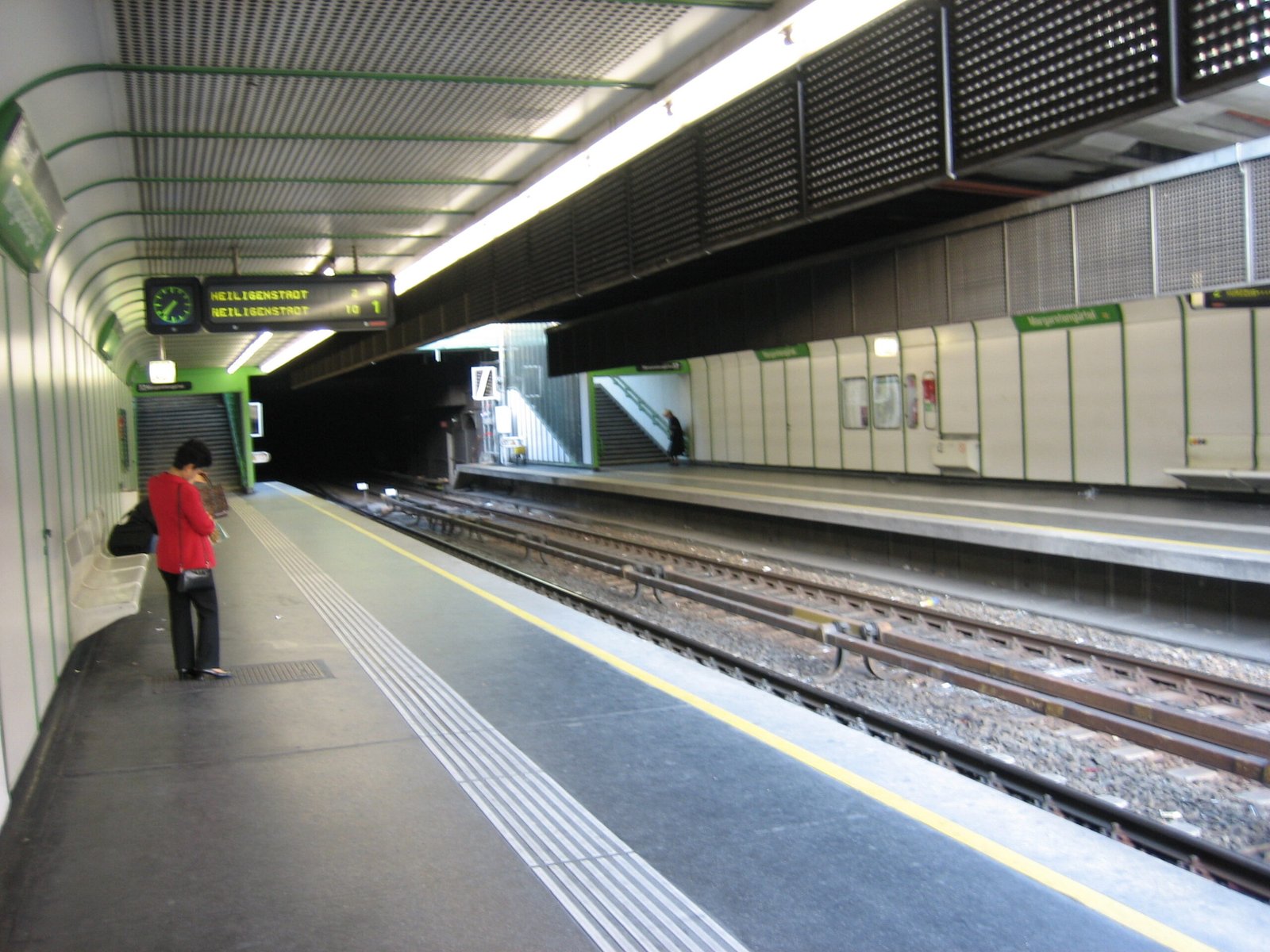
A Vienna U-Bahn station marking over a century of urban transport evolution, from 19th-century Stadtbahn to modern rapid transit.
At a glance
Margaretengürtel is a working station on the U4 line of Vienna’s underground railway system, serving the Margareten District. The station illustrates Vienna’s transit development across two distinct technological periods.
History
The station opened in 1899 as part of the Wiener Stadtbahn, Vienna’s pioneering steam-powered urban railway. This early transport network transformed the city’s mobility landscape. In 1980, the station was integrated into the Vienna U-Bahn system as an underground rapid-transit station, reflecting Vienna’s modernization of public transportation during the late 20th century.
What you see
The station reflects its dual heritage: original Stadtbahn infrastructure from 1899 coexists with modern U-Bahn modifications and facilities installed during its 1980 conversion. These architectural layers tell the story of Vienna’s evolving approach to urban mobility.
Cultural significance
Margaretengürtel represents Vienna’s progression from 19th-century railway innovation to contemporary underground networks. The station embodies the city’s commitment to sustainable urban transport and remains a functional gateway to the Margareten District’s residential and commercial areas.
Key facts
- Country: Austria
- City: Vienna, Margareten District
- Coordinates: 48.1885°N, 16.3431°E
- Original opening: 1899 (Wiener Stadtbahn)
- U-Bahn integration: 1980
- Current line: U4
Practical information & getting there
Margaretengürtel station is directly accessible via the U4 line. For current timetables, route planning, and station facilities, consult the Wiener Linien website or Vienna’s official transport information.
Sources & resources
Find it on the map
See this place and what’s around it →📷 Become a Cultural Heritage Online photographer
Share your photos of places: they stay published under your name as the author. The more they're seen, the more you get noticed — and soon a contest will reward the most appreciated photos.
Log in or sign up free to add a photoIs this page about you?
This page is read by travellers and heritage enthusiasts who find it on Google. Tell us how you are connected to this place and we will take it from there.