
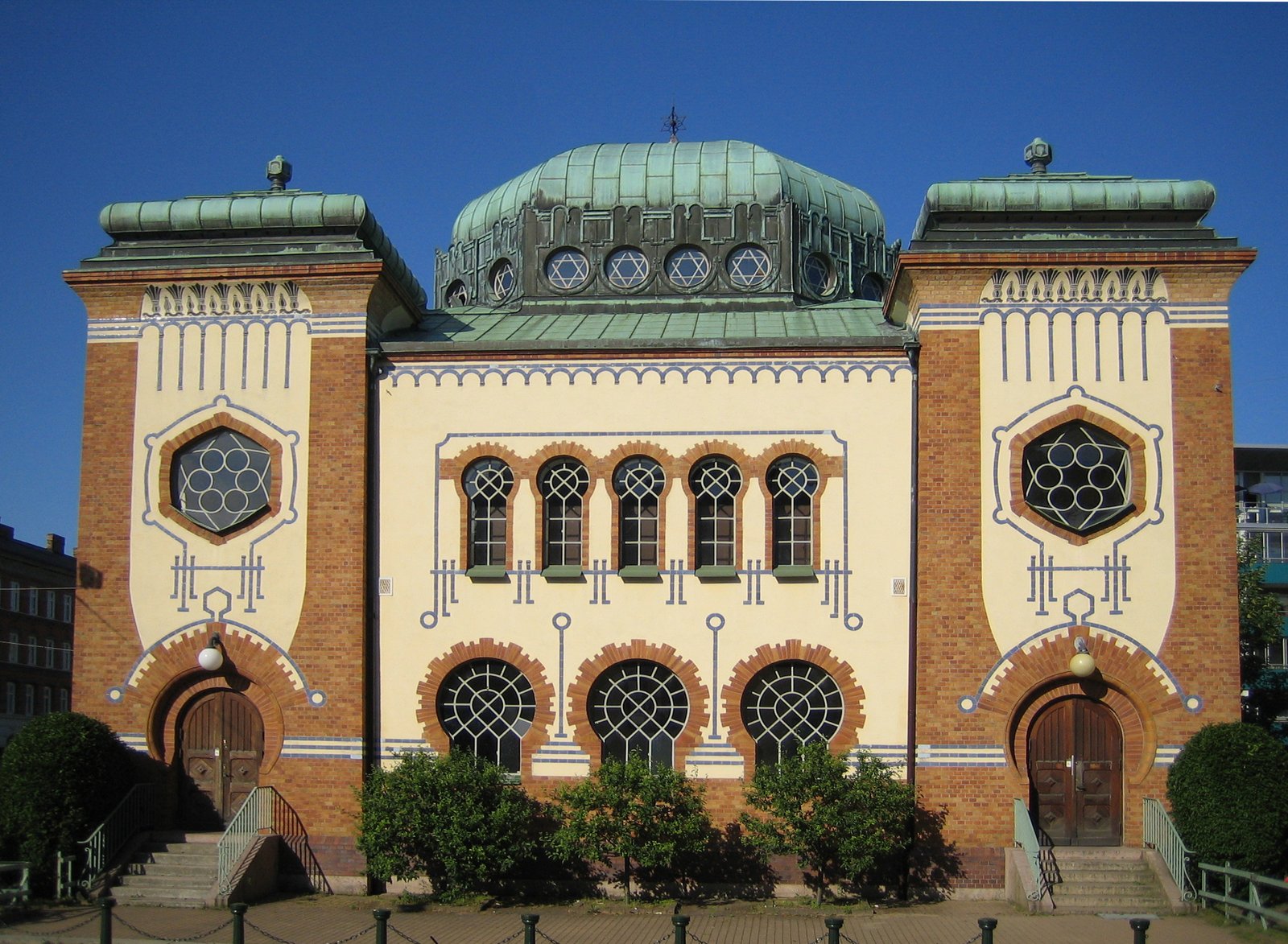
An ornate Art Nouveau and Moorish Revival synagogue completed in 1903, representing Malmö’s first non-Christian place of worship and one of Europe’s rare surviving examples of Moorish Revival Jewish architecture.
At a glance
Malmö Synagogue stands as an architectural landmark on Föreningsgatan in Skåne County. Designed by John Smedberg and completed in 1903, it serves an Orthodox Jewish congregation and welcomes approximately 5,000 visitors annually.
History
The synagogue was inaugurated as Malmö’s first non-Christian place of worship, marking a significant milestone in the city’s religious diversity. Its survival is historically significant—most European Moorish Revival synagogues were destroyed during Kristallnacht in 1938, making this building exceptionally rare. Malmö’s Jewish community also maintains two cemeteries: one section in Sankt Pauli kyrkogård in the northern part of the city and a newer section in Östra kyrkogården.
What you see
Smedberg’s design blends Art Nouveau and Moorish Revival aesthetics, creating an ornate exterior that reflects late-19th-century eclectic taste. The combination of these styles distinguishes it from contemporary European synagogue architecture and demonstrates the artistic ambitions of early-20th-century Malmö.
Cultural significance
The building embodies the cultural and religious pluralism of early modern Sweden. Its preservation offers rare evidence of Moorish Revival synagogue design in Northern Europe, a style largely erased from the continent during the Nazi era. Today it remains an active center of Jewish religious life and a testament to Malmö’s cosmopolitan heritage.
Key facts
- Location: Föreningsgatan, Malmö Municipality, Skåne County, Sweden
- Coordinates: 55.5994°N, 13.0108°E
- Completed: 1903
- Architect: John Smedberg
- Style: Art Nouveau and Moorish Revival
- Congregation: Orthodox Jewish
- Annual visitors (2021): approximately 5,000
Practical information & getting there
The synagogue is located on Föreningsgatan in central Malmö. As an active place of worship, visiting hours and accessibility may be restricted; contact ahead to arrange a visit. The site welcomes cultural heritage tourists and those with genuine interest in the community’s history.
Sources & resources
Find it on the map
See this place and what’s around it →📷 Become a Cultural Heritage Online photographer
Share your photos of places: they stay published under your name as the author. The more they're seen, the more you get noticed — and soon a contest will reward the most appreciated photos.
Log in or sign up free to add a photoIs this page about you?
This page is read by travellers and heritage enthusiasts who find it on Google. Tell us how you are connected to this place and we will take it from there.