
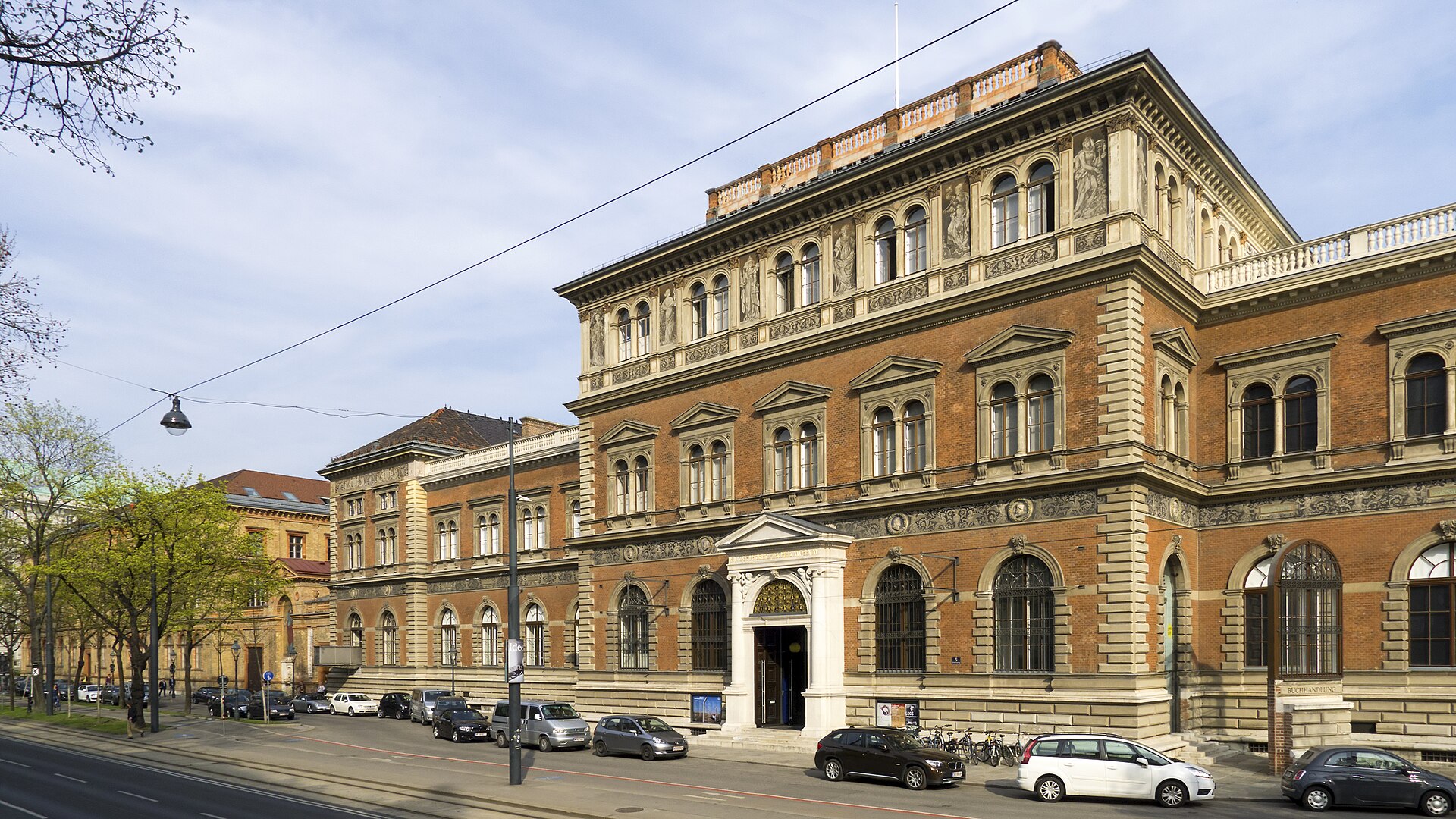
The MAK – Museum of Applied Arts (Museum für angewandte Kunst) has occupied its Ringstrasse building at Stubenring 5 in Vienna’s first district since 1871, making it one of the oldest applied arts museums in the world. With over 300,000 objects available online and holdings spanning decorative arts, design, architecture, and contemporary art, the MAK is a benchmark institution for the intersection of craft, aesthetics, and everyday material culture.
At a glance
- Type
- Applied arts, design, architecture, and contemporary art museum
- Period
- Founded 1863; at current Ringstrasse location since 1871
- Style
- Historicist Ringstrasse architecture (Heinrich von Ferstel, 1868–71); contemporary exhibition design within
- Location
- Stubenring 5, 1010 Vienna, Austria
- Coordinates
- 48.2076° N, 16.3811° E
Overview
The MAK was established to promote and document applied arts and crafts as a counterpart to the fine arts museums of the Habsburg era, drawing inspiration from London’s South Kensington Museum (now the Victoria and Albert Museum). Today it operates as one of Austria’s Federal Museums, with a mandate that has expanded to encompass contemporary architecture, experimental design, and digital art. Its online collection of over 300,000 objects is the largest published by any Austrian federal museum.
History
The museum was founded in 1863 under Emperor Franz Joseph I and moved to its current Ringstrasse building — designed by Heinrich von Ferstel in a Renaissance Revival style — in 1871. Through the late 19th century it was instrumental in raising standards of Austrian craft production, maintaining close links with the Vienna Secession and the Wiener Werkstätte. After significant institutional renewal in the 1980s and 1990s, the MAK adopted a more experimental posture, commissioning contemporary artists and architects to redesign its permanent galleries. Since 2004 its exterior has been illuminated by American artist James Turrell’s permanent outdoor installation MAKlite.
What you see
Permanent galleries cover European decorative arts from the Romanesque period to the 20th century, including outstanding collections of Jugendstil and Wiener Werkstätte objects. Temporary exhibitions address architecture, contemporary design, and digital culture. The MAK Design Lab presents the museum’s design collection in a hands-on context, while the HEIMO ZOBERNIG reading room and the MAK Art Society spaces offer additional programming. The building’s courtyard garden is a pleasant public space in summer.
Cultural significance
The MAK occupies a foundational position in the history of design education and craft promotion in Central Europe. Its early role in nurturing the Wiener Werkstätte and the applied-arts dimension of the Secession movement gave it lasting influence on 20th-century design globally. In 2015 it became the first museum to acquire a work of art using bitcoin, signalling its continued interest in operating at the edge of cultural and technological development.
Practical information
- Address
- Stubenring 5, 1010 Vienna, Austria
- Hours
- Tuesday 10:00–21:00; Wednesday–Sunday 10:00–18:00; closed Monday. Check official website for public holiday schedule.
- Admission
- Check official website for current ticket prices; free admission on Tuesdays after 18:00.
- Website
- mak.at
Getting there
The MAK is on the Ringstrasse near Stubentor. Take U3 to Stubentor (one stop from Stephansplatz); the museum is directly visible from the U-Bahn exit. Tram lines 2 and 74A also stop at Stubentor. The museum is a 10-minute walk from St Stephen’s Cathedral through the historic centre.
Sources & resources
Gallery
Find it on the map
See this place and what’s around it →📷 Become a Cultural Heritage Online photographer
Share your photos of places: they stay published under your name as the author. The more they're seen, the more you get noticed — and soon a contest will reward the most appreciated photos.
Log in or sign up free to add a photoIs this page about you?
This page is read by travellers and heritage enthusiasts who find it on Google. Tell us how you are connected to this place and we will take it from there.