
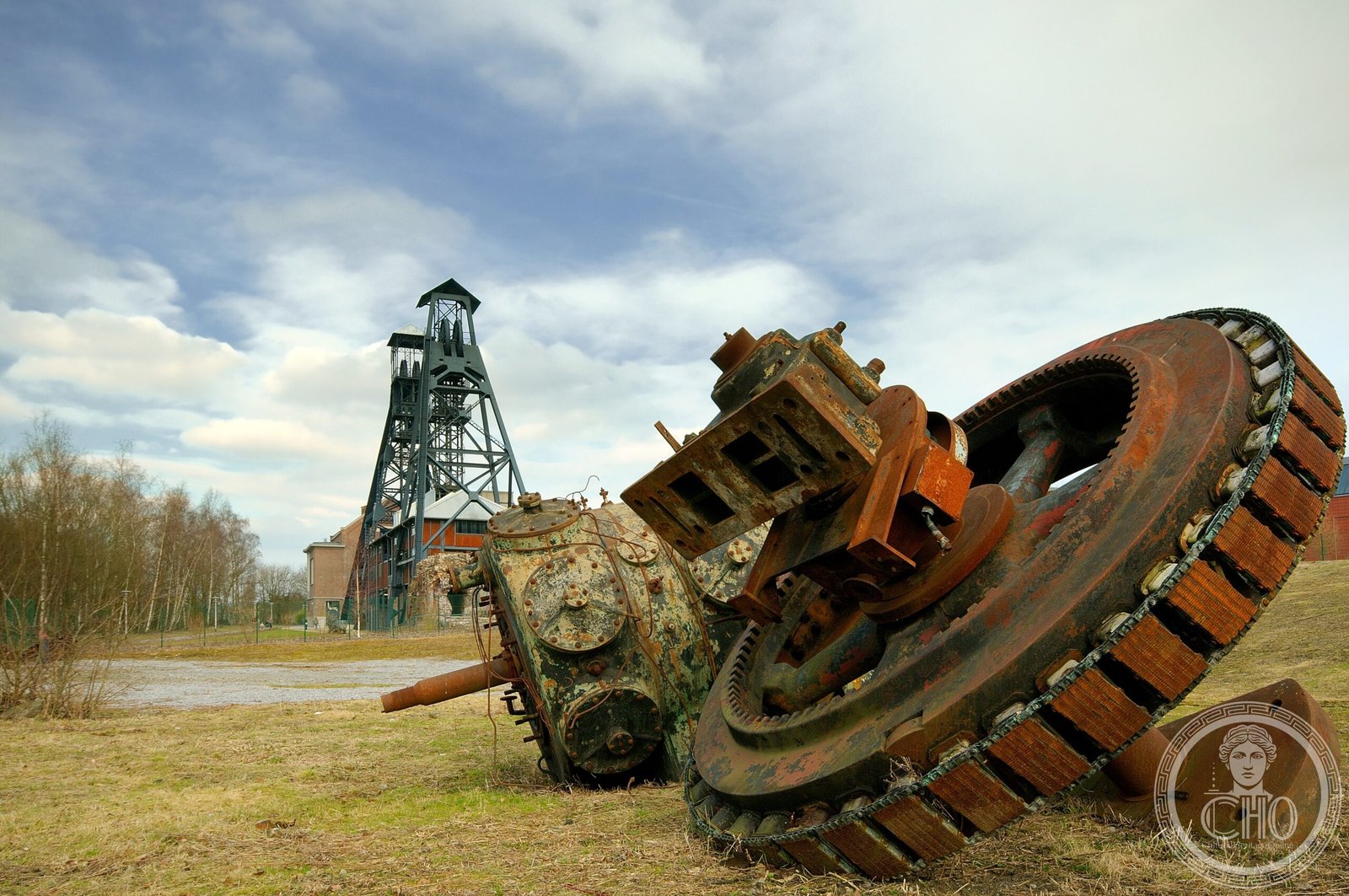
Four industrial complexes preserve the legacy of Belgium’s coal mining heritage, documenting two centuries of extraction, labour, and technological innovation.
At a glance
This UNESCO World Heritage grouping comprises four distinct mining sites—Grand-Hornu, Bois-du-Luc, Bois du Cazier, and Blegny-Mine—spread across the French-speaking provinces of Hainaut and Liège. Together they represent the breadth and depth of Belgian coal mining from its industrial expansion through the 20th century.
History
Belgium’s coal mining industry was essential to the nation’s industrial development throughout the 19th and 20th centuries. The four sites chronicle this pivotal era, when Wallonia’s coal seams powered factories, railways, and cities across Europe. Each site reflects distinct phases and methods of extraction, from early deep mining to later mechanised operations.
What you see
The four sites contain pit-head structures, winding towers, slag heaps, miners’ housing, and processing facilities. Buildings range from functional industrial architecture to more refined administrative structures, documenting the social and technical infrastructure that supported extraction operations.
Cultural significance
These sites stand as monuments to industrial labour and working-class history. They preserve tangible evidence of the miners’ experience—from workplace conditions to community life—and illustrate the technological systems that powered industrial Europe. The grouping was inscribed as a UNESCO World Heritage Site in recognition of this broader historical importance.
Key facts
- Country: Belgium
- Provinces: Hainaut and Liège, Wallonia
- Component sites: Grand-Hornu, Bois-du-Luc, Bois du Cazier, Blegny-Mine
- Period: 19th–20th centuries
- UNESCO World Heritage Site: yes
- Coordinates: 50.4353, 3.8383
Practical information & getting there
The four sites are distributed across southern Belgium’s Walloon region. Each can be visited individually. For current opening hours, admission fees, and guided-tour availability, consult local tourism offices or individual site websites.
Sources & resources
Find it on the map
See this place and what’s around it →📷 Become a Cultural Heritage Online photographer
Share your photos of places: they stay published under your name as the author. The more they're seen, the more you get noticed — and soon a contest will reward the most appreciated photos.
Log in or sign up free to add a photo