
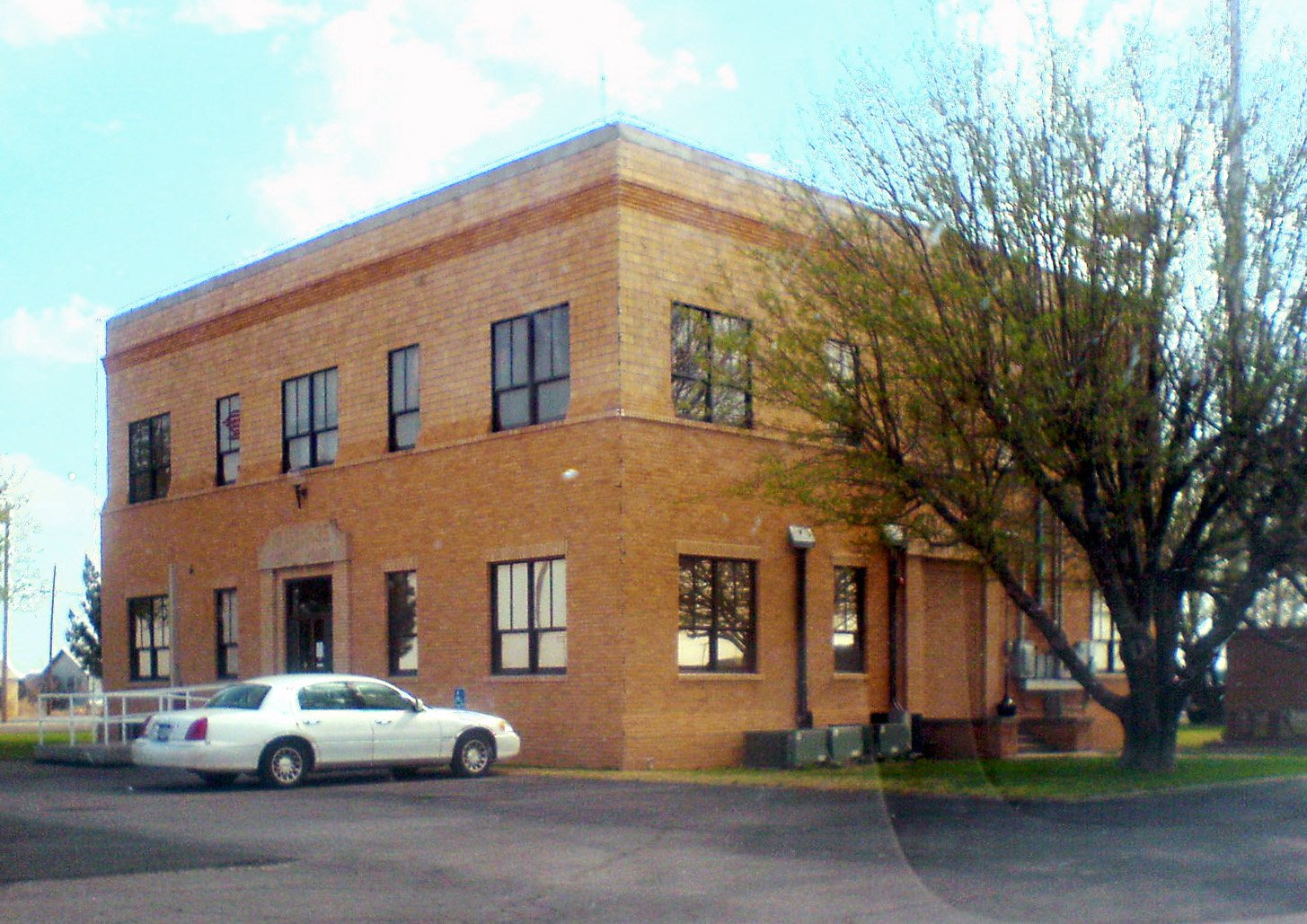
A two-story Moderne courthouse in remote West Texas, built during an oil boom and now the tallest structure in one of America’s least populous counties.
At a glance
Completed in 1935, the Loving County Courthouse is the first permanent courthouse in Loving County. Designed by architect Evan J. Wood, it stands as the only symbol of county government in the county and its most prominent building.
History
Loving County was organized in 1931 following an oil boom in West Texas. A temporary courthouse served the new county until this permanent structure was built four years later. The county’s population peaked at 600 in 1933 but has since declined sharply to 64 residents, making Loving County one of the least densely populated in the United States.
What you see
Architect Evan J. Wood designed the building in the Moderne style, a streamlined aesthetic emerging in the 1930s. The two-story structure remains the tallest building in Loving County. Wood received $2,684.60 for his design work—a modest sum reflecting the courthouse’s practical proportions and the era’s economic constraints.
Cultural significance
The courthouse documents a pivotal moment in West Texas history: the rapid settlement and subsequent decline of an oil-boom region. Its survival and continued use reflect the enduring importance of local government structures, even in communities that have shrunk dramatically from their initial promise.
Key facts
- Country: United States
- City: Mentone, Texas
- Completed: 1935
- Architect: Evan J. Wood
- Style: Moderne
- Coordinates: 31.708°N, 103.599°W
Practical information & getting there
Mentone is located in Loving County in far West Texas, roughly 50 miles south of Pecos. The courthouse remains active as the county’s seat of government. Local roads provide access; plan ahead for supplies and services in this sparsely populated region.
Sources & resources
Find it on the map
See this place and what’s around it →📷 Become a Cultural Heritage Online photographer
Share your photos of places: they stay published under your name as the author. The more they're seen, the more you get noticed — and soon a contest will reward the most appreciated photos.
Log in or sign up free to add a photoIs this page about you?
This page is read by travellers and heritage enthusiasts who find it on Google. Tell us how you are connected to this place and we will take it from there.