

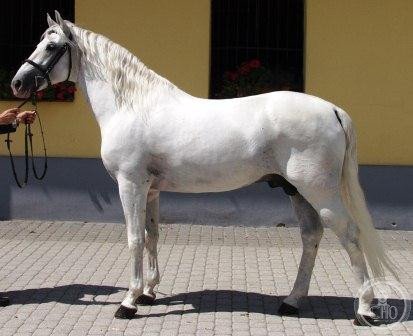
In the Alpine foothills near Graz, the Piber Federal Stud preserves four centuries of classical horsemanship through the breeding and training of the Lipizzan—a gray, powerful horse whose bloodlines trace to eight foundation stallions and whose movements embody centuries of European haute école tradition.
At a glance
The Lipizzan is a European riding horse breed developed in the sixteenth-century Habsburg Empire, distinguished by its gray coat, muscular build, and longevity. These horses are trained in the classical dressage movements known as the “airs above the ground”—highly controlled, stylized jumps performed without forward motion. Today, approximately 11,000 registered Lipizzans exist across Europe and beyond, with the majority bred and trained using methods unchanged for hundreds of years.
Origins and history
The breed takes its name from the village of Lipica (now in Slovenia), where one of the earliest Lipizzan stud farms was established during the Habsburg era and remains active today. All modern Lipizzans descend from eight stallions foaled in the late eighteenth and early nineteenth centuries; every breeding stallion carries the name of its foundation sire within its own pedigree.
War shaped the breed’s survival. Lipizzans endured conflict during the War of the First Coalition, World War I, and World War II. The dramatic rescue of Lipizzans by Allied troops in 1945 became the subject of the 1963 Disney film Miracle of the White Stallions.
The tradition today
The Piber Federal Stud near Graz serves as the primary breeding center for the Spanish Riding School of Vienna, Austria’s legendary institution dedicated to classical dressage. Here, young Lipizzans are trained in traditional methods that preserve the discipline’s historical forms and philosophical foundations. The horses learn movements including the passage, piaffe, and levade—maneuvers requiring years of patient, systematic development.
Breeding stallions and mares are selected according to strict criteria maintained by the Lipizzan International Federation, which coordinates registries across 9 state studs in Europe and 19 countries worldwide. Handlers emphasize the horse’s slow maturation; classical training typically begins only after physical and psychological readiness.
Cultural significance
Lipizzan breeding represents a living continuity between Renaissance horsemanship and contemporary practice. The discipline embodies European ideals of harmony between rider and horse, grace under control, and the preservation of knowledge across generations. The breed’s survival through repeated warfare demonstrates both its cultural value and the commitment of communities to sustaining it.
In 2015, UNESCO recognized Lipizzan horse breeding traditions as Intangible Cultural Heritage of Humanity, acknowledging the knowledge systems, training methods, and community practices that sustain this form of classical expression.
Key facts
- Country: Austria
- Anchor community: Piber, near Graz
- UNESCO listing: Representative List of the Intangible Cultural Heritage of Humanity (2015)
- Breed origin: Sixteenth-century Habsburg Empire
- Foundation bloodstock: Eight stallions foaled in the late eighteenth and early nineteenth centuries
- Global population: Approximately 11,000 registered horses across 19 countries
- Primary institution: Spanish Riding School of Vienna
Where to experience it
The Spanish Riding School of Vienna presents performances of classical dressage featuring Lipizzans trained at Piber. The school also offers guided tours of its facilities. You can visit the Piber Federal Stud directly to observe breeding and training operations, though advance arrangements are recommended. Information on visiting hours and tours is available through the Spanish Riding School’s official channels.
Sources & resources
- Lipizzan — Wikipedia
- Cultural Heritage Online
- UNESCO Representative List of the Intangible Cultural Heritage of Humanity
Find it on the map
See this place and what’s around it →📷 Become a Cultural Heritage Online photographer
Share your photos of places: they stay published under your name as the author. The more they're seen, the more you get noticed — and soon a contest will reward the most appreciated photos.
Log in or sign up free to add a photo