

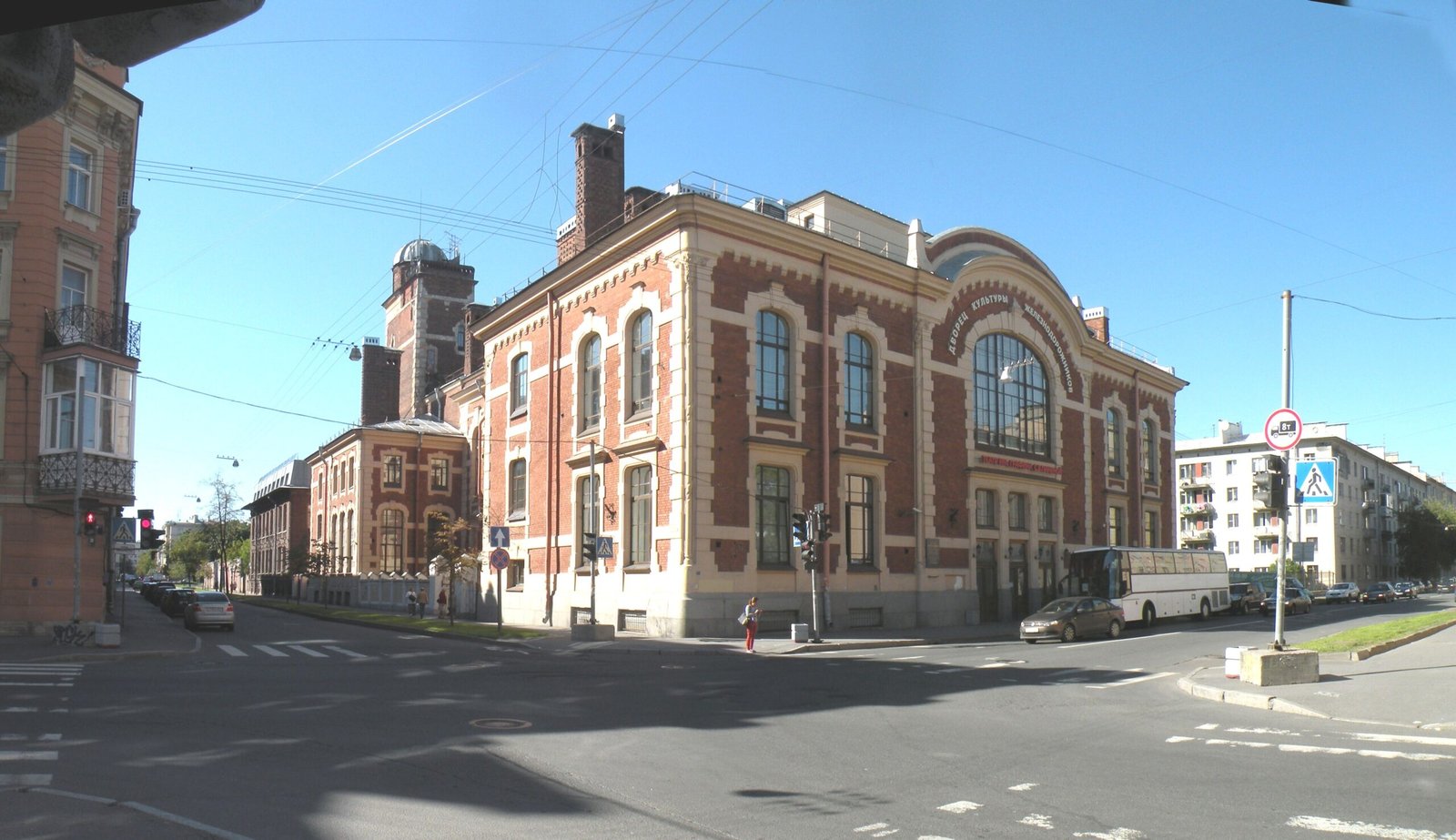
A civic and cultural venue built by Countess Sofia Panina to bring art and theatre to working-class Saint Petersburg.
At a glance
The Ligovsky People’s House stands at the junction of Tambovskaya and Prilukskaya streets as a monument to early-twentieth-century progressive philanthropy. The building served the cultural needs of ordinary citizens through performance and artistic programming.
History
Constructed between 1901 and 1903, the Ligovsky People’s House was funded entirely by Countess Sofia Panina, a prominent philanthropist of Imperial Russia. It formed part of a broader movement across Russia to establish People’s Houses—civic institutions designed to democratize access to culture and the arts. Similar establishments emerged simultaneously across Europe, reflecting shared Progressive-era ideals about public education and social reform.
What you see
The building housed multiple facilities for cultural and artistic activity. An integrated theatre space anchored its programming, enabling live performances and communal gatherings. The architecture accommodated both performance and audience needs typical of early Imperial cultural centres.
Cultural significance
The Ligovsky People’s House represents a pivotal moment when Russian elites invested in bringing cultural life to the working classes. Such institutions challenged the idea that art was an elite privilege, establishing models for public access to theatre and cultural appreciation that influenced civic design across Europe and Imperial Russia alike.
Key facts
- Country: Russia
- City: Saint Petersburg
- Built: 1901–1903
- Founder: Countess Sofia Panina
- Coordinates: 59.9094°N, 30.3512°E
Practical information & getting there
The Ligovsky People’s House is located at the corner of Tambovskaya and Prilukskaya streets in Saint Petersburg. Check local sources for current opening hours and accessibility information.
Sources & resources
Find it on the map
See this place and what’s around it →📷 Become a Cultural Heritage Online photographer
Share your photos of places: they stay published under your name as the author. The more they're seen, the more you get noticed — and soon a contest will reward the most appreciated photos.
Log in or sign up free to add a photoIs this page about you?
This page is read by travellers and heritage enthusiasts who find it on Google. Tell us how you are connected to this place and we will take it from there.