
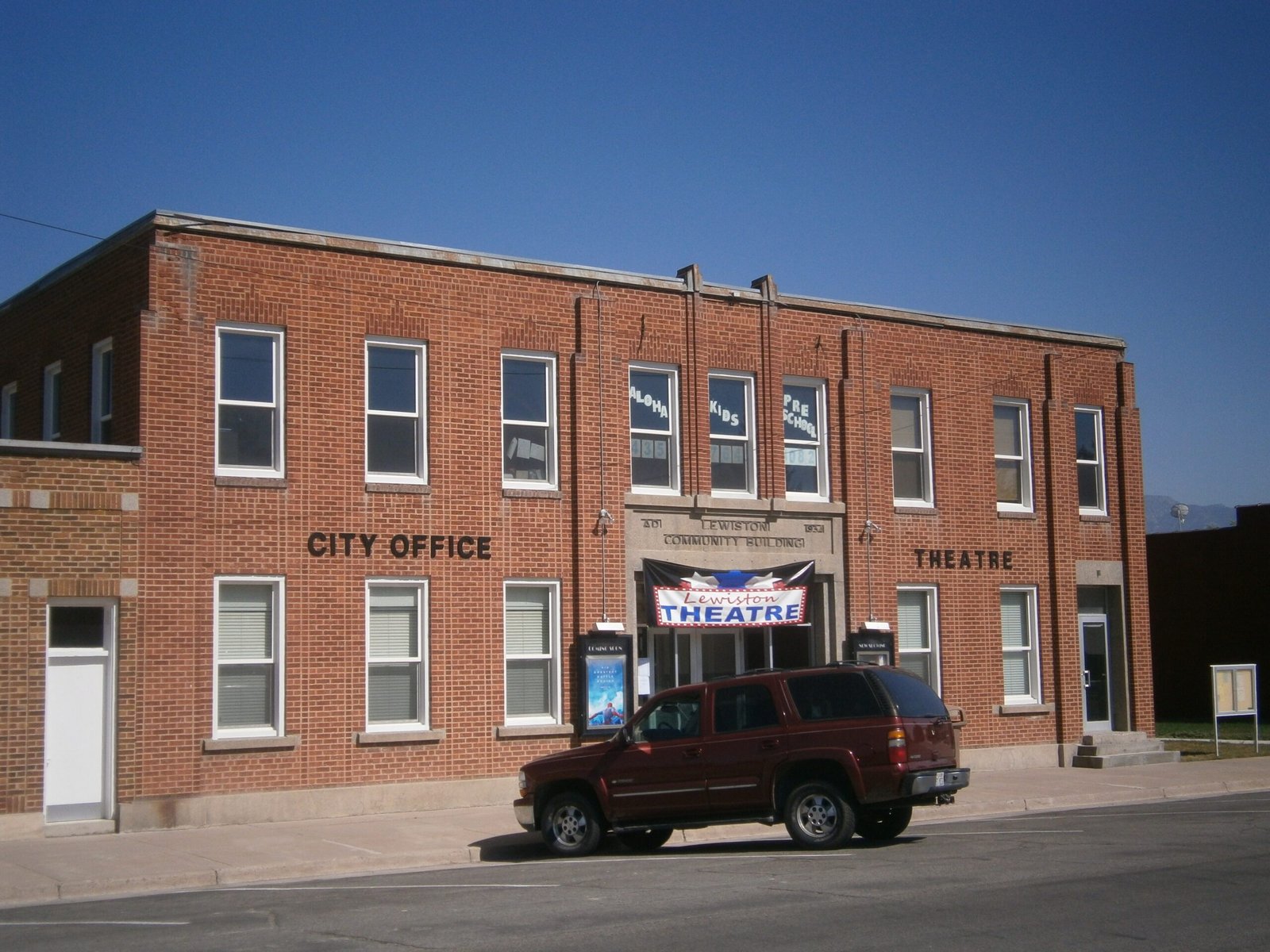
A Depression-era civic landmark embodying PWA Moderne design, this Utah building stands as a testament to New Deal public investment in small-town America.
At a glance
Built during the Great Depression, this community building reflects the architectural ambitions of the Public Works Administration. Its PWA Moderne style captures the optimism and streamlined aesthetics of 1930s modernism adapted for rural contexts.
History
The Lewiston Community Building was constructed in 1935 as part of the broader New Deal effort to stimulate employment and provide civic infrastructure across America. Designed by architect Karl C. Schaub, it was recognized for its historical significance and listed on the National Register of Historic Places on April 1, 1985.
What you see
The building exemplifies PWA Moderne, a style that combined modernist principles with functional design. This architectural approach emphasized clean lines, geometric forms, and materials suited to public use—reflecting the era’s confidence in progressive design for community benefit.
Cultural significance
The building represents a pivotal moment in American history when federal investment supported local infrastructure and employment. Such structures demonstrate how Depression-era public programs shaped the physical fabric of small communities.
Key facts
- Built: 1935
- Architect: Karl C. Schaub
- Style: PWA Moderne
- Location: Lewiston, Utah, USA
- Coordinates: 41.9753, −111.8556
- Listed on the National Register of Historic Places: April 1, 1985
Practical information & getting there
The building is located in Lewiston, Utah. Verify current visiting hours and access before your visit, as community buildings may have restricted public access depending on programming and events.
Sources & resources
Find it on the map
See this place and what’s around it →📷 Become a Cultural Heritage Online photographer
Share your photos of places: they stay published under your name as the author. The more they're seen, the more you get noticed — and soon a contest will reward the most appreciated photos.
Log in or sign up free to add a photoIs this page about you?
This page is read by travellers and heritage enthusiasts who find it on Google. Tell us how you are connected to this place and we will take it from there.