

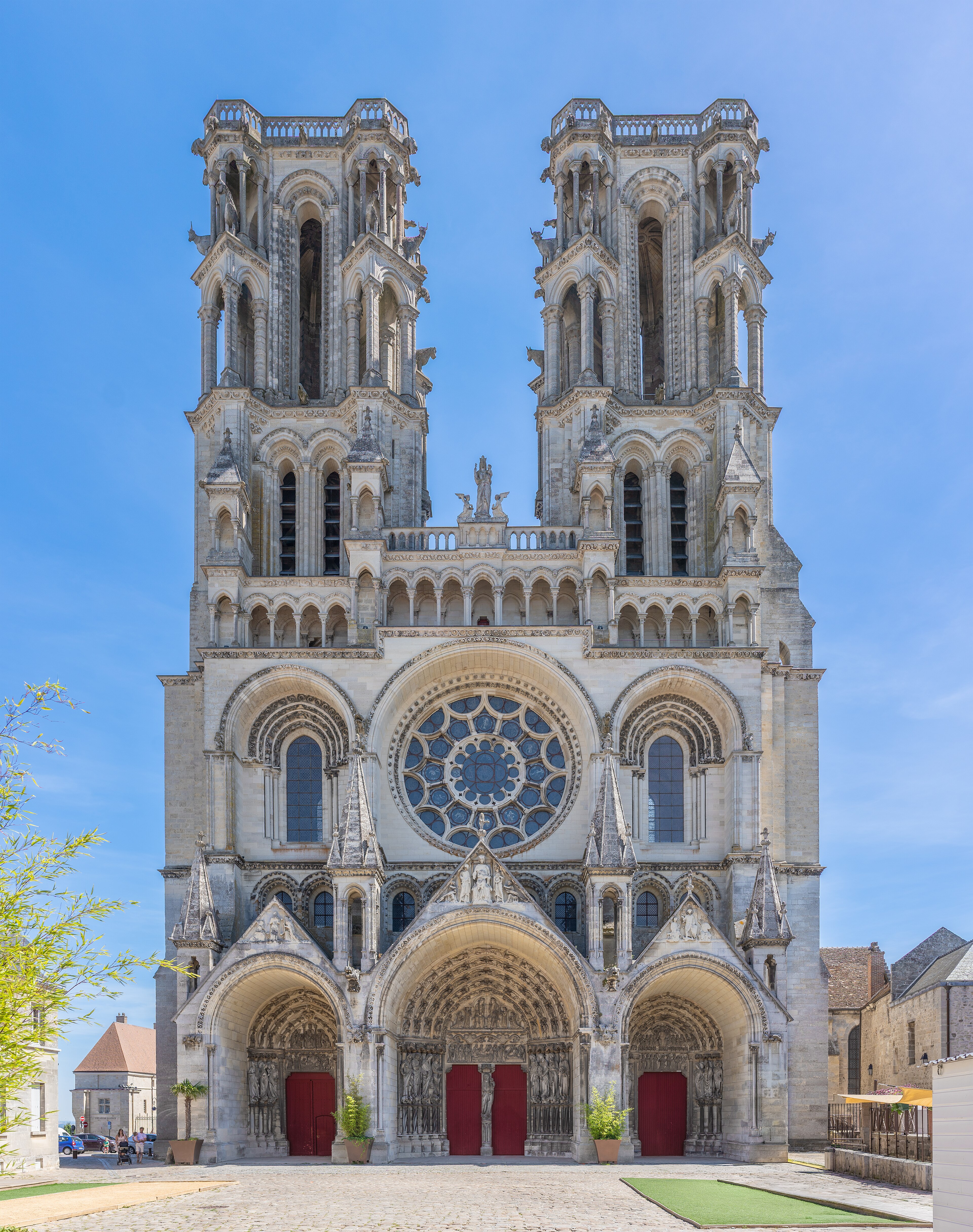
A masterwork of early Gothic design, this limestone cathedral stands as one of the most stylistically coherent ecclesiastical buildings of the High Middle Ages.
At a glance
Laon Cathedral ranks among Europe’s most significant examples of early Gothic architecture. Constructed over the twelfth and thirteenth centuries, the building achieves remarkable stylistic unity across its spans and elevations, distinguishing it from many contemporaries whose designs shifted across decades of building campaigns.
History
The cathedral served as the seat of the Diocese of Laon until 1802, when the diocese was suppressed during the Napoleonic reorganization of French religious administration. The French state granted the building official protection as a monument historique in 1840, recognizing its architectural and historical significance.
What you see
The building embodies the principles of early Gothic—pointed arches, ribbed vaults, and sophisticated proportional systems that distinguish it from Romanesque predecessors. The cathedral’s stonework and structural logic reflect the innovations that would define Gothic cathedral building across northern Europe for centuries.
Cultural significance
Laon Cathedral stands as a critical document in the history of Gothic architecture. Its unified design demonstrates how twelfth- and thirteenth-century masons resolved the structural and aesthetic challenges that defined the period. The building influenced ecclesiastical design throughout the Gothic era and remains essential to understanding medieval architectural development.
Key facts
- Country: France
- City: Laon, Aisne, Hauts-de-France
- Coordinates: 49.5643°N, 3.625°E
- Built: 12th–13th centuries
- Designated monument historique: 1840
Practical information & getting there
Laon is accessible by rail and road from Paris and other northern French cities. The cathedral stands in the upper town, a medieval quarter that rewards exploration. Opening hours and visiting conditions should be confirmed with local tourism offices before traveling.
Sources & resources
Find it on the map
See this place and what’s around it →
📷 Become a Cultural Heritage Online photographer
Share your photos of places: they stay published under your name as the author. The more they're seen, the more you get noticed — and soon a contest will reward the most appreciated photos.
Log in or sign up free to add a photoIs this page about you?
This page is read by travellers and heritage enthusiasts who find it on Google. Tell us how you are connected to this place and we will take it from there.