
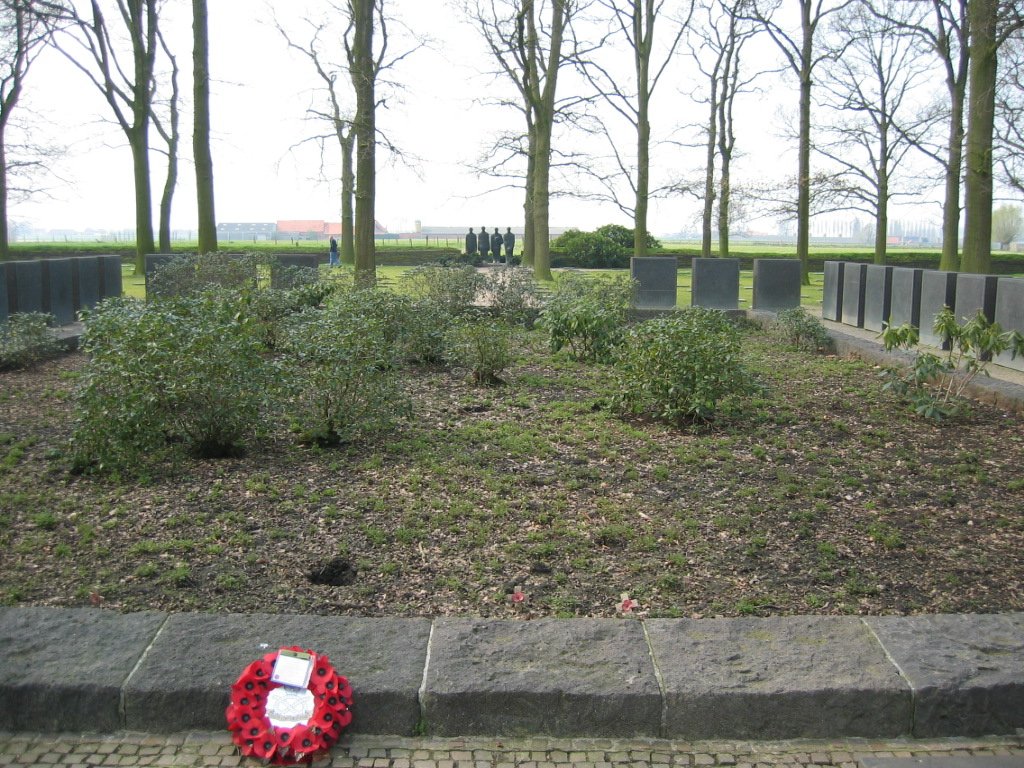
A solemn resting place for over 44,000 fallen soldiers, Langemark cemetery stands near the site of World War I’s first poison gas attacks and marks the tragedy of young conscripts who died far from home.
At a glance
Located in West Flanders near the village of Langemark, this German military cemetery holds the remains of soldiers killed during the First World War, including schoolboys as young as fifteen. The site evolved from scattered graves in 1915 and was formally dedicated in 1932. Emil Krieger’s sculpture of four mourning figures, added in 1956, presides over the grounds with quiet dignity.
History
The cemetery originated during the First Battle of Ypres in 1914, where inexperienced German infantrymen suffered catastrophic losses in frontal assaults against Allied positions. Fifteen percent of the German forces engaged were students or schoolboys, many barely old enough to bear arms. In April 1915, the village became the location of the first poison gas attacks on the Western Front, marking the beginning of the Second Battle of Ypres.
Initially a small collection of graves, the cemetery grew substantially over the decades. It was formally dedicated in 1932 and has undergone numerous extensions. The Volksbund Deutsche Kriegsgräberfürsorge, the German War Graves Commission, has maintained the site throughout its history.
What you see
The cemetery’s most striking feature is the comrades’ grave near the entrance, a mass burial containing 24,917 servicemen, including World War I flying ace Werner Voss. Adjacent to this grave, beneath oak trees, lie another 10,143 soldiers, among them two British soldiers killed in 1918.
A separate section honors approximately 3,000 schoolboy soldiers who fell during the First Battle of Ypres. The front of the cemetery features Professor Emil Krieger’s bronze sculpture—four mourning figures in profound sorrow—dedicated in 1956 to stand sentinel over the fallen.
Cultural significance
Langemark represents a powerful memorial to the human cost of industrial warfare and the particular tragedy of youth conscription. The cemetery has become a place of reconciliation: in 2008, British veteran Harry Patch—among the last surviving soldiers of the First World War—visited to honor a fallen German soldier. In 2009, a joint Belgian, British, and German ceremony saw a traditional German soldiers’ lament performed on bagpipes, followed by attendees socializing peacefully in a village pub—a poignant symbol of healing across former enemy lines.
Key facts
- Country: Belgium
- Municipality: Langemark-Poelkapelle, West Flanders
- Burials: 44,000+
- Dedicated: 1932
- Coordinates: 50.9206°N, 2.9167°E
- Maintained by: Volksbund Deutsche Kriegsgräberfürsorge (German War Graves Commission)
Practical information & getting there
The cemetery is open to visitors and easily accessible from the village of Langemark in West Flanders. The site is maintained to a high standard and serves as both a solemn memorial and a place of pilgrimage for those remembering the First World War. For detailed visiting information, directions, and seasonal hours, consult the German War Graves Commission website or local West Flanders tourism services.
Sources & resources
Find it on the map
See this place and what’s around it →
📷 Become a Cultural Heritage Online photographer
Share your photos of places: they stay published under your name as the author. The more they're seen, the more you get noticed — and soon a contest will reward the most appreciated photos.
Log in or sign up free to add a photoIs this page about you?
This page is read by travellers and heritage enthusiasts who find it on Google. Tell us how you are connected to this place and we will take it from there.