

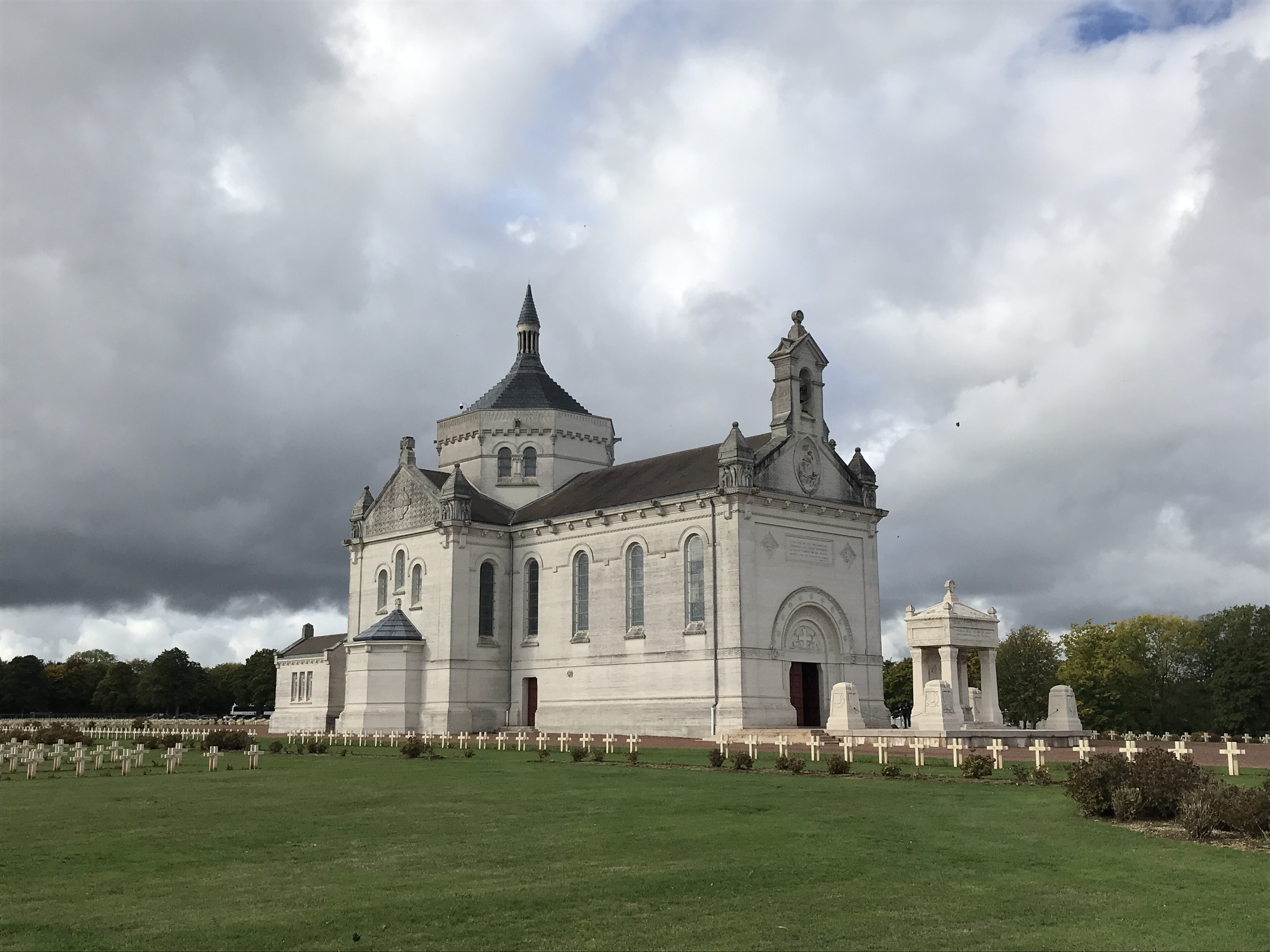
The world’s largest French military cemetery crowns a distinctive ridge northwest of Arras, dominating the Douai plain with solemn remembrance of fallen soldiers.
At a glance
Notre Dame de Lorette comprises a ridge, basilica, and national cemetery at Ablain-Saint-Nazaire. The ridge’s high point rises 165 metres, making it a commanding landmark across the otherwise flat landscape of northern France.
The site developed as France’s principal military burial ground, its significance rooted in the region’s role during modern European conflict. The cemetery reflects the scale of casualties and France’s commitment to honouring those who died.
What you see
A basilica stands atop the hump-backed ridge, visible from considerable distances. The 165-metre elevation commands views across the Douai plain and toward Arras. With Vimy Ridge nearby, Notre Dame de Lorette forms part of a distinctive skyline defining this corner of northern France.
Cultural significance
As the world’s largest French military cemetery, the site holds profound national importance. It serves as a place of remembrance and pilgrimage, reflecting France’s historical relationship with sacrifice and memory in the modern era.
Key facts
- Location: Ablain-Saint-Nazaire, France
- Coordinates: 50.4011°N, 2.7189°E
- UNESCO World Heritage Site: Yes
- Ridge elevation: 165 metres
- Status: World’s largest French military cemetery
Practical information & getting there
Notre Dame de Lorette is located northwest of Arras in the Pas-de-Calais region. The site is accessible by road and welcomes visitors year-round. Respectful dress and conduct are expected when visiting this solemn memorial.
Sources & resources
Find it on the map
See this place and what’s around it →📷 Become a Cultural Heritage Online photographer
Share your photos of places: they stay published under your name as the author. The more they're seen, the more you get noticed — and soon a contest will reward the most appreciated photos.
Log in or sign up free to add a photoIs this page about you?
This page is read by travellers and heritage enthusiasts who find it on Google. Tell us how you are connected to this place and we will take it from there.