
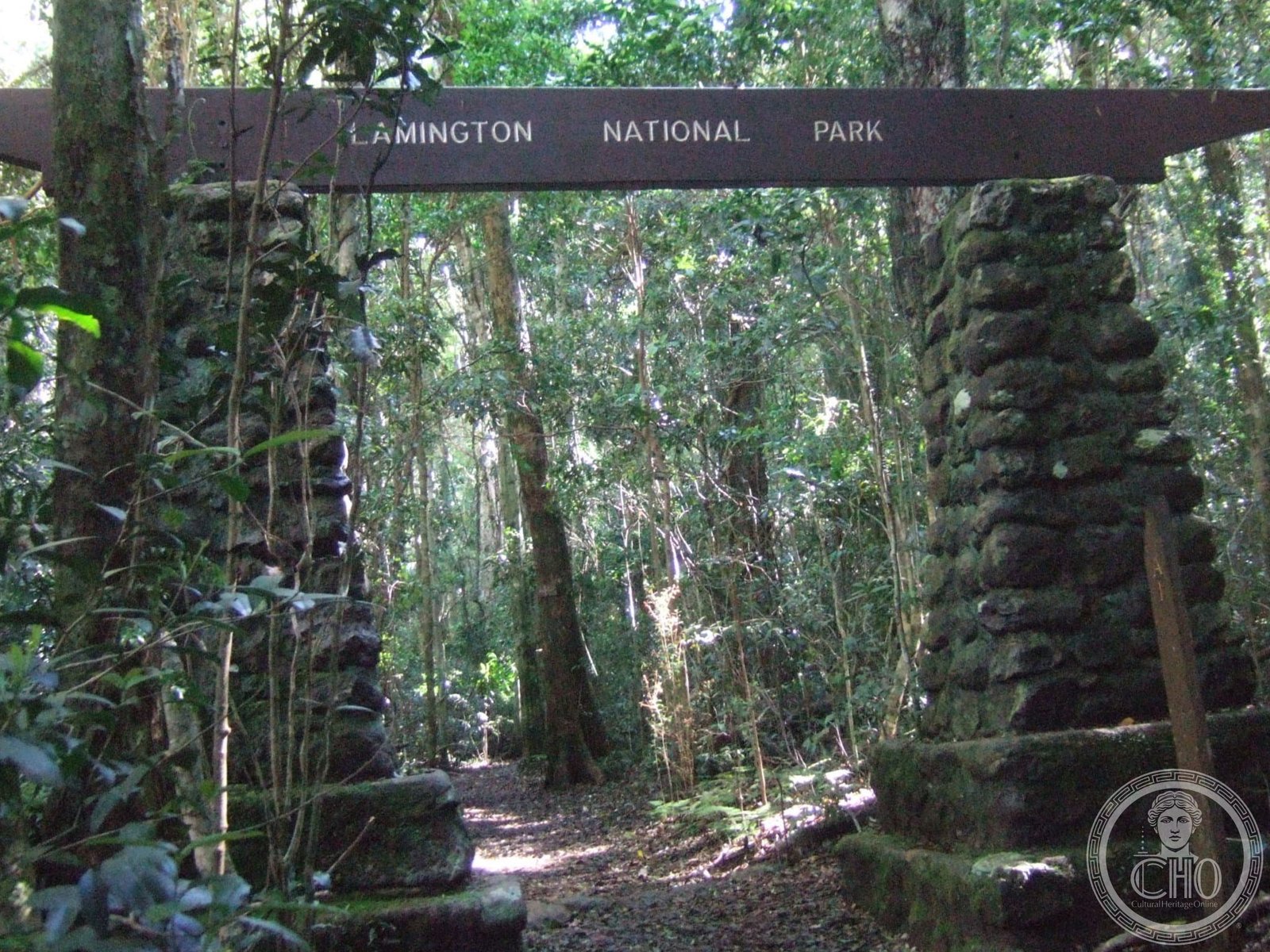
A 20,600-hectare sanctuary of subtropical rainforest straddling the Queensland–New South Wales border, celebrated for its biodiversity, ancient trees, waterfalls and mountain vistas.
At a glance
Lamington National Park protects some of Australia’s most significant temperate rainforest. Located in the McPherson Range, the park lies 85 kilometres southwest of the Gold Coast and 110 kilometres north of Brisbane. Its landscape encompasses dense forest canopy, dramatic waterfalls, and walking tracks offering views across the mountains and eastern Australian lowlands.
History
The park was recognised in 1986 when the Gondwana Rainforests of Australia—a transnational World Heritage Site—was inscribed, protecting forests that have evolved since the Gondwana supercontinent. Lamington forms part of the Shield Volcano Group within this designation. In 2007, the park was added to the Australian National Heritage List. Recognition culminated in 2009 when it was named a Q150 Icon of Queensland for its role as a major natural attraction.
What you see
The park’s dominant feature is subtropical rainforest with ancient trees rising above the canopy. Water cascades down the mountainsides in numerous waterfalls. Walking tracks wind through the forest and along ridgelines, revealing dense undergrowth, fern gullies and panoramic vistas. The landscape reflects the volcanic origins of the McPherson Range. Neighbouring protected areas—Springbrook National Park to the east and Border Ranges National Park to the south—conserve similar rainforest ecosystems.
Cultural significance
Lamington protects part of the Eastern Australian temperate forests, a biodiversity hotspot of global importance. The park is designated an Important Bird Area by BirdLife International because of its critical role in conserving threatened bird species. The Gondwana rainforests themselves represent a living link to Australia’s geological and biological past, hosting species and plant communities of international scientific value.
Key facts
- Country: Australia (Queensland & New South Wales border)
- Area: 20,600 hectares (51,000 acres)
- Coordinates: −28.14°S, 153.12°E
- World Heritage Site: Gondwana Rainforests of Australia (inscribed 1986)
- Australian National Heritage List: 2007
Practical information & getting there
The park is accessible from the Gold Coast (85 km) and Brisbane (110 km). Multiple walking tracks range from short forest strolls to longer mountain hikes. Visitor facilities are available; consult the Queensland Parks and Wildlife Service for current access information, accommodation options and seasonal conditions.
Sources & resources
Find it on the map
See this place and what’s around it →📷 Become a Cultural Heritage Online photographer
Share your photos of places: they stay published under your name as the author. The more they're seen, the more you get noticed — and soon a contest will reward the most appreciated photos.
Log in or sign up free to add a photo