
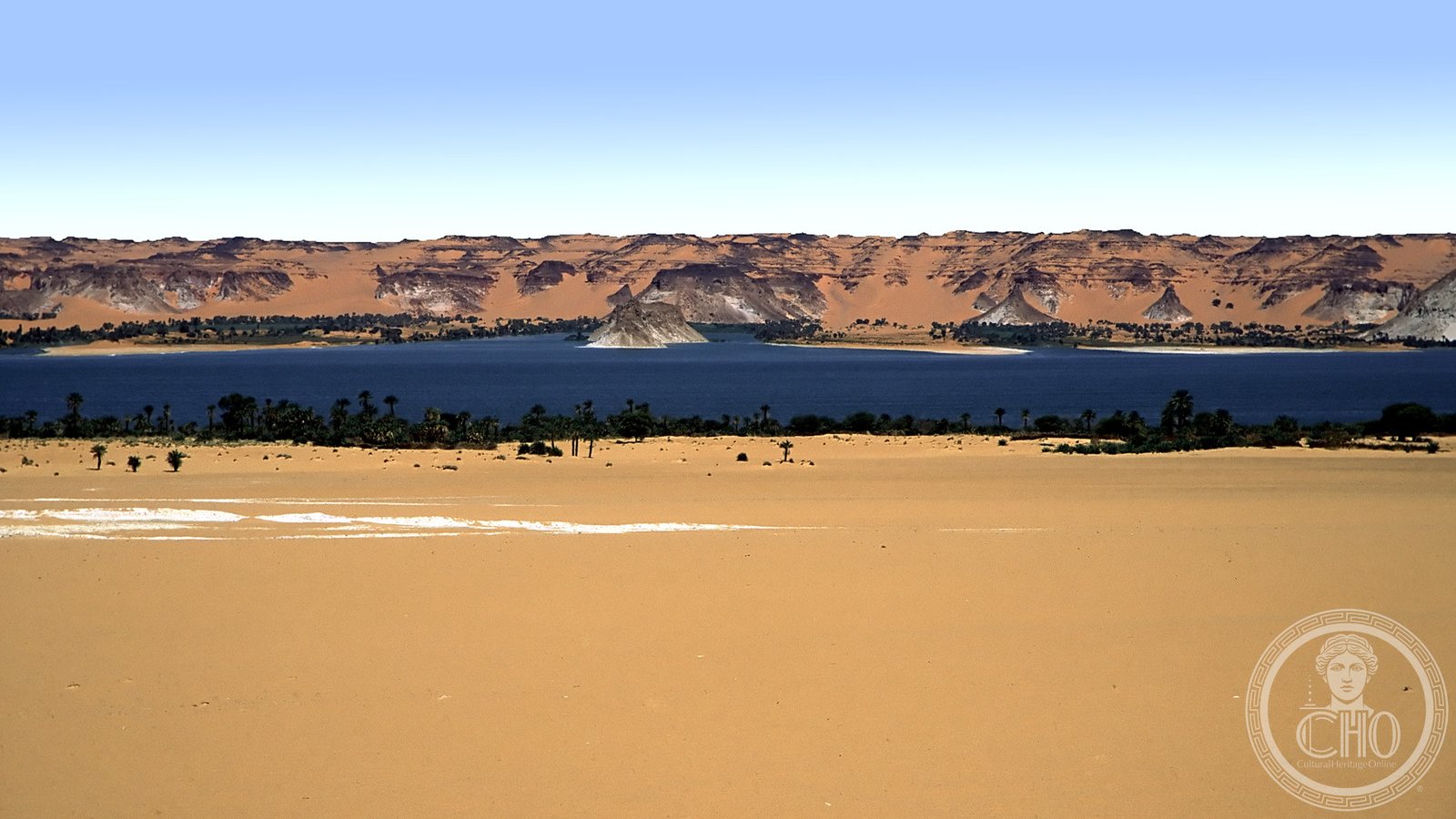
Eighteen lakes scattered across the Sahara Desert in Chad’s remote Tibesti and Ennedi mountains offer a geological miracle: freshwater oases thriving where fewer than 2 millimetres of rain fall annually.
At a glance
The Lakes of Ounianga comprise 18 distinct water bodies spread across two main groups and one isolated lake, covering approximately 20 square kilometres in one of Earth’s most inhospitable environments. Each lake maintains its own chemistry, depth and colour, creating a rare mosaic of aquatic ecosystems within a hyperarid desert basin.
History
The lakes occupy a basin in the West Tibesti and Ennedi East mountains, where local geography has long sustained these waters despite extreme aridity. The lake groups take their names from nearby villages: Ounianga Kébir means “the great Ounianga,” while Ounianga Sérir means “little Ounianga.” Recognition of their ecological and geological significance led to UNESCO World Heritage designation in 2012.
What you see
Lake Yoa, the largest, covers approximately 3.5 square kilometres and reaches depths of 20 metres. The Ounianga Kébir group clusters six lakes—Yoa, Katam, Oma, Béver, Midji and Forodom—together with Lake Motro situated some 30 kilometres southeast. The Ounianga Sérir group, located 45 to 60 kilometres further southeast, contains the remaining eleven lakes. Variable water chemistry and distinct colorations distinguish each lake, making the entire complex a natural laboratory of aquatic diversity.
Cultural significance
In a region receiving minimal precipitation, these lakes represent an extraordinary hydrological and ecological phenomenon. They sustain life in one of the Sahara’s most remote corners and have become increasingly valuable for scientific study of desert hydrology, geology and adaptation in extreme climates.
Key facts
- Country: Chad
- Location: North-eastern Chad, West Tibesti and Ennedi East mountains
- Number of lakes: 18
- Total surface area: approximately 20 square kilometres
- Largest lake: Lake Yoa (3.5 sq km, 20 metres deep)
- Annual rainfall: less than 2 millimetres
- UNESCO World Heritage site: designated 2012
- Coordinates: 19.055°N, 20.506°E
Practical information & getting there
The Lakes of Ounianga lie in a remote desert region of north-eastern Chad. Access requires careful planning and local knowledge due to the extreme environment and isolation. The hyperarid climate demands appropriate preparation and equipment for any visit.
Sources & resources
Find it on the map
See this place and what’s around it →📷 Become a Cultural Heritage Online photographer
Share your photos of places: they stay published under your name as the author. The more they're seen, the more you get noticed — and soon a contest will reward the most appreciated photos.
Log in or sign up free to add a photo