
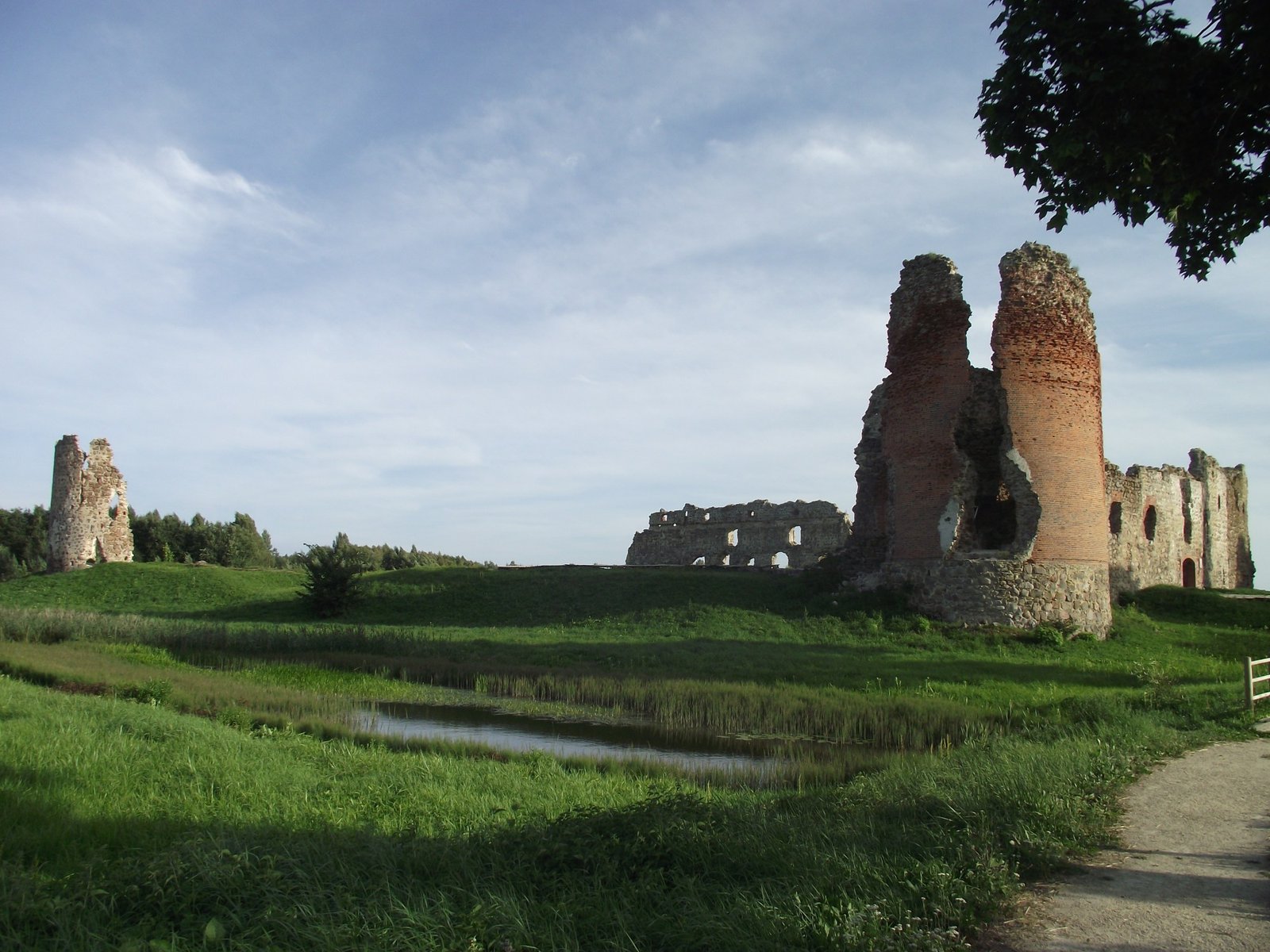
A fortress of the Livonian Order, now reduced to ruins in rural Jõgeva Parish.
At a glance
Laiuse Castle was a stronghold built by the Livonian Order in what is now eastern Estonia. The fortification stood in Laiusevälja, within Jõgeva Parish, commanding the surrounding landscape. Today only ruins remain, testament to centuries of change across the Baltic region.
History
The castle served the Livonian Order, the military-religious organisation that dominated the eastern Baltic from the 13th century onward. Like many order castles, Laiuse functioned as both fortress and administrative centre. The transition from medieval rule to Swedish, Russian and finally Estonian sovereignty left its mark on the structure and the land.
What you see
Visitors encounter the weathered remains of a medieval fortress. The ruins convey the scale and ambition of Livonian military architecture, though detailed structural information is limited in available sources.
Cultural significance
Laiuse Castle stands as a physical reminder of the Livonian Order’s presence in Estonia and the region’s complex medieval and early modern history. The ruins document the architectural traditions of the order and its strategic priorities across the Baltic.
Key facts
- Country: Estonia
- Location: Laiusevälja, Jõgeva Parish
- Coordinates: 58.81°N, 26.54°E
- Original builder: Livonian Order
- Current status: Ruins
Practical information & getting there
The ruins are located in Jõgeva Parish in central-eastern Estonia. For current visiting conditions, hours and access details, consult local tourism resources or the Jõgeva Parish administration before planning a visit.
Sources & resources
Find it on the map
See this place and what’s around it →📷 Become a Cultural Heritage Online photographer
Share your photos of places: they stay published under your name as the author. The more they're seen, the more you get noticed — and soon a contest will reward the most appreciated photos.
Log in or sign up free to add a photoIs this page about you?
This page is read by travellers and heritage enthusiasts who find it on Google. Tell us how you are connected to this place and we will take it from there.