

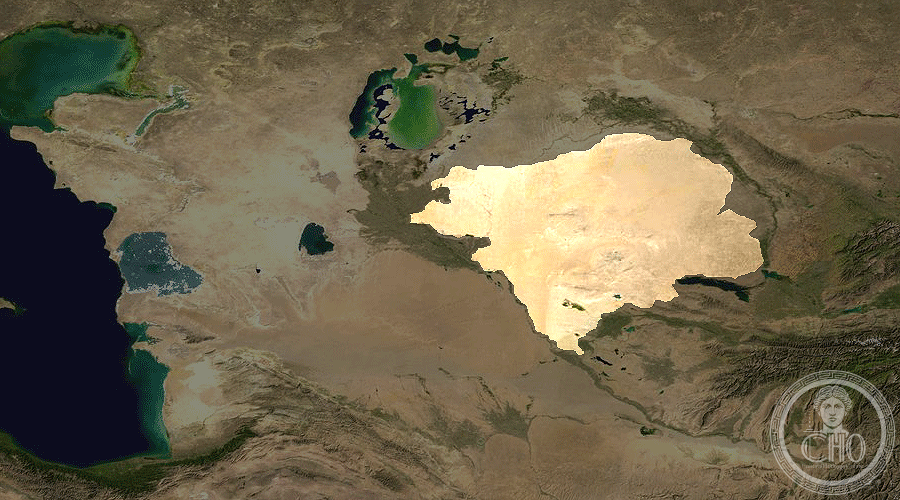
The world’s 15th largest desert spans the ancient region of Transoxania, stretching across three nations between two of Central Asia’s mightiest rivers.
At a glance
Covering approximately 298,000 square kilometres, the Kyzylkum Desert occupies the arid plateau between the Amu Darya and Syr Darya rivers. Its name—meaning ‘Red Sand’ in Turkic languages—refers to the iron oxide that colours much of its terrain. The desert is today shared by Kazakhstan, Turkmenistan and Uzbekistan.
History
The Kyzylkum lies within Transoxania, the historically significant region that served as a crossroads of the Silk Road. For centuries, this landscape shaped the movement of trade, peoples and empires across Central Asia. Its strategic position between two major river systems has defined settlement patterns and cultural exchange since antiquity.
What you see
The desert’s distinctive reddish sands dominate the landscape, a product of iron-rich mineral deposits. Vast expanses of dunes alternate with harder stony plains. The Amu Darya and Syr Darya rivers form natural boundaries, their valleys creating ribbons of riparian vegetation that contrast sharply with the surrounding aridity.
Cultural significance
The Kyzylkum Desert represents one of Central Asia’s defining geographical features. Its position between two great rivers has made it instrumental in the region’s historical development. Today it remains ecologically and geopolitically important as a shared landscape connecting three modern nations.
Key facts
- Area: 298,000 km² (115,000 sq mi)
- Rank: 15th largest desert in the world
- Shared by: Kazakhstan, Turkmenistan, Uzbekistan
- Rivers: Between Amu Darya and Syr Darya
- Historical region: Transoxania
- Coordinates: 42.44°N, 63.46°E
Practical information & getting there
The Kyzylkum is accessible from major cities in Kazakhstan, Turkmenistan and Uzbekistan. For detailed travel information, permits and practical advice, consult local tourism authorities, as crossing borders and accessing certain areas may require special permissions.
Sources & resources
Find it on the map
See this place and what’s around it →
📷 Become a Cultural Heritage Online photographer
Share your photos of places: they stay published under your name as the author. The more they're seen, the more you get noticed — and soon a contest will reward the most appreciated photos.
Log in or sign up free to add a photo