
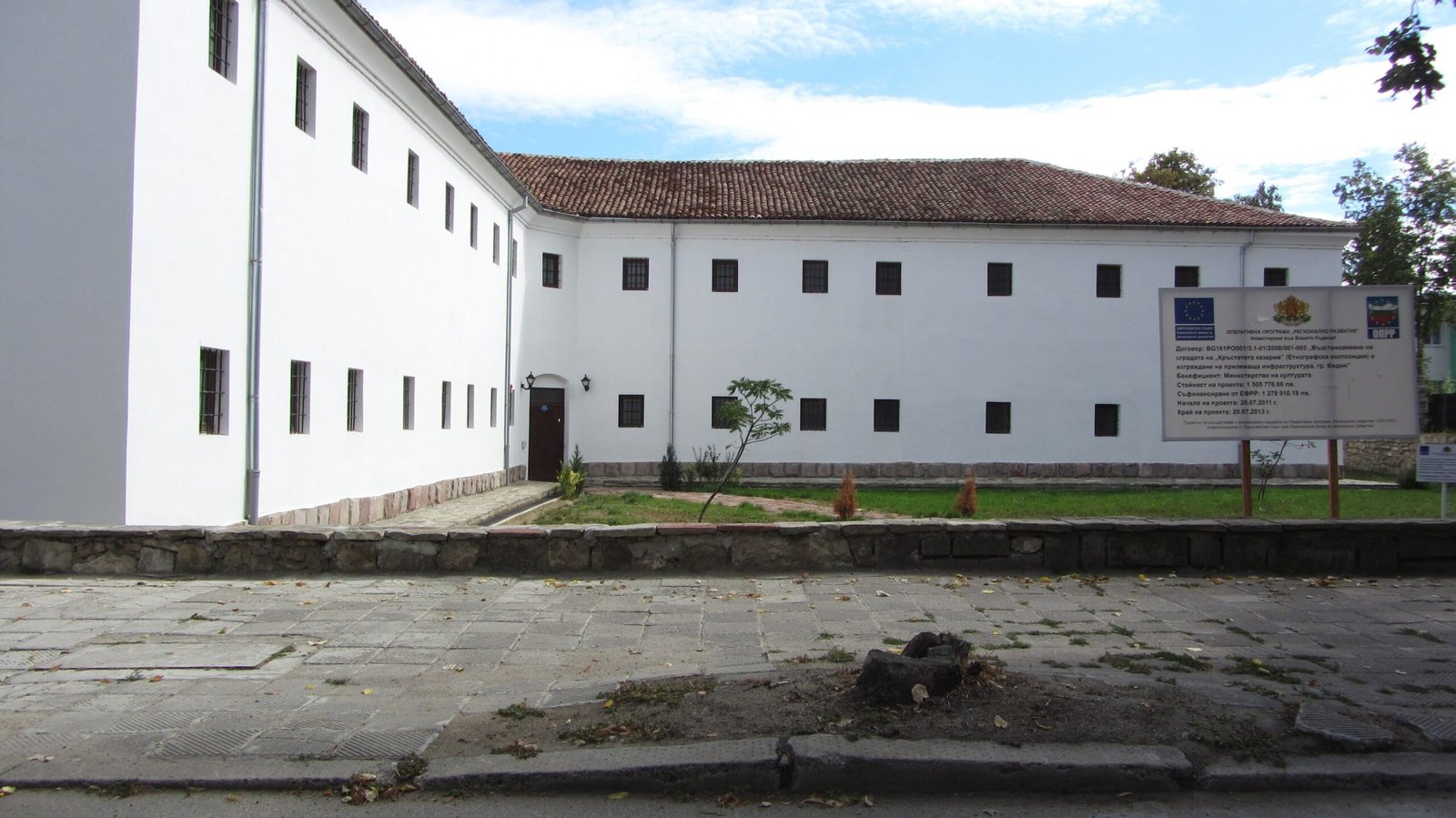
A cross-shaped Ottoman military barracks completed in 1801, designed by Polish architects and now home to an ethnographical museum in northwestern Bulgaria.
At a glance
The Krastata Kazarma—meaning “cross-shaped barracks” in Bulgarian—stands as a distinctive Ottoman-era military building distinguished by its unusual architectural plan. Its name derives directly from its cross-shaped layout. Once a functioning garrison, it has evolved into a cultural institution preserving regional heritage.
History
Polish architects designed and completed this barracks in 1801 during the Ottoman occupation of the Balkans. The facility accommodated four separate military units, including a contingent of Janissaries—the elite infantry corps of the Ottoman army. Following Bulgaria’s liberation, the building transitioned to civilian use, serving as a court of law and subsequently as military accommodation for the Bulgarian army before its final conversion to museum use.
What you see
The building’s defining feature is its cross-shaped floor plan, an unusual design for military barracks that creates distinctive sightlines and spatial organization. Constructed in the early 19th-century Ottoman style, it reflects the architectural preferences of Polish designers working within Ottoman imperial service.
Cultural significance
The Krastata Kazarma represents an important intersection of Ottoman military administration and Bulgarian regional history. Its survival and preservation make it a valuable cultural memorial of Vidin, documenting the physical infrastructure of Ottoman rule and the transitions that followed independence.
Key facts
- Location: Vidin, Bulgaria
- Completed: 1801
- Architects: Polish
- Coordinates: 43.9904°N, 22.8816°E
- Current use: Ethnographical section of the Konaka Museum
Practical information & getting there
The barracks is now part of the Konaka Museum in Vidin. For current opening hours, admission details, and guided tour availability, contact the museum directly or visit Vidin’s tourism office.
Sources & resources
Find it on the map
See this place and what’s around it →📷 Become a Cultural Heritage Online photographer
Share your photos of places: they stay published under your name as the author. The more they're seen, the more you get noticed — and soon a contest will reward the most appreciated photos.
Log in or sign up free to add a photoIs this page about you?
This page is read by travellers and heritage enthusiasts who find it on Google. Tell us how you are connected to this place and we will take it from there.