
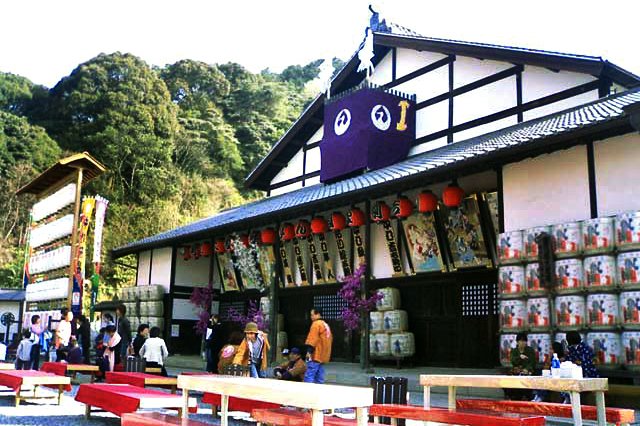
Japan’s oldest kabuki theatre, restored and still staging classical performances in the mountain town of Kotohira.
At a glance
The Konpira Grand Theatre—also known as the Kanamaru-za—stands as the nation’s earliest surviving kabuki playhouse. Built in 1835 on Shikoku’s island, it continues to host traditional kabuki performances annually, preserving centuries of theatrical heritage.
History
Constructed in 1835, the theatre has witnessed nearly two centuries of kabuki tradition. Its survival makes it a rare architectural and cultural document of Japan’s Edo period theatre practice, standing in Kotohira alongside the sacred Kompira Shrine.
What you see
The theatre retains the physical layout and materials of its original 19th-century design. Its restoration has preserved the wooden structure, traditional stage mechanisms, and interior arrangement characteristic of early Edo-period kabuki houses.
Cultural significance
As Japan’s oldest standing kabuki theatre, the Konpira Grand Theatre represents an irreplaceable window into traditional performance spaces and stagecraft. Its continued use for monthly performances demonstrates the enduring power of kabuki as a living art form.
Key facts
- Country: Japan
- Location: Kotohira, Kagawa Prefecture, Shikoku
- Built: 1835
- Coordinates: 34.184633, 133.818028
- Annual performances: One month, typically April
Practical information & getting there
The theatre welcomes visitors year-round, though kabuki performances occur for one month annually, usually in April. Check ahead for current performance dates and tickets. Kotohira is accessible by train via the Kotohira Line.
Sources & resources
- Konpira Grand Theatre – Wikipedia
- Cultural Heritage Online
Find it on the map
See this place and what’s around it →📷 Become a Cultural Heritage Online photographer
Share your photos of places: they stay published under your name as the author. The more they're seen, the more you get noticed — and soon a contest will reward the most appreciated photos.
Log in or sign up free to add a photoIs this page about you?
This page is read by travellers and heritage enthusiasts who find it on Google. Tell us how you are connected to this place and we will take it from there.