
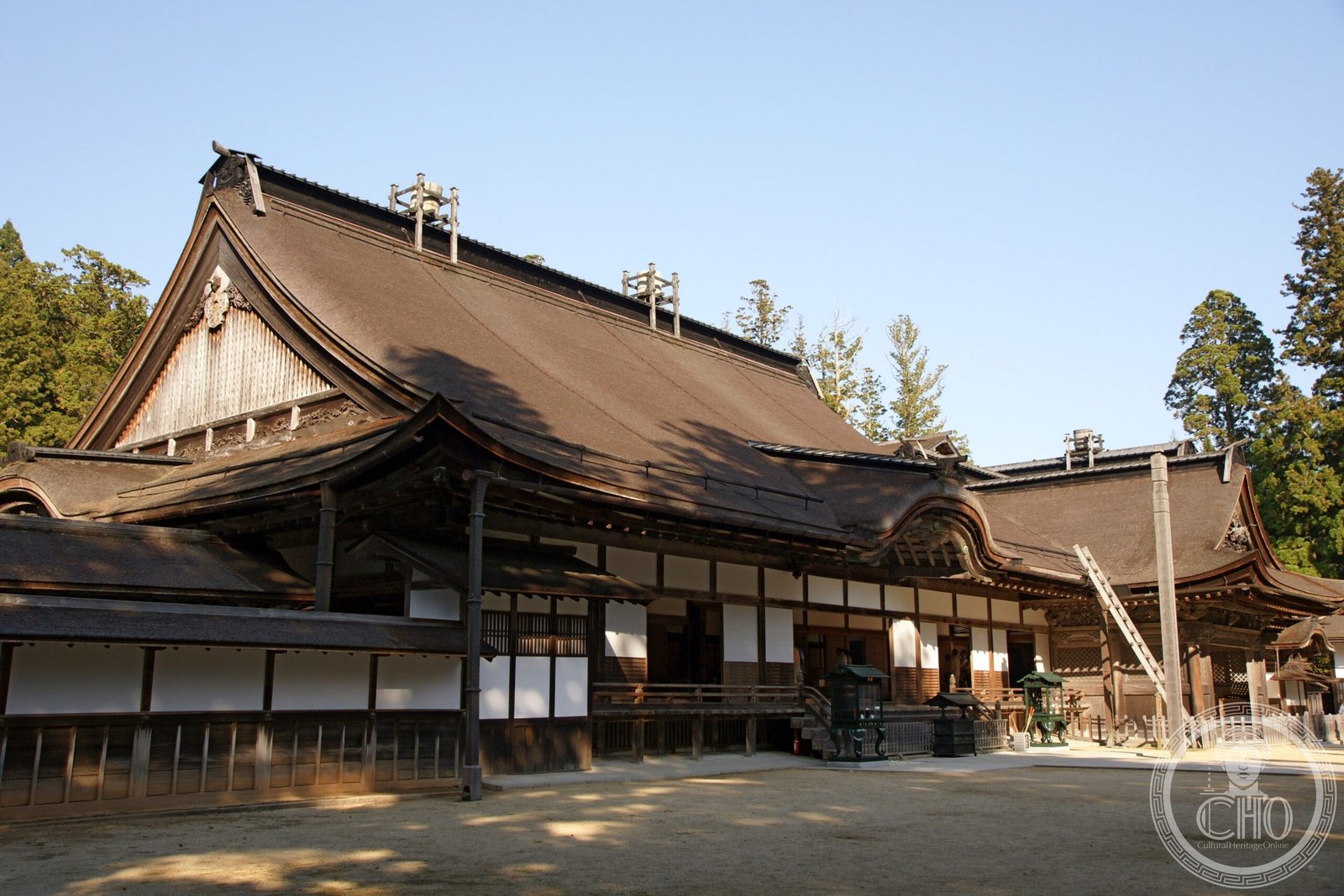
The ecclesiastic head temple of Kōyasan Shingon Buddhism, this sacred mountain sanctuary preserves centuries of Buddhist art and practice within its halls and gardens.
At a glance
Kongōbu-ji—the Temple of the Diamond Mountain Peak—stands as the spiritual center of one of Japan’s most significant Buddhist traditions. Perched on Mount Kōya in Wakayama Prefecture, it serves as the abbot’s residence and administrative headquarters of the Kōyasan Shingon school. The temple is part of the UNESCO World Heritage Site “Sacred Sites and Pilgrimage Routes in the Kii Mountain Range.”
History
Originally constructed as Seigan-ji Temple in 1593 by Toyotomi Hideyoshi as a memorial to his mother, the temple was rebuilt in 1861 and received its present name in 1869. This renaming marked its formal elevation as the head temple of the Shingon sect. The 414th abbot, Reverend Kogi Kasai, also serves as archbishop of the broader Kōyasan Shingon school, continuing a leadership lineage spanning centuries.
What you see
The temple houses numerous sliding screen doors painted by Kanō Tanyū (1602–1674) and other masters of the Kyoto Kanō school, representing some of Japan’s finest decorative painting traditions. The Banryūtei rock garden, Japan’s largest at 2,340 square meters, commands particular attention. One hundred forty granite stones are arranged to evoke a pair of dragons emerging from clouds—a symbolic gesture of celestial protection over the sacred temple grounds.
Cultural significance
Kongōbu-ji embodies the living continuity of Shingon Buddhism, one of Japan’s most influential esoteric Buddhist schools. The temple remains an active center of monastic practice and teaching. Its integration into the broader pilgrimage network of the Kii Mountains underscores its role in Japan’s spiritual geography and demonstrates how religious architecture functions as both sanctuary and destination within a larger sacred landscape.
Key facts
- Country: Japan
- Location: Mount Kōya, Wakayama Prefecture
- Coordinates: 34.214081, 135.584092
- Founded: 1593 (originally as Seigan-ji Temple)
- Current name adopted: 1869
- UNESCO World Heritage Site: Sacred Sites and Pilgrimage Routes in the Kii Mountain Range
- Banryūtei rock garden: 2,340 square meters (Japan’s largest)
Practical information & getting there
Visitors can attend monk sermons and participate in ajikan meditation sessions—a fundamental Shingon practice involving focused breathing and meditation on the Sanskrit letter A written in the Siddhaṃ script. For current opening hours, visitor access, and meditation program details, consult the official temple website or contact Mount Kōya’s tourism office. The site is accessible by cable car and bus from the town of Kōyasan.
Sources & resources
Find it on the map
See this place and what’s around it →📷 Become a Cultural Heritage Online photographer
Share your photos of places: they stay published under your name as the author. The more they're seen, the more you get noticed — and soon a contest will reward the most appreciated photos.
Log in or sign up free to add a photoIs this page about you?
This page is read by travellers and heritage enthusiasts who find it on Google. Tell us how you are connected to this place and we will take it from there.