
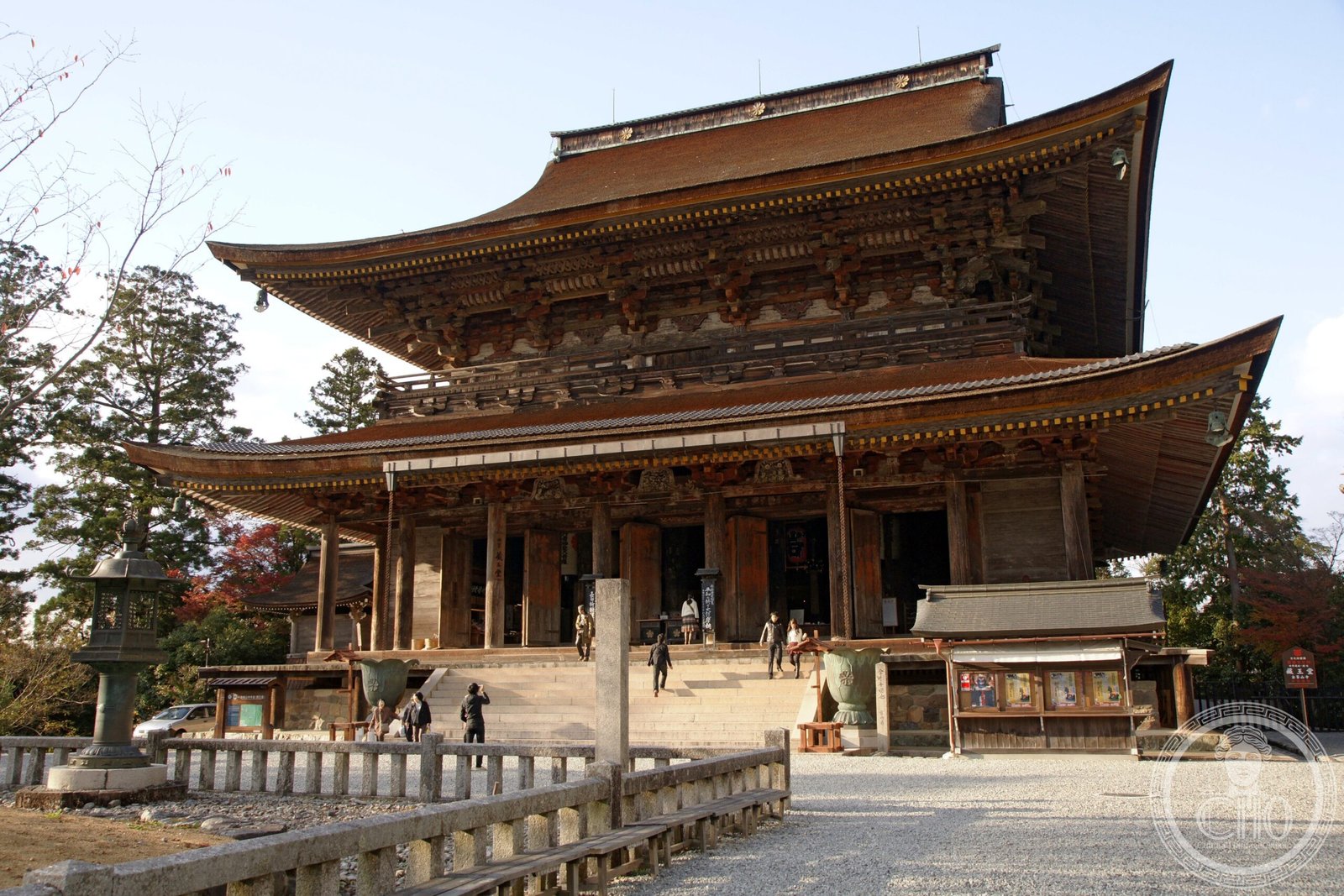
The spiritual heart of Shugendō mountain asceticism, Kinpusen-ji houses Japan’s second-largest wooden hall and anchors one of Asia’s most significant pilgrimage networks.
At a glance
Kinpusen-ji serves as the head temple of Kinpusen-Shugendō, a branch of the Japanese mountain-ascetic tradition synthesizing Shinto, Taoism, and Buddhism. The temple functions as a crucial junction on historic pilgrimage routes through the Kii Mountains, drawing practitioners and devotees for centuries.
History
According to tradition, En no Gyōja founded Kinpusen-ji as a center for mountain asceticism, blending multiple spiritual traditions. In 1963, the temple constructed the Southern Court Mystic Law Hall to honor the souls of four emperors of the Southern Court and others who perished during the Nanboku-chō period (1336–1392). The UNESCO designation in 2004 recognized the temple’s role within the Sacred Sites and Pilgrimage Routes in the Kii Mountain Range.
What you see
The Zaō-Hall (Zaōdō), the temple’s dominant structure, ranks as Japan’s second-largest wooden building after the Great Buddha Hall at Tōdai-ji in Nara. Dedicated to Zaō gongen, the deity embodying the convergence of Buddhist and Shinto worship, the hall dominates the mountain landscape. A Shinto shrine honoring Inari Ōkami is integrated into the main compound, reflecting the syncretism central to Shugendō practice. The principal image within enshrines a statue of Gautama Buddha (Shaka Nyōrai).
Cultural significance
Ranked alongside Ōminesan-ji Temple as one of Shugendō’s two most important sites, Kinpusen-ji represents a uniquely Japanese synthesis of religious traditions. The temple embodies centuries of pilgrimage spirituality and remains vital to practitioners of mountain asceticism. Its architectural prominence and role in interconnected sacred routes make it essential to understanding Japanese religious geography and practice.
Key facts
- Country: Japan
- Location: Yoshino district, Nara Prefecture
- Coordinates: 34.368°N, 135.858°E
- Founded by: En no Gyōja (according to tradition)
- UNESCO status: Part of Sacred Sites and Pilgrimage Routes in the Kii Mountain Range (designated 2004)
- Notable structure: Zaō-Hall (second-largest wooden building in Japan)
Practical information & getting there
Kinpusen-ji is situated in Yoshino district in Nara Prefecture. You can reach the temple via local transportation from Nara city. The site functions as a working temple and pilgrimage destination; check locally for visiting hours and any restrictions before traveling.
Sources & resources
Find it on the map
See this place and what’s around it →📷 Become a Cultural Heritage Online photographer
Share your photos of places: they stay published under your name as the author. The more they're seen, the more you get noticed — and soon a contest will reward the most appreciated photos.
Log in or sign up free to add a photoIs this page about you?
This page is read by travellers and heritage enthusiasts who find it on Google. Tell us how you are connected to this place and we will take it from there.