
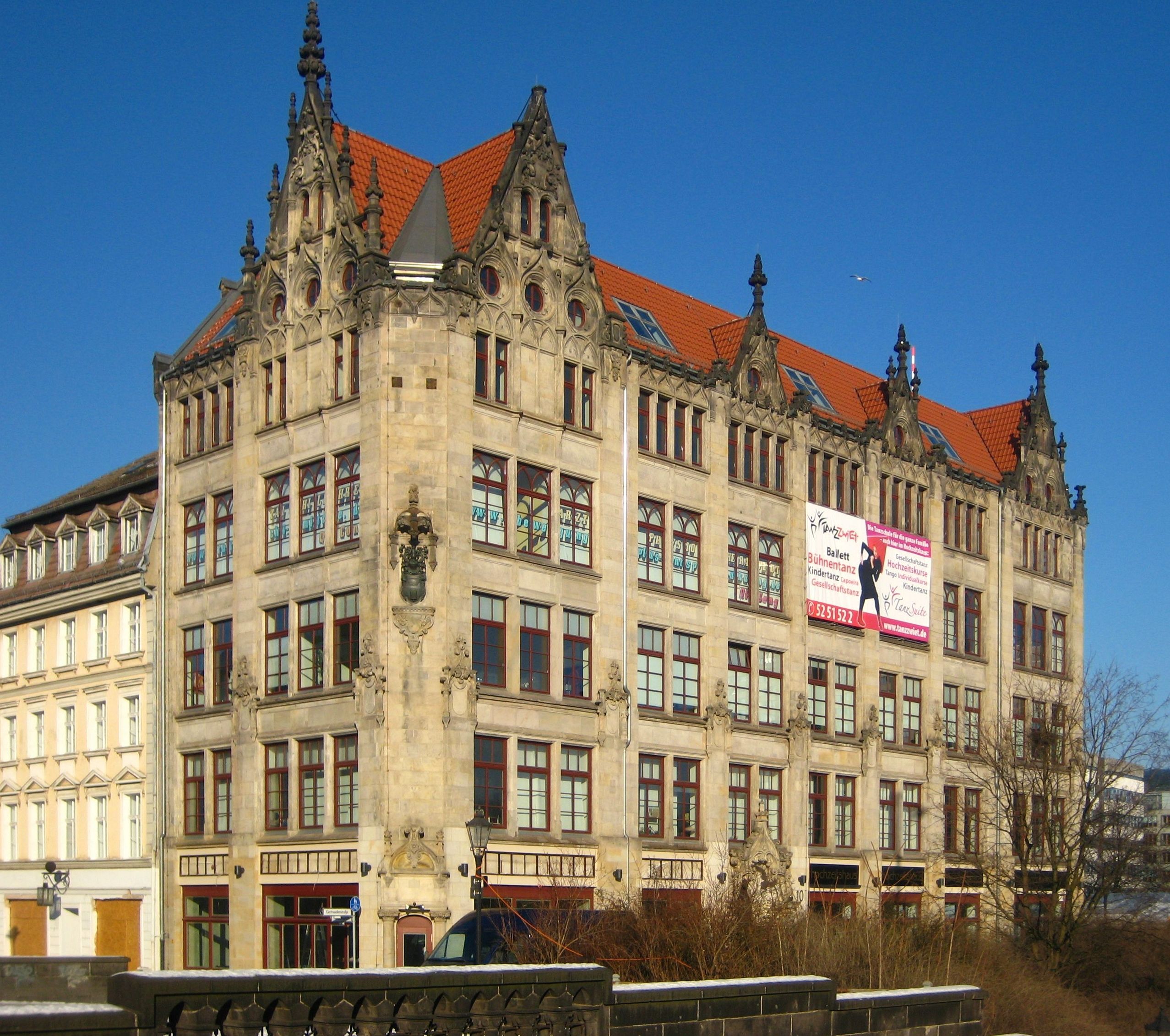
A Neo-Gothic trading house completed in 1898, the Jewel Palace takes its name from its original specialization in gold commerce. Remarkably preserved through World War II, this Berlin landmark underwent extensive renovation after German reunification.
At a glance
The Jewel Palace stands as a refined example of late 19th-century Berlin architecture. Its Neo-Gothic style distinguishes it among the city’s commercial buildings. The palace survived wartime destruction largely intact, a fortune that enabled its post-reunification restoration.
History
Architects Max Jacob and Georg Roensch designed the building for completion in 1898, during Berlin’s period of rapid commercial expansion. Originally functioning as a specialized trading house for gold, the palace earned its distinctive name through this mercantile heritage.
The building’s survival through World War II proved exceptional. Following the German reunification, the palace underwent essential renovation and now houses various offices within its historic walls.
What you see
The palace exemplifies the Neo-Gothic style favored by Berlin’s late-19th-century patrons. Its architectural language reflects the aesthetic preferences of the fin de siècle period, combining commercial function with aesthetic ambition.
Cultural significance
The Jewel Palace represents the continuity of Berlin’s architectural heritage across the turbulent 20th century. Its preservation without considerable damage during World War II makes it a rare survivor of the era. The building embodies the city’s commercial dynamism and the enduring value of thoughtful restoration.
Key facts
- Country: Germany
- City: Bezirk Mitte, Berlin
- Completed: 1898
- Architects: Max Jacob and Georg Roensch
- Style: Neo-Gothic
- Coordinates: 52.51275389, 13.402805
Practical information & getting there
The Jewel Palace is located in Berlin-Mitte, the historic heart of the capital. Further details about visiting hours and current uses are available through local Berlin tourism resources.
Sources & resources
Find it on the map
See this place and what’s around it →📷 Become a Cultural Heritage Online photographer
Share your photos of places: they stay published under your name as the author. The more they're seen, the more you get noticed — and soon a contest will reward the most appreciated photos.
Log in or sign up free to add a photoIs this page about you?
This page is read by travellers and heritage enthusiasts who find it on Google. Tell us how you are connected to this place and we will take it from there.