

In the winter of 1655, during the Swedish invasion known as “the Deluge”, seventy Pauline monks and some hundred and eighty volunteers of the Polish nobility withstood a Swedish siege, protecting the icon of the Black Madonna of Częstochowa. The defensive victory was so significant that the following year King Jan Kazimierz solemnly consecrated Poland to the protection of the Virgin, proclaiming her Queen of the kingdom.
About Jasna Góra Monastery
Jasna Góra Monastery was founded in 1382 by Pauline monks who had come from Hungary at the invitation of Duke Vladislaus II of Opole. The new monastery was soon entrusted with the icon known as the Black Madonna of Częstochowa, depicting the Mother of God with the Christ Child — legend attributes its painting to Saint Luke in the 6th century, though art historians consider it more likely a Byzantine work of the 12th to 14th century. On 14 April 1430, Hussite forces sacked the shrine; the church, originally a single-nave building, was expanded around 1463 into a three-nave Gothic hall church. The monastery’s defining moment came during the winter of 1655, in the midst of the Swedish invasion of Poland known as “the Deluge”: a garrison of roughly seventy Pauline monks and about 180 volunteers, mostly drawn from the Polish nobility (szlachta), withstood a Swedish siege by a force reportedly numbering around 4,000, holding out for forty days and preserving both the monastery and its sacred icon. The unexpected success of this defence was widely credited with turning momentum in Poland’s favour during the wider conflict. In its aftermath, King Jan Kazimierz solemnly consecrated Poland to the protection of the Mother of God at Lwów Cathedral on 1 April 1656, formally proclaiming her Queen and Patron of his kingdom, and visited Jasna Góra himself in March 1657 to pray before the icon. The monastery withstood further unsuccessful Swedish sieges in 1702, 1705, and 1709 during the Great Northern War. Between 1690 and 1696, the church underwent major Baroque reconstruction, its walls raised to transform the building’s spatial design from a hall church into a basilica. Today Jasna Góra is Poland’s principal pilgrimage destination and among the largest Catholic pilgrimage sites in the world, drawing an estimated 3.2 million visitors annually from more than 80 countries.
Key facts
- Foundation: 1382, by Pauline monks from Hungary, invited by Duke Vladislaus II of Opole
- Black Madonna icon: traditionally attributed to Saint Luke; art historians date it to the 12th-14th century, Byzantine origin
- 1430: shrine sacked by Hussite forces
- 1655: approximately 250 defenders withstand a 40-day Swedish siege of roughly 4,000 troops during “the Deluge”
- 1656: King Jan Kazimierz consecrates Poland to the Virgin Mary, proclaiming her Queen and Patron of the realm
- 1690-1696: Baroque reconstruction transforms the church from a hall church into a basilica
- Today: approximately 3.2 million pilgrims annually from over 80 countries; designated a Polish National Historic Monument
History
The 1655 siege’s outsized historical impact — a garrison of roughly 250 defenders successfully resisting a force many times its size — gave Jasna Góra a symbolic weight in Polish national identity far beyond its purely military significance, cementing the association between the Black Madonna icon and the survival of the Polish state itself at a moment of near-total foreign occupation during “the Deluge.” King Jan Kazimierz’s subsequent 1656 consecration of the entire kingdom to the Virgin’s protection formalised this connection at the highest level of state ritual, embedding Jasna Góra permanently within the machinery of Polish royal and national self-understanding.
The monastery’s repeated survival of further Swedish sieges during the Great Northern War in the early 18th century, decades after the original 1655 defence, reinforced its reputation as a uniquely protected site within the Polish national imagination, a reputation that has persisted into the modern era as the shrine draws millions of pilgrims from dozens of countries each year, making it one of the largest active Catholic pilgrimage destinations anywhere in the world.
What you see
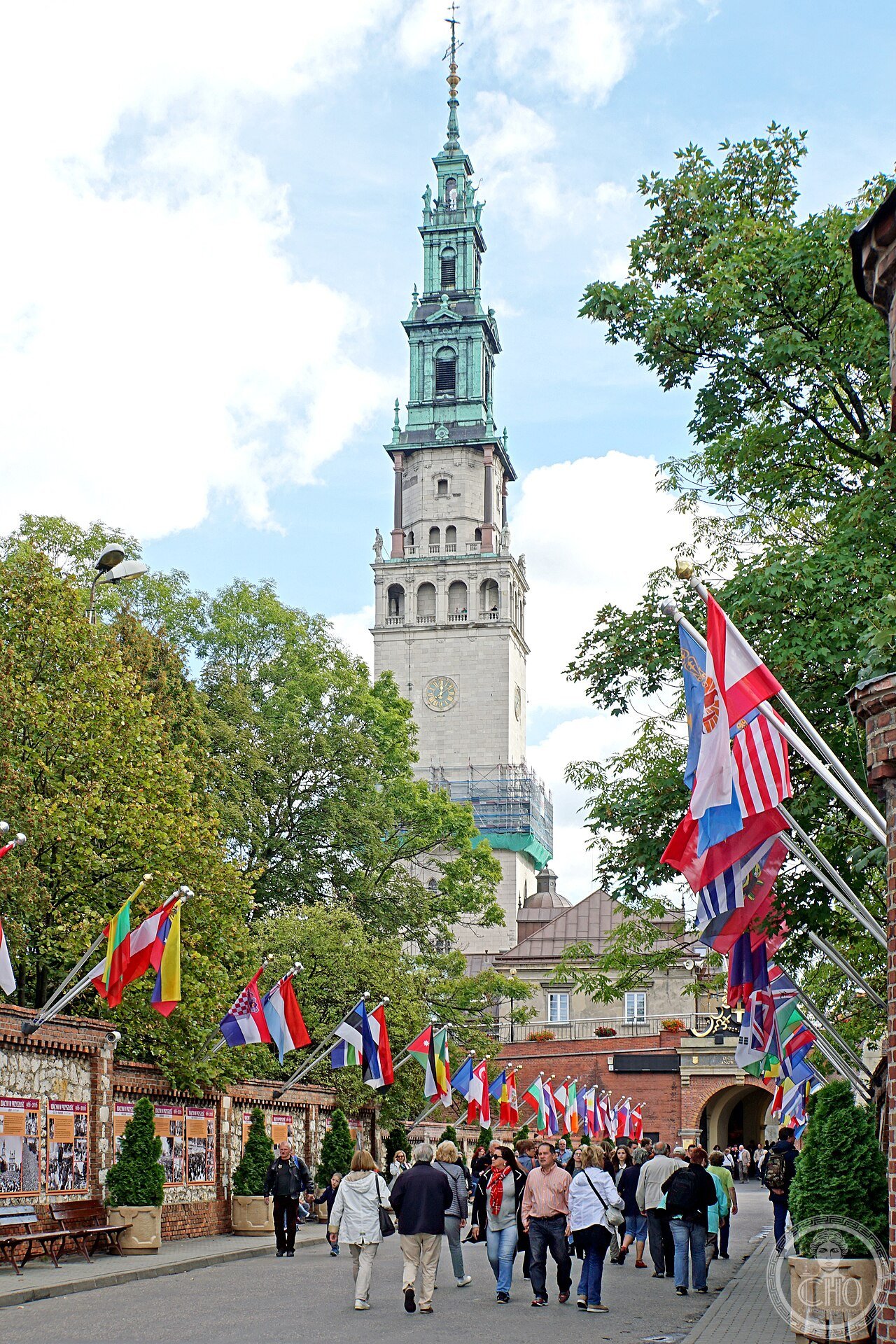
The monastery complex, expanded from its original single-nave 14th-century church into a three-nave Gothic hall church around 1463, was substantially rebuilt in Baroque style between 1690 and 1693, with the nave and chancel walls raised between 1693 and 1696 to convert the building’s spatial design into a full basilica. The complex today includes the basilica itself, housing the Black Madonna icon in its dedicated chapel, alongside a treasury, sacristy, and the monastery’s distinctive tower, all set within the fortified walls that once withstood the 1655 Swedish siege.
Practical information
- Opening hours: the basilica and grounds are generally open daily; check current hours for chapel access and Mass times
- Address: Jasna Góra, Pasaż Biskupa Stefana Bareły, 42-200 Częstochowa, Poland
Getting there
Częstochowa is reachable by train or car from Katowice (approximately 1 hour) or Warsaw (approximately 3 hours), in the Silesian Voivodeship. GPS: 50.8128° N, 19.0971° E.
Nearby
- Częstochowa Old Town — the city’s historic centre, near the monastery
- Aleja Najświętszej Maryi Panny — the ceremonial avenue leading to Jasna Góra from the city centre
- Jura Krakowsko-Częstochowska — the limestone upland region with medieval castle ruins nearby
Sources
- Wikipedia — “Jasna Góra Monastery” and “Black Madonna of Częstochowa” (en.wikipedia.org)
- Britannica — “Jasna Góra” (britannica.com)
- Catholic Shrine Basilica — “Jasna Góra Monastery, Częstochowa Poland” (catholicshrinebasilica.com)
Find it on the map
See this place and what’s around it →📷 Become a Cultural Heritage Online photographer
Share your photos of places: they stay published under your name as the author. The more they're seen, the more you get noticed — and soon a contest will reward the most appreciated photos.
Log in or sign up free to add a photo