
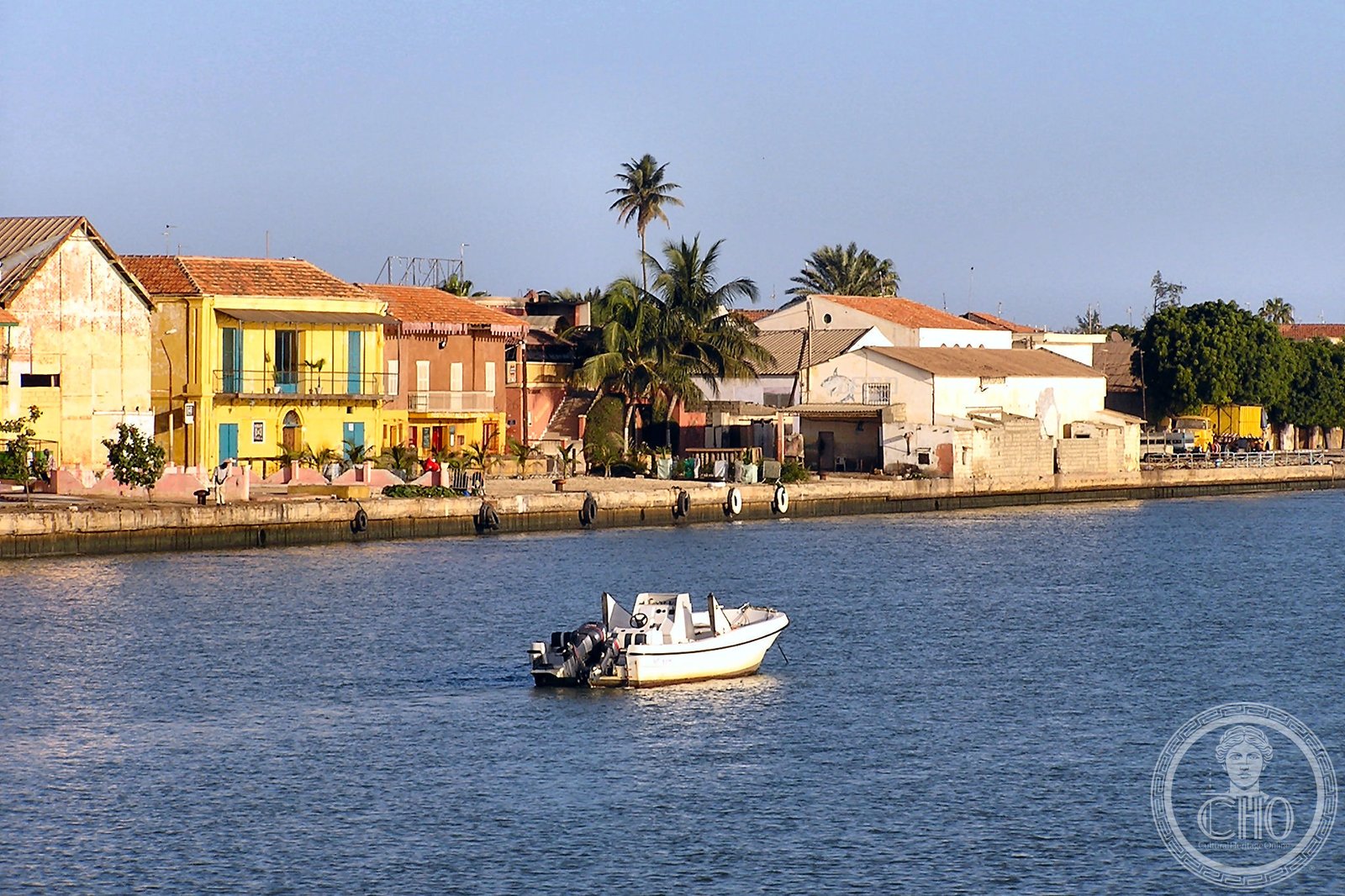
The historic core of Saint-Louis preserves centuries of West African and French colonial architecture on a narrow island in the Senegal River.
At a glance
The Island of Saint-Louis represents a distinctive moment in African urban history. This compact settlement, surrounded by water, developed as a major trading post and administrative center under French colonial rule. Today it stands as one of West Africa’s best-preserved colonial towns.
History
Saint-Louis was established as a French trading post on the Senegal River. Over time, the island became the capital of French West Africa and a thriving commercial hub. The settlement reflects layers of cultural exchange—European, African, and Arab—accumulated through centuries of trade and colonial presence.
What you see
The island’s streetscape displays characteristic colonial-era buildings with shuttered facades, wrought-iron balconies, and pastel-colored walls. Narrow streets follow a grid pattern typical of 18th- and 19th-century French planning. Residential compounds, merchant houses, and administrative buildings reveal the urban hierarchy of the colonial period.
Cultural significance
The Island of Saint-Louis documents a pivotal chapter in Franco-African relations and the development of West African urbanism. Its architecture demonstrates how European colonial planning adapted to the Sahel’s climate and geography. The site remains a symbol of Senegal’s cultural heritage and its position within the Atlantic trading world.
Key facts
- Country: Senegal
- City: Saint-Louis
- Coordinates: 16.02778, -16.50444
- UNESCO World Heritage: inscribed 2000
Practical information & getting there
The island is accessible by road from Dakar, approximately 260 kilometers south. Local guides are recommended for navigating the narrow streets and understanding the district’s architectural details.
Sources & resources
Find it on the map
See this place and what’s around it →📷 Become a Cultural Heritage Online photographer
Share your photos of places: they stay published under your name as the author. The more they're seen, the more you get noticed — and soon a contest will reward the most appreciated photos.
Log in or sign up free to add a photo