
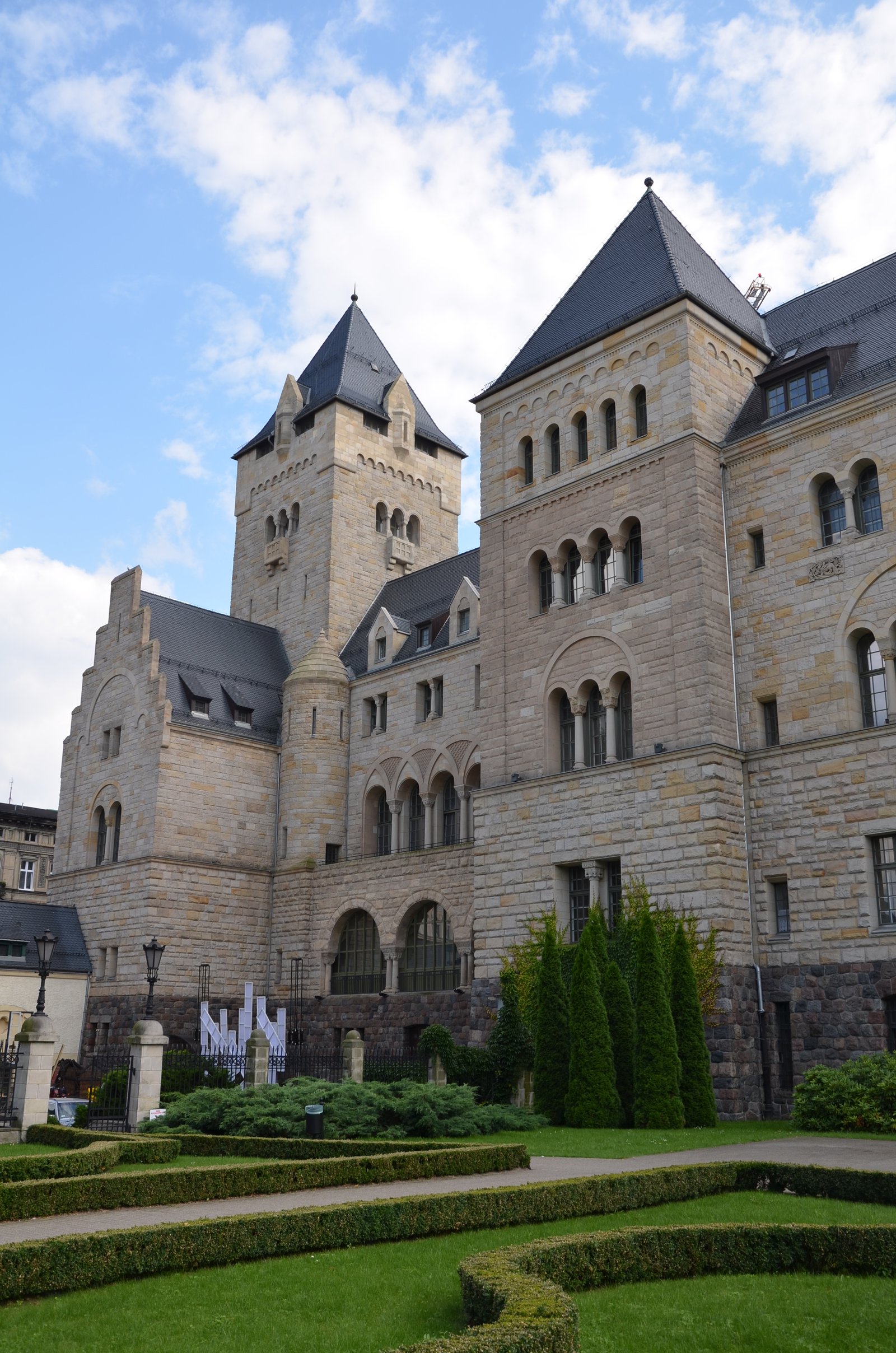
Built for German Emperor Wilhelm II, this early-twentieth-century palace reflects the architectural ambitions of the German Reich during its final imperial decade. Today it serves as a symbol of Poznań’s complex political history.
At a glance
A Prussian-era royal residence designed by architect Franz Schwechten and completed in 1910, the Imperial Castle stands as testimony to Germany’s architectural presence in occupied Polish territory. The building has alternated between German and Polish administrative use, reflecting the dramatic shifts in Central European power throughout the twentieth century.
History
Constructed under German imperial rule, the castle was designed by Franz Schwechten with substantial input from Emperor Wilhelm II himself—a patron closely involved in its conception. Following Germany’s defeat in World War I, the building transitioned to Polish government use from 1918 to 1939. During World War II, Nazi Germany reclaimed it as an administrative center. Since 1945, it has served Polish governmental functions.
What you see
The palace reflects the formal aesthetic preferences of Imperial Germany at the turn of the twentieth century. Schwechten’s design embodies the architectural confidence of the Prussian state, combining monumental scale with the decorative traditions favored by Wilhelm II’s court.
Cultural significance
The Imperial Castle encapsulates a pivotal era in European history. It represents the architectural legacy of German imperial power in Poland, while simultaneously marking the contested nature of Poznań itself—a city that shifted between German and Polish sovereignty. The building’s twentieth-century trajectory mirrors the region’s turbulent political transformations.
Key facts
- Country: Poland
- City: Poznań
- Completed: 1910
- Architect: Franz Schwechten
- Coordinates: 52.4078, 16.9192
- Original patron: Emperor Wilhelm II of Germany
Practical information & getting there
The castle remains an active government building in central Poznań. Visitors should check current accessibility before planning a visit, as operational status may limit public access.
Sources & resources
Find it on the map
See this place and what’s around it →📷 Become a Cultural Heritage Online photographer
Share your photos of places: they stay published under your name as the author. The more they're seen, the more you get noticed — and soon a contest will reward the most appreciated photos.
Log in or sign up free to add a photoIs this page about you?
This page is read by travellers and heritage enthusiasts who find it on Google. Tell us how you are connected to this place and we will take it from there.