
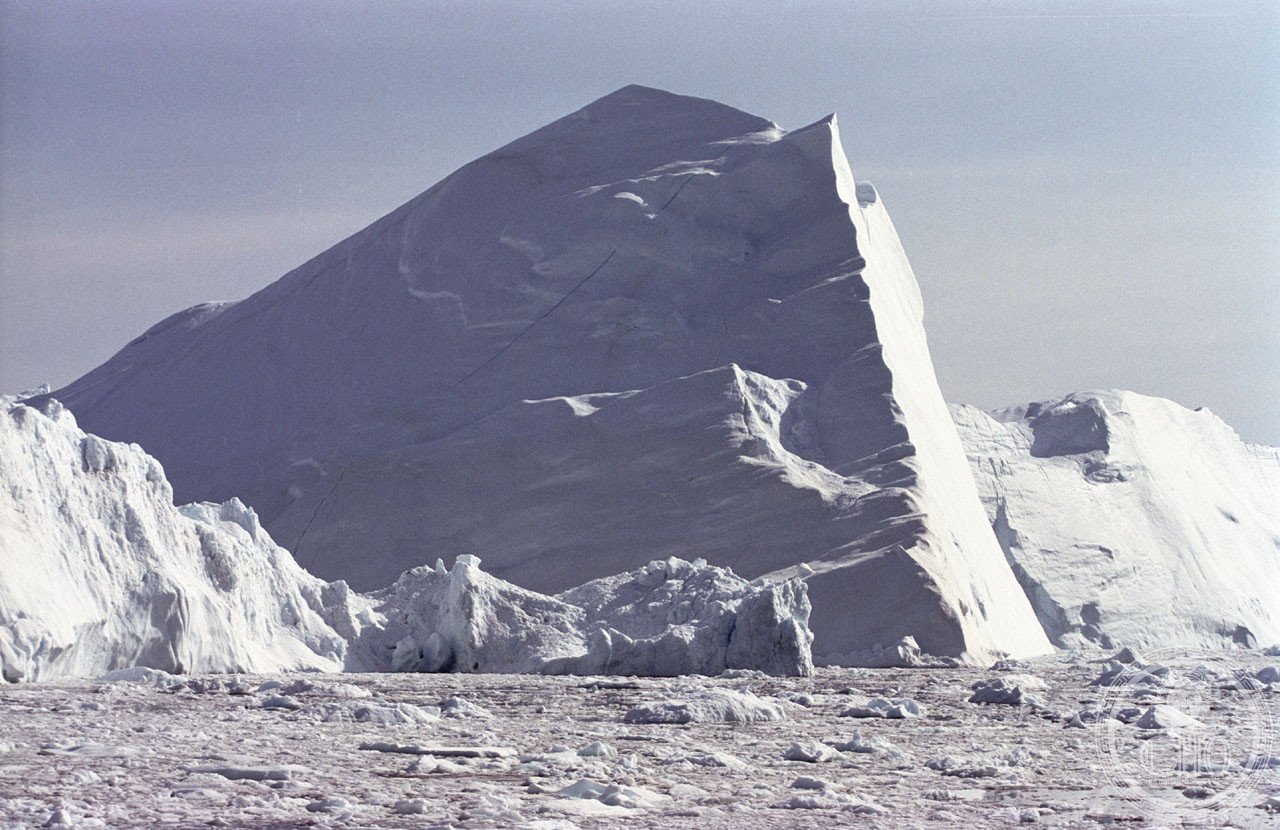
A 40-kilometre fjord carved by one of Earth’s fastest-moving glaciers, where ice meets sea in the Arctic and science confronts climate change.
At a glance
The Ilulissat Icefjord (Greenlandic: Ilulissat Kangerlua) stretches westward from the Greenland ice sheet across 40 kilometres to Disko Bay. Positioned 250 kilometres north of the Arctic Circle, it represents a dramatic meeting point between the planet’s vast ice reserves and the open ocean.
History
The fjord’s formation reflects millennia of glacial advance and retreat. In 2004, UNESCO designated it a World Heritage Site, recognising both its natural significance and its role in modern climate science—particularly through the Jacobshavn Glacier’s dramatic behaviour.
What you see
Massive icebergs calve continuously from the Jacobshavn Glacier, one of the world’s fastest-moving glaciers, and drift through the fjord toward Disko Bay. The landscape is dominated by towering walls of ice meeting water, shaped by the relentless force of glacial flow.
Cultural significance
The Ilulissat Icefjord has become central to understanding anthropogenic climate change. The Jacobshavn Glacier’s accelerating ice loss and remarkable velocity shifts have provided scientists with crucial data about how global warming reshapes the Arctic. For the people of Ilulissat, the fjord remains integral to traditional hunting and contemporary identity.
Key facts
- Country: Greenland
- UNESCO World Heritage Site: designated 2004
- Coordinates: 69.15°N, 49.55°W
- Length: 40 kilometres (25 miles)
- Notable feature: Jacobshavn Glacier, one of the world’s fastest-moving glaciers
Practical information & getting there
The fjord is accessible from the town of Ilulissat, located just south on the coast. Visit in summer months (June–September) for the best conditions and maximum daylight. Boat tours and helicopter flights provide views of the ice and calving glaciers. Winter travel is possible but requires proper Arctic preparation.
Sources & resources
Find it on the map
See this place and what’s around it →📷 Become a Cultural Heritage Online photographer
Share your photos of places: they stay published under your name as the author. The more they're seen, the more you get noticed — and soon a contest will reward the most appreciated photos.
Log in or sign up free to add a photo